


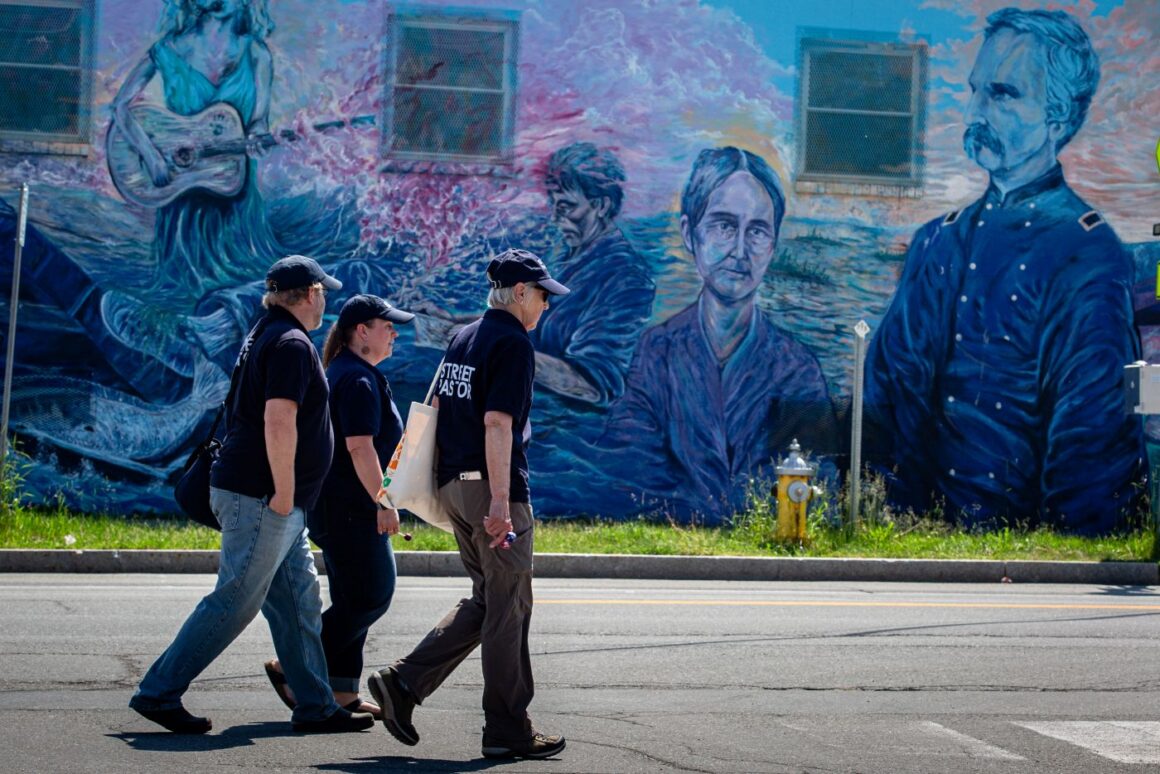
Volunteers wearing navy polos and hats emblazoned with the phrase “street pastor” fanned out across Bangor’s Davenport Park last Friday afternoon, armed with water bottles and lollipops. Roughly 30 homeless people were scattered throughout the park on blankets and chairs, and the six members of the Greater Bangor Street Pastors made a point of stopping to speak — and listen — to each one.
Many of the conversations were brief; others were longer and sometimes meandering. One person shared a story about his family’s connections to the Underground Railroad; another asked for help acquiring a razor to shave. As the group continued walking downtown and along the Penobscot River, another introduced his dog before launching into a discussion about whether the earth is flat. The volunteers listened for a while before moving on.
Spike Brimmer, a member of St. Paul the Apostle Catholic Parish who has been volunteering as a street pastor for the past four years, said the group offers a “ministry of presence,” a friendly ear to those on the street.
“Sometimes people really open up in their hearts; sometimes they just want to be left alone,” Brimmer said. “We respect wherever they are at the moment.”
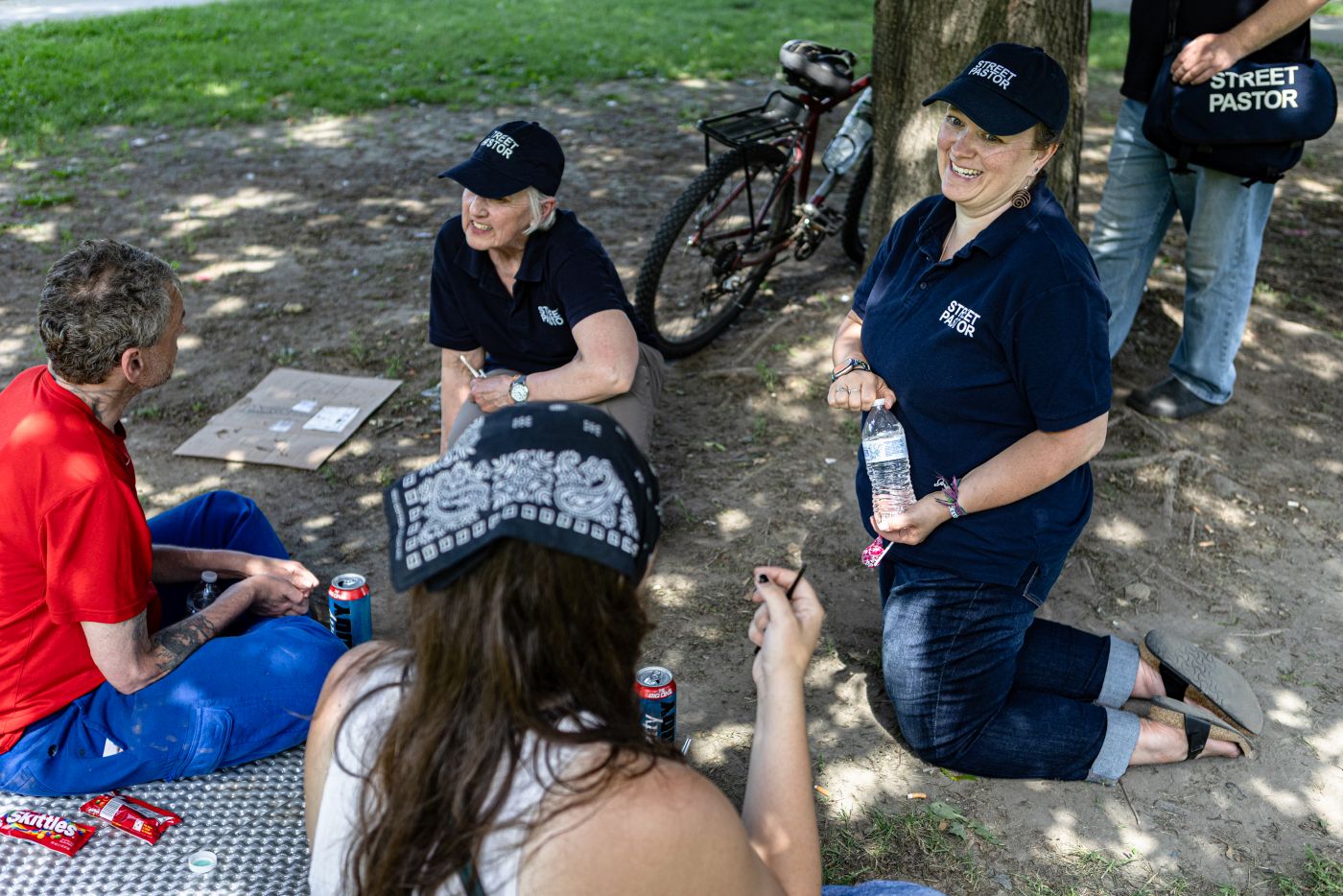
The Bangor group was founded in 2014 as an affiliate of Street Pastors, an organization based in the United Kingdom that describes itself as “the church in action on the street.” The Bangor group is the only active affiliate in the United States, and began with a mission to talk to anyone on the street in need, whether that was someone without a permanent home or someone who wanted company as they walked to their car in the dark. After a hiatus in the early days of the pandemic, the organization has increasingly focused on serving Bangor’s unhoused population as it has grown and moved out of encampments, said chapter coordinator Anna Phillips.
The chapter relies on roughly 20 volunteers from a variety of Christian congregations to go out in the community. While the organization is Christian, Phillips said its focus is on outreach, not evangelizing. Since returning to operations in 2021, the group has expanded from operating once a month to going out every Friday, thanks to new volunteers who follow a rotating schedule.
Phillips has been involved with the Bangor chapter since it formed. In that time, she has watched residents become more aware of homelessness in the city. There were 725 actively homeless people in Penobscot and Piscataquis counties who connected with services that reported data to Maine Homeless Planning this month — more than at any point since March 2024, the earliest available data online. A statewide needs assessment found that the region needs to invest $11.5 million to optimize its support for unhoused people.
The city has shut down three major homeless encampments since 2023, a process that has been complex and controversial.
The Bangor City Council listed creating a comprehensive plan to address homelessness as a top priority this year. And late last month, the city appointed nine members to a new committee tasked with developing a long-term plan to address Bangor’s homeless population.
Pat Kealy, a member of the committee, works for both the Penobscot County Overdose Response Team and Together Place, a peer-run recovery center for people living with mental health challenges and substance use disorders. Kealy was chronically homeless himself and struggled with addiction until seven years ago, he said.
“It took me till I was 41 till I kind of straightened myself out, and that was thousands, tens of thousands of conversations with people,” Kealy said. Now that he’s on the other side of those conversations, he sees talking with unhoused people as a way to build relationships to get them help.
Bruce Hews, Bangor’s homelessness response manager, said the city is still working out the specifics of how the committee will function, but noted it brings together people who have long focused on serving low-income and unhoused residents in Bangor.

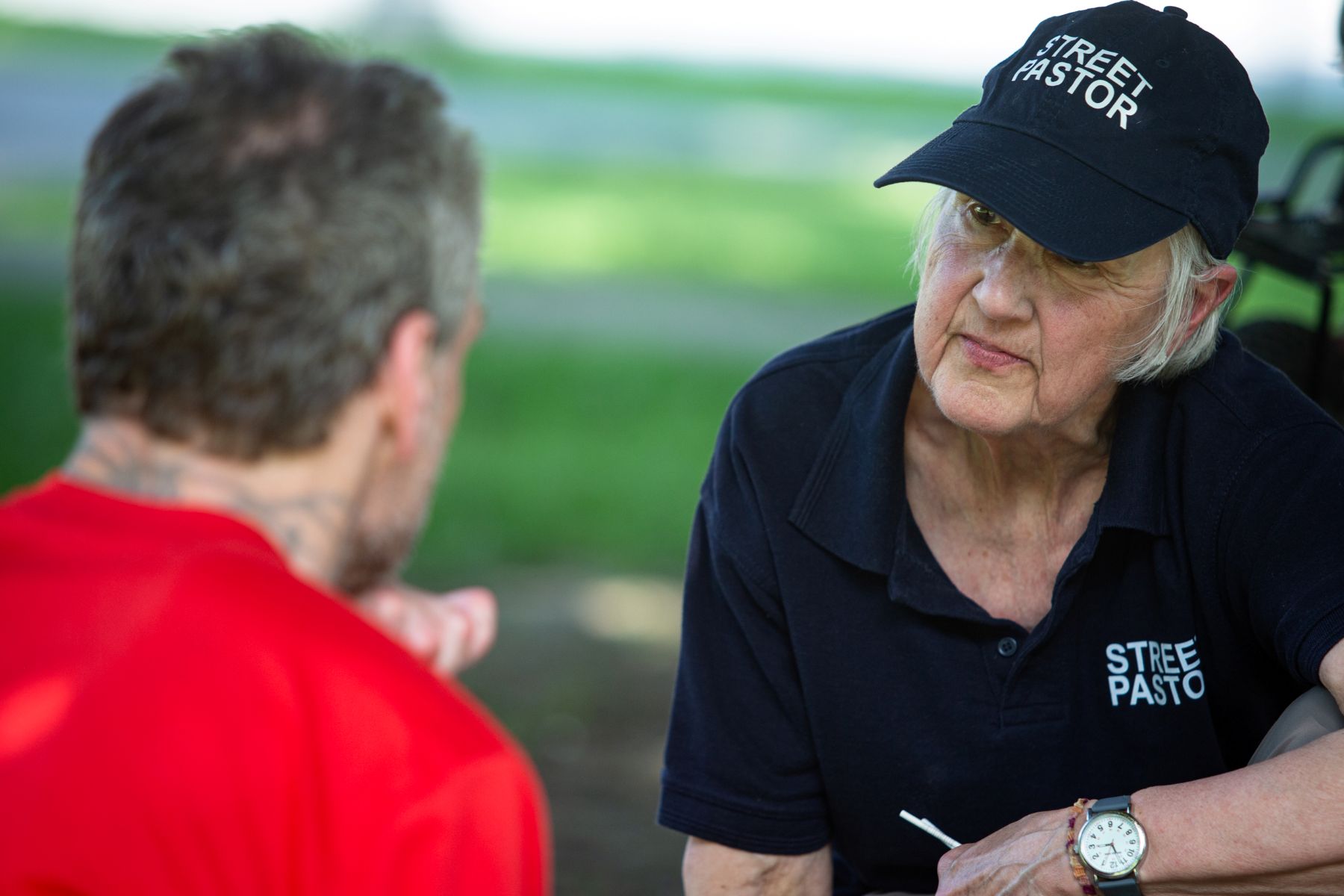
In the meantime, Hews said some people may be more comfortable getting help from secular organizations while others prefer a faith-based approach. Having multiple groups regularly meeting with Bangor’s homeless people helps cast a wide net once people are ready to ask for help, he said.
“Anything that makes a connection with people is helpful,” Hews said. “Whoever we have out on the streets, eventually someone is gonna break through to a person and gain their trust.”
The street pastors group is one of several faith-based organizations working with the city’s homeless population.
The Mansion Church on the corner of Center and Cumberland streets has operated a warming shelter each winter since 2020. Roughly 350 people used the shelter at some point this past winter, said Pastor Terry Dinkins, an increase from 320 last year. The church has room for up to 50 people per night.
Since founding The Mansion Church in 2013, Dinkins has focused on serving homeless and incarcerated people. He estimates that each Sunday service attracts 40 to 60 people, roughly 15 of whom don’t have permanent housing. The church serves a meal after each service.
Dinkins used to be a member of street pastors himself. Now he tends to walk the streets and meet with Bangor’s homeless people on Wednesdays. People are more likely to ask for help from a familiar face, he said.
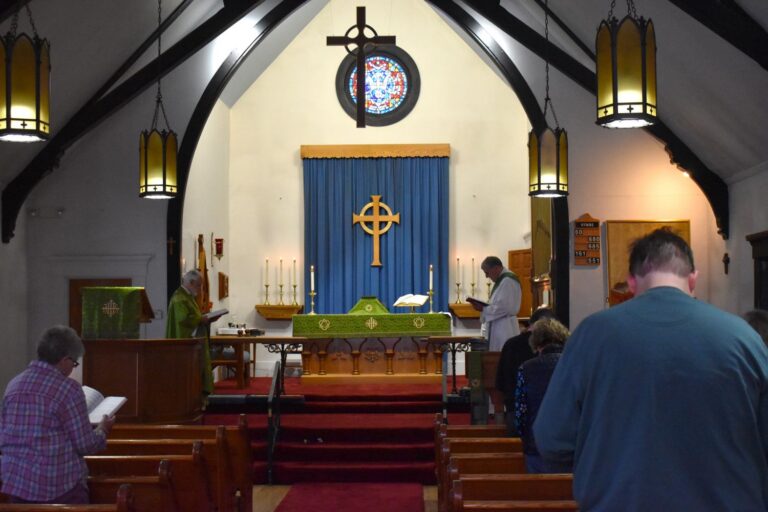
Two blocks away, the Rev. Jarrett Kerbel, pastor of St. John’s Episcopal Church, allowed a group of people to stay on church property this past winter until the city forced them to leave. Since then, he said he and several of his congregants have tried to stay in touch with some of the homeless people who had been staying on church property and help them find stable housing.
Hews, the city’s homelessness manager, said one of the goals in closing encampments across Bangor has been to drive people to seek help at safer facilities such as Bangor Area Homeless Shelter and Hope House Health and Living Center, a low-barrier shelter and medical clinic.
But the shift has also made it harder to find people on the street who need help, said Amelia Hersey, a physician associate and medical director at Hope House Clinic. Hope House staff stay in touch with other community organizations, including faith-based groups, to identify medical needs among Bangor’s unhoused population, she said. Homelessness can be an isolating experience, Hersey said, and groups such as Street Pastors that focus on making personal connections can help meet people’s social and emotional needs.
One of the people the street pastors met in Davenport Park last Friday, Jess, said she has been homeless since she was released from jail in late January. Jess said she has a place to live in Harrington, but as a condition of her case in Adult Treatment and Recovery Court she has to stay in Penobscot County. In the past four months she has cycled through living with her mom, staying at a hospital, sleeping in a warming center, living in a hotel and, most recently, having a bed at Bangor Homeless Shelter across from Davenport Park — her second stint at the shelter.
Moving around so often is “horrible,” Jess said.
Camping in public parks and storing belongings on sidewalks are both prohibited in Bangor, making it difficult for people experiencing homelessness to know where to go if they can’t get into a shelter.
Jess said she had seen the street pastors before. Other people in Bangor visit the park almost every day with food, she said.
“It’s nice when people don’t just stigmatize you right immediately from the start,” Jess said. “There are people that actually care, and then there are other people who are just ignorant and don’t. You get both sides of the coin.”
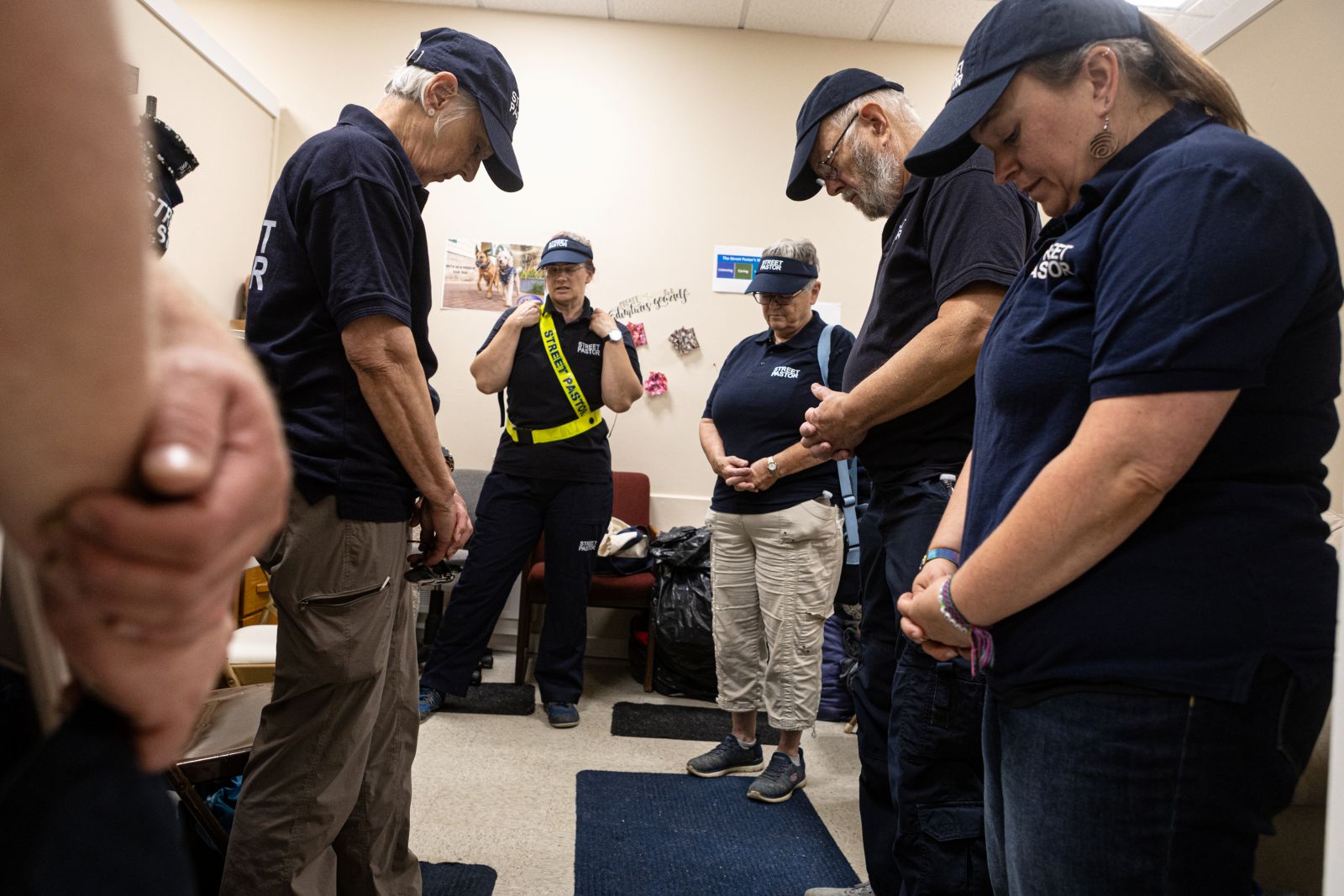
If the conversation turns to prayer, the street pastors will offer to pray with or for the people they’re speaking to.
Each chapter of Street Pastors needs volunteers from congregations of at least four different denominations to form. The Bangor chapter’s current members include both evangelical and mainline Protestants, as well as Catholics.
“We may have some differences in doctrine, but it doesn’t change the fact that Jesus walked with the broken and the homeless and the helpless,” said Eric Jergenson, a volunteer who attends The Rock Church, an evangelical congregation.
As Jergenson and the other volunteers gathered in their rented office space on Columbia Street after making their rounds on June 12, they each shared what they learned from the people they met that day and took notes for next week’s volunteers.
“If somebody else bumps into the same person, they know a little bit of the backstory,” Phillips said. “Sometimes they recognize that we’re different people, and sometimes they just see the uniform and start in the middle of their story. It helps to have a little connection.”