


KINGFIELD — The Kingfield Planning Board met last week to review Bowdoin College’s proposed campsite project, a contentious component being proposed as part of the Finnegan McCoul Woodruff Mountain Center.
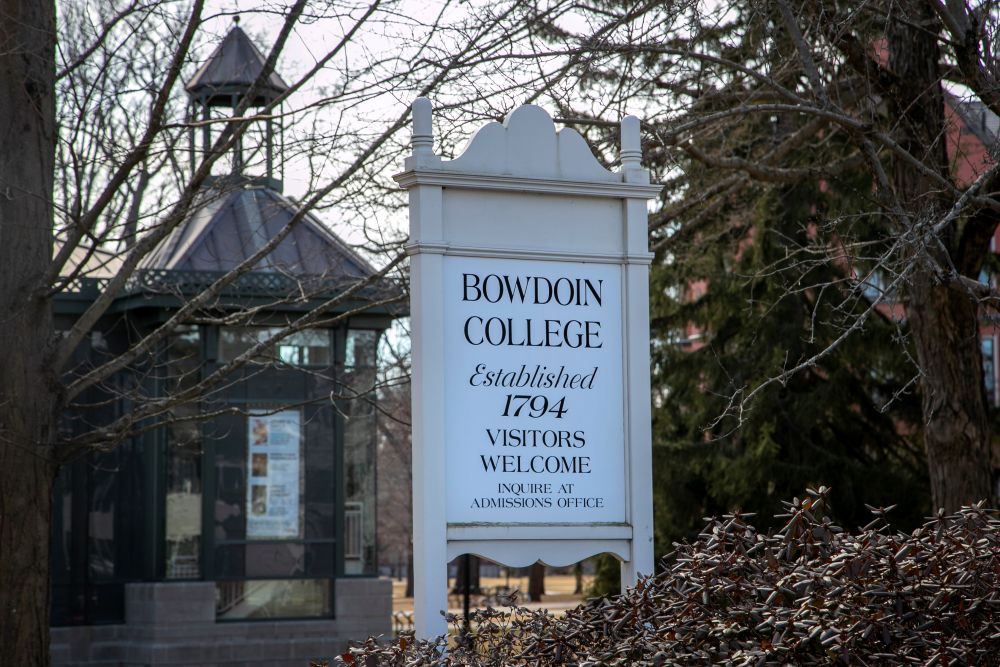
Last April, the Brunswick liberal arts college bought 21 acres in Kingfield for the mountain center, a destination for members of the Bowdoin Outing Club, or BOC.
John Simoneau, director of capital projects at Bowdoin and the manager overseeing design, construction and permitting for the campsite project, attended the meeting.
BOC Director Mike Woodruff also attended, along with Kylile Mason and Tanner Gridden of Sebago Technics, the firm hired to complete the project.
The Finnegan McCoul Woodruff Mountain Center is named for Mike Woodruff’s son.
According to Bowdoin College, Finnegan Woodruff was an avid outdoorsman who grew up in Maine and majored in environmental studies and music. He died in a kayaking accident in November 2021 while attending Lewis & Clark, a college in Oregon, while living in Washington state, where he was completing his Bowdoin degree.
Project plans say the campsite would be chemical‑free, meaning no alcohol or illegal substances would be allowed, and it would follow a 10 p.m. noise curfew. Students who want to use the site must get permission through the BOC, and the site is intended for specific BOC outings that will have a staff member present.
The proposal calls for seven gravel campsites that would allow up to 28 tents, or 112 students, at full capacity. When asked how often the site would reach that number, the Bowdoin Outing Club said it expects about 84 students to use the site in late August and early September for orientation activities. For the rest of the year, use is expected to be closer to 40 students at a time.
“These are trips that are being organized by students who are putting in a lot of effort to be a wilderness leader and are not just … student(s) who (are) on a whim coming up to go camping,” Simoneau said. “We recognize that our activities can have an impact on the environment.”
The project has raised concerns in the community about increased traffic and noise.
Plans for the campsite have been before the Planning Board for months. At last week’s meeting, the board accepted the application as complete, moving it to the next step in the process: a public hearing. Accepting the application as complete does not mean it has been approved.
Community members have raised concerns that access to the outdoor center and proposed campground runs along Route 27 and Iron Bridge Road, a narrow private road. They also note that the proposed site sits in the middle of what has long been a rural neighborhood of about 50 family lots.
The one‑lane bridge used to access the site is in rough shape, and many residents say the turn onto it — and the bridge itself — is already dangerous, even before adding vans of students and a truck hauling kayaks.
Bowdoin is applying for “institutional” use of the land, not for an actual campsite. That designation does not require a study of the bridge. Such a review is typically required when a developer builds on a 21‑acre site.
A “campsite” is defined by a use fee, while an institutional application requires no payment. Some meeting attendees argued that Bowdoin is using the “institutional” category as a broad umbrella that covers everything, rather than as a true institutional use of a campground.
“We (are) looking at your standards for campgrounds in our design, even though the use classification we feel is institutional, but we … cross‑check(ed) all of your campground standards to make sure what we were designing was consistent with it,” Simoneau said.
“This is not just something from your community. We have the same experience in other communities, other than college towns who wrote an ordinance around anticipating a college use.”
The project would require lot owners to pay their proportionate share of road and bridge maintenance and repairs every year. Local taxpayers say that is not fair because the added load is not in their control.
Residents have said they are also deeply concerned about the safety of that stretch of road and the bridge, along with the increased traffic that would result from vans queuing to cross the one‑lane span.
One community member voiced her concern, saying: “I think you’re hearing from all of us that that’s a significant concern. And we feel powerless because we don’t own the road, the bridge. We feel powerless to resolve this.”
Now that the application is complete, it is expected to be the subject of a public hearing May 7, ahead of the Planning Board meeting scheduled for May 12.
Correction: This story was updated April 21 to correct that Lewis & Clark is a college in Oregon, not Washington.