


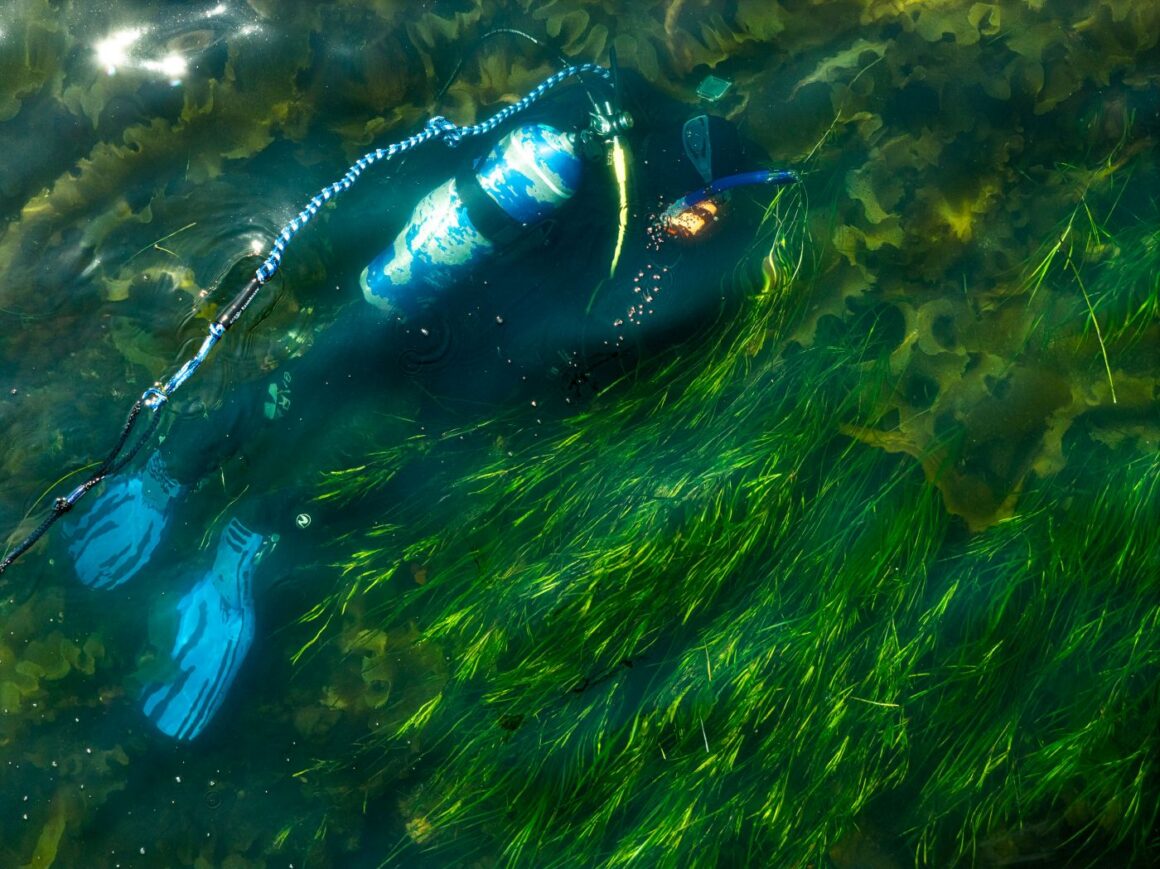
Maine’s seagrass meadows are shrinking and thinning. And this isn’t the only place where seagrass is declining. These underwater meadows off Maine’s coast are part of a global, decades-long pattern of loss believed to be driven by development and human activity on coastlines, nutrient pollution, and climate change.
The decline is a serious problem for the young sea creatures who use these underwater meadows as a nursery habitat, and for the coastal communities that the seagrass helps in myriad ways — improving water quality, storing carbon, stabilizing erosion, absorbing the destructive energy of storm surges and more.
Scientists have estimated that, between the late 1800s and early 2000s, the world lost about 29 percent of its known seagrass areas. And this loss is ongoing. More recently, using satellite images, researchers estimated that, between 2019 and 2024, the world lost about 4 percent of its seagrass areas.
In some places, the changes have happened much faster. Mapping by the Maine Department of Environmental Protection shows that many parts of the state’s coastline have lost well over half their seagrass acreage just in the past two decades.
There’s also hope. Seagrass can come back quickly when the conditions are right. And people have started to intervene and help. This includes Maine, with conservationists from a variety of nonprofit organizations, universities and government agencies starting restoration projects in Southern Maine’s Casco Bay and Great Salt Bay on the Damaricotta River.
While seagrass restoration is new here, Mainers can look to successful projects elsewhere for lessons on how to make it stick. One of the longest-running seagrass conservation efforts is in Chesapeake Bay and in the coastal lagoons of Virginia and Maryland.
The region saw major declines beginning in the 1960s, as nutrient pollution from farms and wastewater washed into the ocean and caused algal blooms that shaded the seagrass.
“These are plants,” said Chris Patrick, an assistant professor at the College of William & Mary’s Virginia Institute of Marine Science who manages the Chesapeake Bay aquatic plant mapping program. “They need light to reach the bottom.”
Over the years, people made an effort to control nutrient pollution and improve water clarity. This has helped the seagrass significantly by allowing it to grow further offshore, in deeper water. As climate change warms the ocean, scientists expect the availability of deeper, cooler habitats to become increasingly important for seagrass, which can only withstand so much heat.
In addition to tracking the seagrass in their region, researchers from the Virginia Institute of Marine Science also pioneered a restoration method involving collecting and spreading the plant’s seeds. They have helped restore more than 12,000 acres of eelgrass, a type of seagrass, to Virginia’s coastal lagoons over nearly 30 years.
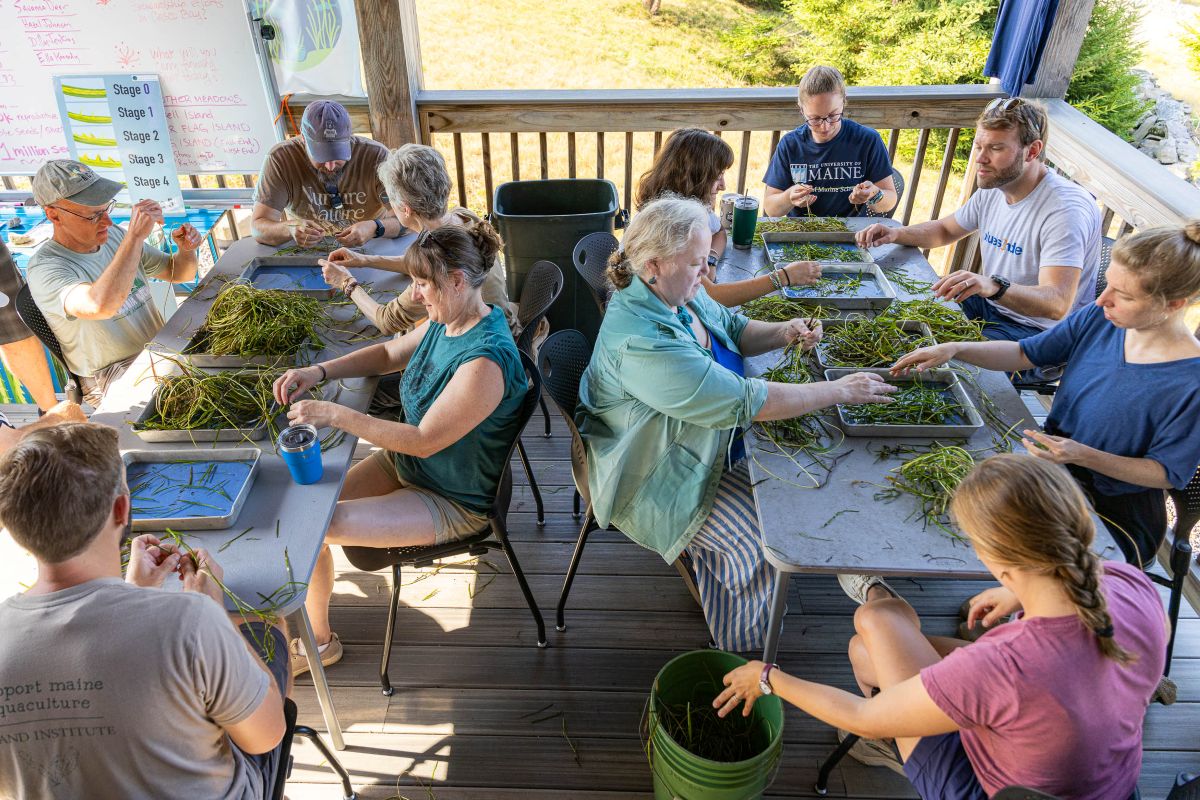
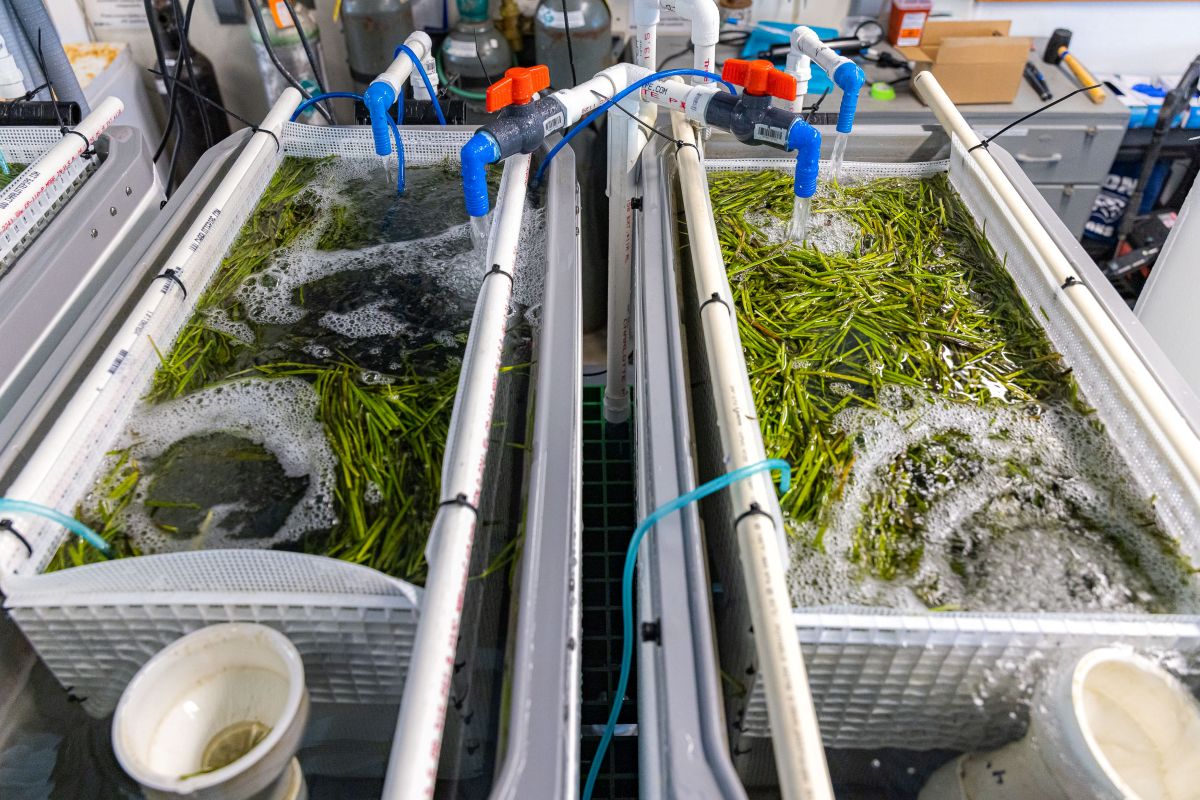
This effort is similar to what Mainers are trying to do now in Casco Bay, where scientists are monitoring the surviving seagrass, studying its environmental conditions and experimenting with seeding new meadows from the healthy ones.
Asked what tips he has for others attempting to restore seagrass, Patrick said selecting the right sites is incredibly important.
“Established meadows can actually exist in conditions that are quite a bit worse than the conditions required for establishment,” he explained.
Often, the “single best thing” people can do for seagrass is to improve water clarity, he said. That can involve upgrading wastewater management plants, improving septic fields, and encouraging farmers to limit the fertilizer and waste that runs off their fields and feedlots.
Patrick also emphasized the need for sustained effort over many years. The first years of a project are likely to be full of challenges and failures, he said, and restoration practitioners shouldn’t expect success overnight.
“Seeding is not a silver bullet. It’s not magic. But it is the perfect tool to use when the conditions are right, but there’s no population there,” he said. “And that’s the case when you step in and you can have a really big impact.”