



FAIRFIELD — Voters have approved $2.7 million to complete the town’s annual budget after rejecting the funding in two previous attempts.
The three measures — $1.21 million for salaries and operations, $1.21 million for tax relief and $280,000 primarily for capital improvements and equipment — passed Wednesday after failing in June and September.
Officials said they will draw the new allocations, along with $1.15 million approved in June, from the town’s undesignated fund, a reserve account built from unspent money, investments, and other revenues.
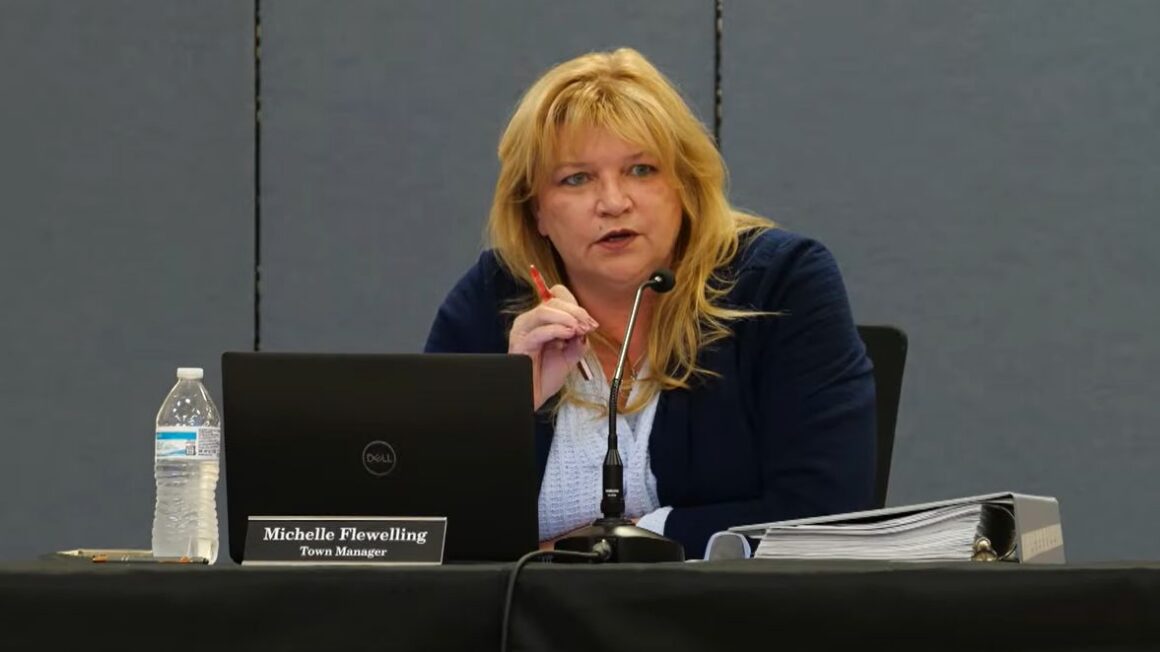
Town Manager Michelle Flewelling said the reserve fund, now at $8.2 million, has grown steadily since facing a deficit in 2011. The town draws from the account to offset property taxes and balance the budget, Flewelling said, and has strategically grown the account “to make sure we don’t put the town in a catastrophic position.”
Residents voiced concerns over property taxes throughout the meeting, with several hoping a reduced property tax rate, also called the mill rate, would offer relief.
Town Council Chair Timothy Martin said next year’s tax rate is expected to drop from $19.40 to about $14.30 per $1,000 of assessed valuation under the new budget.
Flewelling cautioned residents that a lower mill rate does not necessarily mean lower property taxes.
Flewelling said Fairfield is conducting a state-required property revaluation this year because local tax assessments have fallen out of line with current market values.
“When your assessment ratio, which is your deviation between market value and assessed value, dips below 70 percent, the state of Maine can start penalizing you,” Flewelling said.
Under state law, Maine cuts municipal funding when that gap grows too wide.
Flewelling cited the homestead exemption, a standard tax deduction for Maine homeowners on primary residences, to show how those state reductions impact individual tax bills.
“The homestead exemption value on your property taxes should be $25,000,” Flewelling said. “That is because we’re not at 100 percent of assessment value.”
In an interview with Monitor Local, Martin said Fairfield’s 85 percent assessment ratio now limits homestead reimbursements to $21,250 per homeowner. He said he expects the town to finish the revaluation by the end of the fiscal year, reaching 100 percent by late June.
Predicting how long the town can maintain that 100 percent ratio remains difficult because market forces drive the calculation, Martin added. Rapidly rising home prices, like those in recent years, could quickly widen the gap between assessed values and market prices.
Fairfield resident Larissa Larrabee asked the council to confirm whether tax bills will likely rise despite the lower mill rate.
“If assessment is going up, people’s tax commitment bill is going to go up, correct?” Larrabee asked.
Flewelling confirmed that tax bills will likely increase because of the revaluation, but noted that using $1.2 million from the undesignated fund offers significant relief.
“When we did the calculation,” Flewelling said, “the average property was going to see anywhere between a $600 and $1,000 increase this year. Using this additional funding will probably put you somewhere closer to $100.”
Flewelling said the town will draw the full $3.85 million for the current fiscal year from the undesignated fund, with last week’s $2.7 million vote building on the $1.15 million approved in June.
The Town Council’s next meeting is scheduled for 6:30 p.m. Wednesday, Oct. 28.
Kevin Mann is a Community Reporting Fellow receiving training through the Journalism New England Career Lab to do civic reporting that provides people in towns across New England with the information they need to be engaged in their community.
Editor’s note: This story was updated on Oct. 23 to reflect the balance of Fairfield’s reserve fund is $8.2 million.