


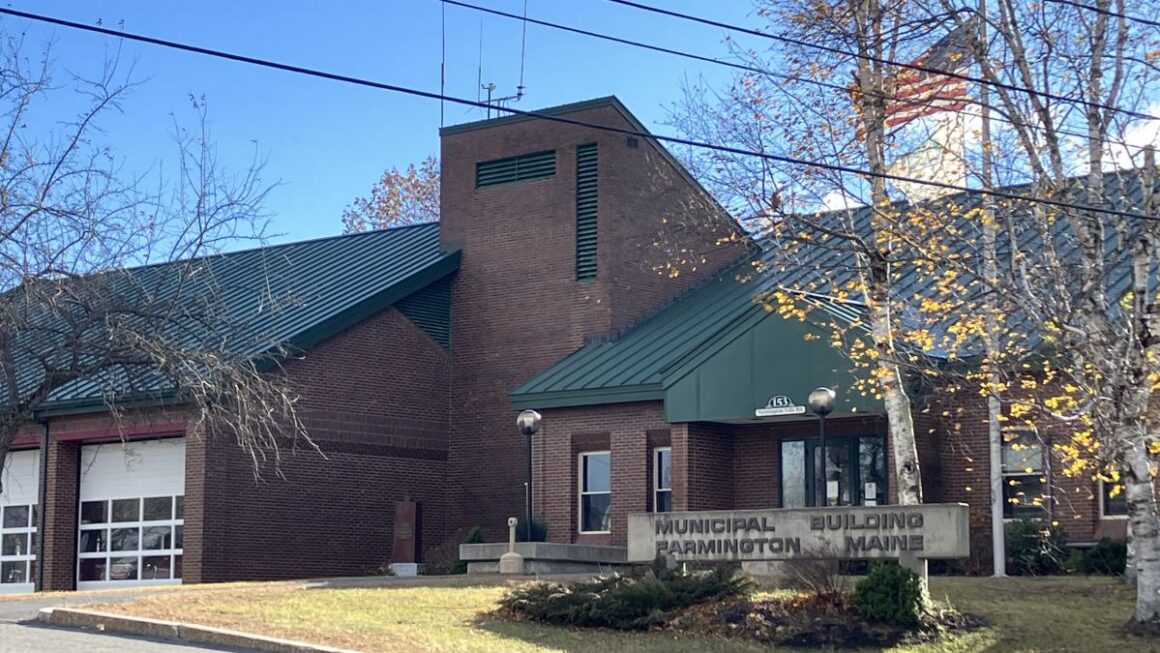
FARMINGTON — The Planning Board approved a permit Monday for a nearly 1‑megawatt solar power project on Farmington Falls Road.
USS Hillstrom Solar LLC, a subsidiary of US Solar in Minneapolis, is developing the project. The company operates about 90 similarly scaled community solar projects nationwide, according to Derek Papagianopoulos, a project development manager.
The site is designed to produce 995 kilowatts of alternating‑current electricity using ground‑mounted solar panels that rotate to face the sun throughout the day.
A 20‑foot‑wide gravel road will provide access to the 8.6‑acre site, ending at a gate. The project’s transformer and other power‑management equipment will sit on a concrete pad, and an 8‑foot‑tall fence will surround the equipment and the site’s solar panels.
An underground line will run to as many as three poles, allowing the project to connect to lines along Farmington Falls Road.
Papagianopoulos said US Solar already has an interconnection agreement with Central Maine Power Co., and the project’s energy will go directly into the grid.
The project sits more than 250 feet from the river to meet Shoreland Zoning requirements.
It lies outside the 100‑year flood plain, according to Federal Emergency Management Agency maps. Some who attended the meeting questioned the designation, pointing to the 2023 flooding, which they said affected the area.
The project includes a decommissioning plan filed with the Maine Department of Environmental Protection and a bond. If the project is removed, the developer must restore the site to its current condition.
Ken Secor owns the 25‑acre lot across Farmington Falls Road from the proposed site. The property is home to The Farmhouse Beer Garden. He asked the board to consider the development in light of the town’s comprehensive plan, which he said conflicts with the project.
Secor said the beer garden sits about 35 feet above the solar farm, making it difficult to screen.
“My argument is that an appropriate use does not destroy the utility of a neighboring established business,” Secor said, referencing language from the town’s comprehensive plan. “Guests at a celebration of life or a wedding cannot adequately enjoy the space if they are looking down into a sea of glass and metal.”
Secor said the site would need a berm and indigenous trees to visually buffer it from the beer garden.
Gail Hillstrom, who owns the property with her husband, said they have always tried to be good neighbors and have allowed people to camp and otherwise use the land. She said the property is no longer useful for farming or generating income to offset its tax burden.
“We would also like to be good neighbors,” Hillstrom said. “But, however, we really ask that the consideration be that our responsibility is not totally the view that supports their business. It’s our responsibility to be good stewards of the land and to take care of it, and that’s what we intend to do.”
The project would allow the Hillstroms to preserve the land for their grandchildren, she said. Other residents expressed concerns about their own viewsheds and property values, the potential for flooding on the site and whether the benefits of the project outweighed the costs.
A number of attendees and board members referenced other solar projects in town, particularly the 490‑acre project operated by NextEra Energy Resources on Farmington Falls Road.
Those who spoke about that larger solar farm cited insufficient visual screening, failed or inadequate plantings and a lack of community benefit, among other issues.
Planning Board members said their role in the process was to enforce the town’s ordinances rather than make value judgments on whether projects should proceed.
“Our job is to decide if the application process meets our ordinances,” board member Gloria McGraw said. “Just because we don’t like (a project) personally doesn’t mean we can vote it down. We have to base it off of the ordinances in existence.”
The Planning Board unanimously approved the permit with conditions that US Solar submit an amended site plan with additional screening and that a visual simulation be conducted from the beer garden. The approval also includes a three‑year performance guarantee to ensure that the local trees planted to screen the project become established.
The project still must go through a Tier 3 review with the Maine Department of Environmental Protection because of wetlands on the site — the most stringent level required in the state — and US Solar must also obtain permits from the U.S. Army Corps of Engineers and the Maine Department of Transportation.
An archaeological survey for the Maine Historic Preservation Commission is also required.