


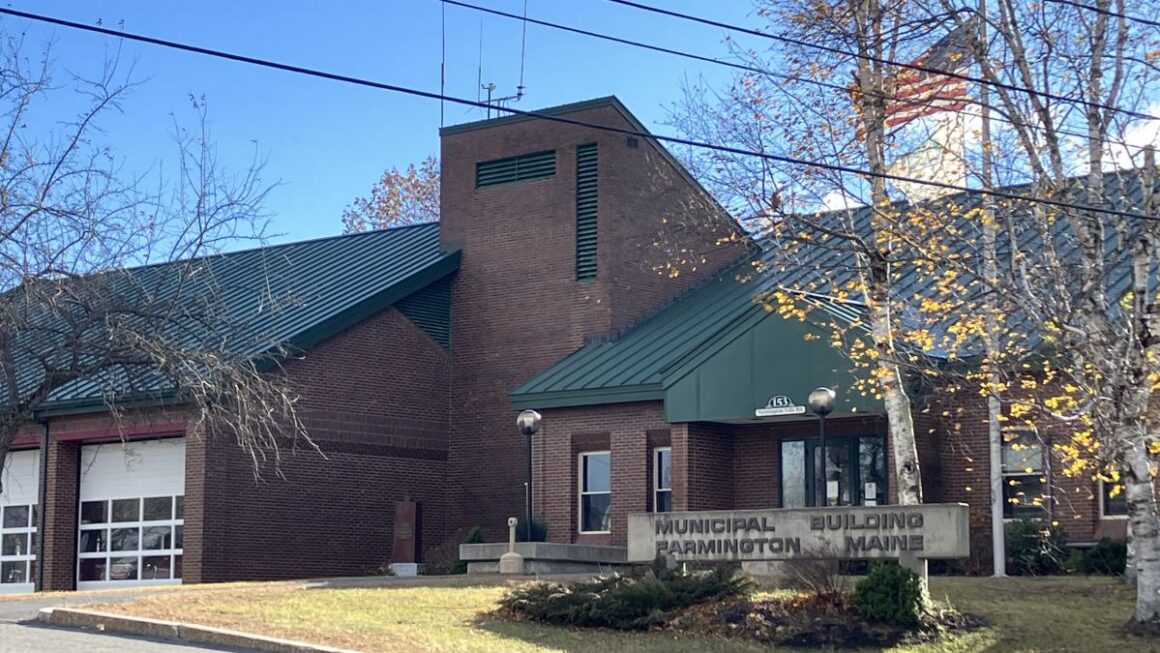
FARMINGTON — Early spring is budget season for school boards and town committees as local governments set priorities and plan for the year ahead. In Farmington, town officials are preparing for two town meetings scheduled just weeks apart.
The schedule reflects Farmington’s shift from a budget based on the calendar year, which runs Jan. 1 through Dec. 31, to one based on the fiscal year, which runs July 1 through June 30, the timetable used by school systems and by county and state governments.
The advantages of a fiscal year over a calendar year have much to do with the schedules of other governments, officials said.
In the past, Farmington has set its budget at the annual town meeting in March, leaving nearly a quarter of the year gone before officials know how much they can spend.
Furthermore, county and school budgets — along with municipal spending — form the basis of the tax rate, but they are not set in March. Because those governments operate on a July-to-June fiscal year, Farmington tax bills have reflected half of the previous year’s and half of the current year’s school and county budgets.
Other major expenses, including MaineHealth Emergency Medical Services, the Maine Public Employees Retirement System, or MainePERS, and fuel contracts, also follow a fiscal year.
Tax bills are usually issued in October, leaving Farmington to rely on its fund balance for the first 10 months of the year. In each of the past three years, the town’s checking account has been depleted by September.
Farmington also surveyed about 450 municipalities in Maine and found that slightly more than half favored the July‑to‑June fiscal year. Fewer than 30% still base their budgets on the calendar year, while about 9% follow other fiscal schedules, typically changing over in the spring.
In Franklin County, more than 60% of the 21 municipalities base their budgets on the calendar year, but the larger communities of Wilton and Jay follow a July‑to‑June fiscal year.
Switching from a budget based on the calendar year to one on a July‑to‑June fiscal year leaves a six‑month gap. The 2025 budget ended Dec. 31, and the 2025‑26 budget does not begin until July 1, 2026.
To bridge the gap, the Select Board has proposed a six‑month transition budget for voter approval in March. A second town meeting would follow within weeks to adopt the next year’s spending plan.
In Farmington, the Select Board and Budget Committee review proposed expenditures and make recommendations that appear with each town meeting warrant article. On Jan. 13, the board voted to add Bill Crandall and Christina Bobrow to the committee, restoring it to full strength except for a few alternate seats.
The review process began this week and is expected to continue into early next month. The Select Board plans to approve the town meeting warrant March 10, with voters set to decide the transition budget at a March 23 meeting.
The proposed six‑month budget totals $5.9 million, 47% less than the 2025 plan. If approved at the town meeting, it would set the property tax rate at $5.44 per $1,000 of assessed valuation.
That would be slightly more than half the $10.50 property tax rate the Select Board approved late last year.
However, the town actually needed a rate of $11.70 to fund the 2025 budget. An error in the homestead exemption figure provided by the company handling the property revaluation led the board to set the rate too low.
The board reset the rate at $10.50 and covered the $1.3 million shortfall by liquidating an investment account and securing voter approval to use $700,000 from the undesignated fund balance.
While the $5.44 rate in the proposed transition budget is more than half of the $10.50 rate, it is 46.5% less than the $11.70 rate.
Town expenditures in the proposed budget are down 55.8%, but the total appropriation is higher because of county and school costs, which add $3.35 million for the first half of 2026.
Of the $5.9 million in proposed appropriations, 43.1% would cover town expenses, 46.6% would go to Regional School Unit 9 and 10.2% would help fund Franklin County government.
The budget includes a 45‑cent hourly raise for all employees to match the state’s minimum wage increase, along with a 9% hike in health insurance costs. Utility expenses are also rising for fire hydrants and electricity.
The transition budget adds only a few new items: a part‑time Farmington police position funded by savings from two vacancies, plus about $6,000 for comprehensive plan work, adding the Parks Department to the town’s copier contract and installing security cameras at the Community Center.
The transition budget anticipates a 55.6% drop in nontax revenue, partly from declines in police and recycling income and partly from timing issues. For example, Farmington receives Local Road Assistance in November, so those funds fall outside the budget ending June 30.
With an average home value of about $300,000 in Farmington, the typical owner would pay a $1,633 tax bill under the six‑month budget, before exemptions.
Farmington previously issued a single tax bill in October. Beginning with the transition budget, residents will receive two bills each year — one due in October and another in April.
The town plans to approve the transition budget March 23 and issue a tax bill due in April or May. To ease the shift, that bill will carry no interest or initial penalty for late payment.
As residents weigh the six‑month budget in March, the Select Board and Budget Committee will already be working on the 2026‑27 spending plan, officials said. That full‑year budget is expected to reach the boards in early February.
On Jan. 27, the Select Board is expected to discuss when to hold the second town meeting.