



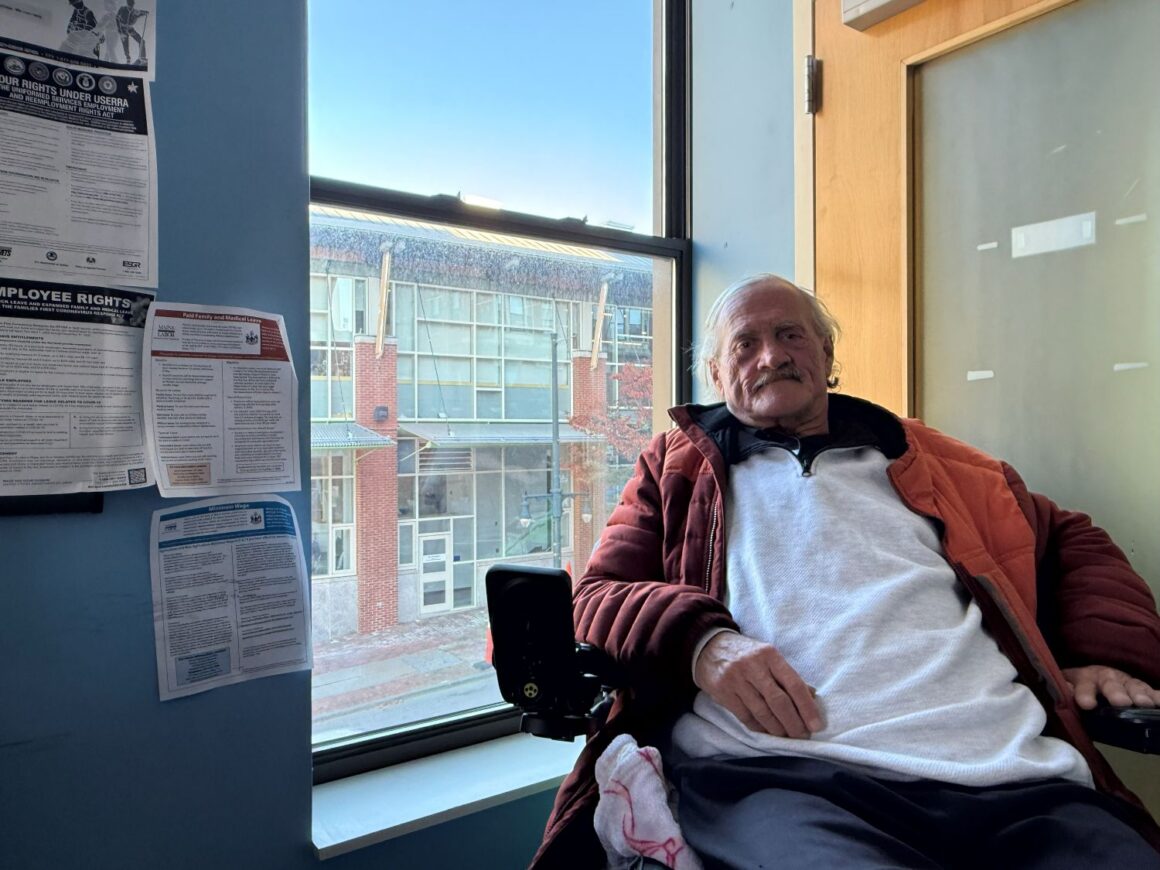
Robert Demmons is a single-issue voter. Whereas many Mainers might be motivated to weigh in on the makeup of the U.S. Senate or determine the state’s next governor, he says his focus is more local: How Portland’s city council candidates can improve the day-to-day lives of the homeless community he is a part of.
Demmons, 69, has been homeless for seven years, three of which he has spent in Portland, he said. After several moves and stays at various shelters — including getting kicked out of one city shelter for criminal trespassing — he is hoping to get into an apartment within a month with the help of Preble Street’s Rapid Re-Housing team. He said he has been frustrated in particular by the debate over where to put a warming shelter this winter.
“We need people in the right places that will care for the unhoused,” he said. “I mean, they’re out there freezing to death; they’re starving to death.”
His lack of a permanent address did not stop him from voting. In Maine, homeless people can vote even if they have a non-traditional address such as a park bench. Instead of providing traditional residency documentation, they can submit a description of their place of residency to their municipal clerk under oath. Demmons did so last Wednesday, swearing an oath before a clerk at Portland City Hall that he lived in a shelter before casting his ballot on the second-to-last day of early voting.
But unhoused people still face many barriers to voting that range from transportation challenges to difficulty getting time off from work. A 2012 study from the National Coalition to End Homelessness found only one in 10 homeless people vote each year. Helping people overcome these challenges is a key focus of groups such as Homeless Voices for Justice, a nonprofit that helps educate the unhoused about their voting rights and provides transportation from Preble Street’s three Portland shelters to polling places on Election Day.
The group has worked to help homeless people understand their right to vote and how local politics can affect their daily lives this year as Portland, Bangor and Brunswick have had prominent debates over social services and policies toward the unhoused. In Portland, conversations about homelessness often overlap with issues related to addiction and mental health, and the city has been wrestling with how to approach public safety concerns alongside finding a warming shelter space. Mayor Mark Dion has proposed limiting panhandling in certain areas and called for secure treatment centers as an alternative to jail sentences.
“These are not folks who are reading the newspaper,” said Jane Dawson, a community organizer for Preble Street, a homelessness service provider and the fiscal sponsor of Homeless Voices for Justice. “They might not know who is running, might not know where to vote on Election Day. But they are engaged in the issues that affect them.”
Dawson said the first phase of her work began in May before the primary and ran through Oct. 13, the last day people could register to vote online. She and others set up tables around the city to talk to unhoused people and collect voter registration cards. She said she expected most homeless voters to register to vote on Election Day, which is permitted in Maine.
The second phase involved talking about candidates, the issues and helping people make a plan to vote. This year, Homeless Voices for Justice hosted a candidates forum for the Portland City Council and put out a voter guide that covered the city council races, the 1st Congressional District race and the governor’s race. The group does not endorse candidates but asked candidates about their stances on homelessness issues.
Preble Street is largely focused on the Portland area, but does some work with people across the state and opened a low-barrier shelter in Bangor last year. At the moment, its voter outreach efforts are focused just in Portland, said spokesperson Danielle Smaha.
Cumberland County has the largest population of unhoused people in the state, according to the 2026 Point In Time survey, which attempts to chronicle the number of people who are homeless in a single night. Most of them likely live in Portland, which has a higher concentration of shelters and mental health and substance use services than other cities.
Marcy Thompson, the vice president of programs and policy for the National Alliance to End Homelessness, said there are unique problems that can arise from being homeless that can prevent people from voting. People may lose their IDs if they are living in a tent encampment that gets swept by police. Or they may be worried about making it back in time to meet a strict shelter curfew if they go to vote after work.
The National Alliance to End Homelessness recommends providers try to be flexible and offers a toolkit to help get homeless people to the ballot box.
Still, Thompson said it can be difficult to drive home the importance of voting when a person does not know where their next meal is coming from.
“We know that people who are experiencing homelessness are both currently experiencing a tremendous amount of trauma and most likely have trauma in their past, so they’re in survival mode,” she said. “The election is probably not front and center for them for a variety of reasons.”
That’s how Richard Long, who is staying at the city’s emergency shelter on Riverside Street, feels. Homeless on and off since he was 13, he came to Portland a year and a half ago from New York after he heard about the shelter services here. In an October interview, he said he has never voted and did not know how he would do so in Portland. He said he was not planning to do so in November.
“I’m not connected to any of that,” he said, referring to politics. “I’m not really connected to anything.”
But Demmons, who is staying at Elena’s Way, was excited to vote and has lots of ideas about what the city could do to help homeless people, including looking at the former Renys storefront on Congress Street as a space for a winter shelter, building a tiny home village with bathroom and laundry amenities, or providing more public bathrooms.
“There’s a lot of stuff they can do to help people, to make it a little easier,” Demmons said.