




Max Dupuis lay face up on the floor while two adults pinned down his arms and a third adult held down his legs. The 10-year-old boy was being restrained by the staff at the Eslie J. Parquette School in Saco, a special purpose private school for children with intellectual disabilities and behavioral challenges run by the mental health nonprofit Sweetser.
On that day in 2021, Max hadn’t wanted to leave art class. His friend hadn’t either. Staff told Max and his friend they could be rewarded if they went to their academic classrooms as directed, but the two weren’t swayed. Instead, they tried to leave the school. Max climbed on the tables and “attempted to use a tool in the art room as a weapon,” according to an incident report. Staff intervened, grabbing Max by his armpits and removing him from the room. He tried to punch and kick them. They held him down for five minutes.
Over the next two hours, Max exploded. He ran out of the school building. He threw things. He punched and kicked people. Staff restrained him for an additional 54 minutes.
Maine’s 45 special purpose private schools, run by 23 different organizations, are presented as a solution for kids who struggle in public school. While some kids thrive in the specialized schools, others, including Max, have found they are no better off and are routinely subjected to punitive discipline known to harm children.
Special purpose private schools provide a place for public schools to send students when they feel they can no longer adequately serve them. But there’s a trade-off: Public schools have to foot the bill for the private schooling, which averaged $80,000 per student in 2025, putting additional pressure on school budgets and taxpayers.
In recent years, it’s a deal public school districts have made more often. Enrollment in special purpose private schools has risen dramatically over the past decade. Costs have climbed even more. The number of students attending special purpose private schools has increased by about 40 percent over 10 years, and spending has more than doubled, according to data from the Maine Department of Education.
Yet their success is mixed. Max and his family said the special purpose private schools he attended caused more harm than good.
Under federal law, school districts must teach students with learning disabilities and do so in the least restrictive setting possible. But determining that environment is rarely straightforward.
More than a dozen lawyers, educators and advocates told The Maine Monitor that many public schools in Maine lack the capacity or expertise to manage the most challenging kids themselves. As the number of students with disabilities and instances of challenging behavior rise, they said, schools are overusing the relief valve of special purpose private schools.
Today, Max is 15. He creates intricate Lego structures, goes fishing, plays video games, builds forts with his friends and spars with his parents over curfew. He attends public school and hasn’t been restrained or secluded in more than two years.
But his path was traumatic and left his parents feeling abandoned by Maine’s school system.
One day in first grade, Max, then 7, made a paper airplane. His teacher at Saco’s Governor John Fairfield School told him it was inappropriate, and it was thrown away, according to an incident report. Max “began being disruptive,” the report stated, and the teacher called for backup. He was standing on a radiator throwing small items at his classmates when two education technicians arrived. They took him to the “quiet room,” an unfurnished 6.5-by-10-foot space, where he remained for 15 minutes.
From the start, Max was a challenging kid, said his mother, Angela Dupuis of Saco. She described the work of getting Max to nap as a toddler as “three-plus-hour standoffs.” Later, when she told him “no” or gave him timeouts, he simply refused to listen.
Angela and her husband, Steve Dupuis, found effective ways to work with Max. But school proved challenging. He wouldn’t put his shoes in the correct place or do classwork when asked. He didn’t behave as expected.
For six years, starting in first grade, life for Max and his family unfurled into an overwhelming battle to help him as his mental health deteriorated and his behavior worsened.
“I didn’t know when this would end or if it would ever end,” Angela said.
During that time, Max enrolled in five schools: his district elementary schools and three special purpose private schools. He had hundreds of altercations with school staff, his parents and police. Therapists, behavioral specialists, special education specialists and psychologists evaluated him. He received diagnoses of emotional disturbance, anxiety, depression, attention deficit hyperactivity disorder, oppositional defiant disorder and post-traumatic stress disorder from his experience at school.
He was prescribed a dozen different medications, made multiple trips to the hospital and missed out on years of academic learning and opportunities to socialize.
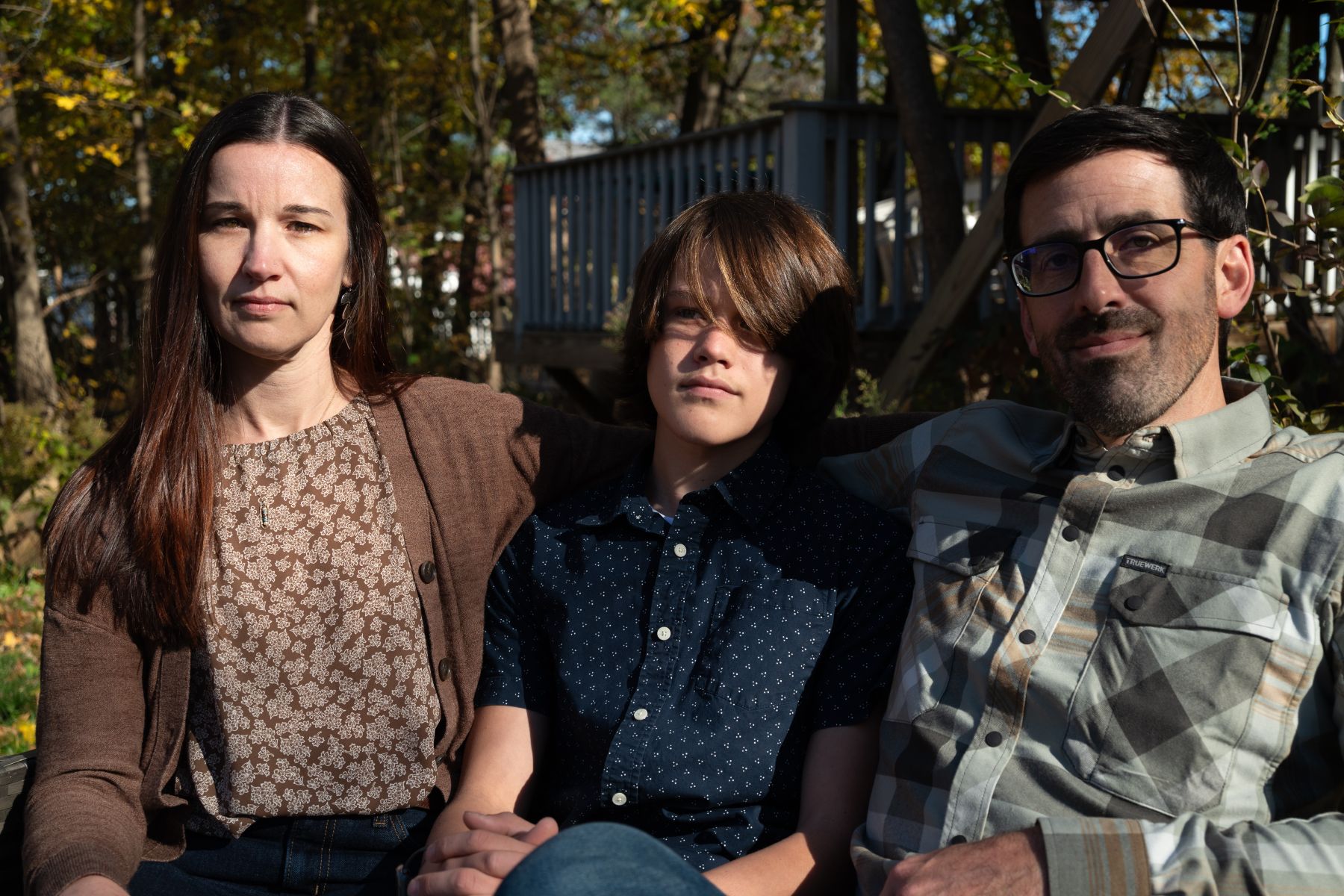
In those six years, school staff restrained or secluded him more than 200 times, forcibly holding him down for a total of 14 hours, sometimes by as many as four adults, according to 246 pages of incident reports reviewed by The Maine Monitor.
When kids are acting aggressively or running away, they’re often having automatic fight-or-flight responses they can’t control, according to psychologists and other experts. Their brain is telling them they are in danger, and they are reacting. Children in this state of extreme distress often cannot hear what others say, reason their way through a situation or ask for help.
By the time children reach the point of crisis, physically restraining or isolating them might prevent others from being injured, but it compounds children’s distress and can lead to serious long-term emotional harm.
Many kids who are subject to restraint and seclusion already have a history of trauma, said J. Stuart Ablon, a child and adolescent psychologist at Massachusetts General Hospital and an associate professor at Harvard Medical School. Being locked in a seclusion room or held against their will retraumatizes them, he said, causing their brains to spiral out of control and leading to long-term developmental damage. In turn, this damage makes it harder for them to develop the skills — including regulating their emotions, managing frustration and navigating social situations — to behave as expected.
“It’s a vicious cycle,” Ablon said.
Instead of restraining and secluding kids, educators need to proactively understand what might cause children to escalate, said Ross Greene, a clinical child psychologist in Freeport. Educators can better avoid crises if they identify, discuss, change or temporarily remove expectations that children are struggling to meet.
The Saco School Department said staff use restraint and seclusion only as a last resort when students pose a danger to themselves or others, and when less restrictive interventions have failed or are inappropriate.
But in 2021, in response to a complaint, the U.S. Department of Education’s Office for Civil Rights stated it had concerns about the Saco School Department’s restraint and seclusion of 14 students, including Max, between 2017 and 2020. The agency found that the district failed to provide students with an adequate education by repeatedly restraining, secluding and sending them home early. It also found that the district failed to assess how its treatment of children affected their education and to accurately report restraints to the government.
For Max, the upheaval resulted in him spending less than half of each academic year in school from third through sixth grade. Angela, a cognitive behavioral nurse practitioner, reduced her work hours and eventually took two years off to care for him. She and Steve, a master locksmith, borrowed money from family and took out a home equity loan to cover their bills.
Max’s first-grade pickup took place in the cafeteria. Most days, as other students headed to their parents alone, Max’s first-grade teacher would walk him to Angela and share concerns about his behavior. As the year went on, Angela began to dread pickup.
“I would try to be neutral, positive and appreciative,” she said. “I wanted to prove I was a good parent.”
By January of Max’s first-grade year, when Max was 7, Angela and Steve had switched into high gear. They communicated regularly with his teacher, principal and other school employees, according to copies of their emails. They read books and talked to experts. They had Max professionally evaluated and worked with the school to create an individualized education plan to support him.
But from early on, Angela and Steve felt at odds with the Saco school district.
They tried to collaborate, they said. They told his teachers what worked best for him at home: speaking to him like an adult, helping him assess why certain tasks were hard and altering activities so he would readily participate. But Angela and Steve got the sense that the school district believed Max, not the district’s tactics, needed to change.
“There was never any self-reflection on behalf of the adults,” Steve said.
Some of the district’s practices, such as helping Max name his emotions, were helpful, Angela and Steve said. But others, such as offering rewards and closely tracking his behavior with daily report cards, caused Max to temporarily repress his emotions and did not address the root causes of his behavior.
Saco School Department Superintendent Jeremy Ray said the district could not speak about specific students due to federal privacy laws.
Behavior is a form of communication, mental health professionals said.
“It’s a child’s way of saying, ‘Something is not right in my world,’” said Carrie Woodcock, executive director of Maine Parent Federation, a disability rights group.
Schools’ reward-based behavior management approaches assume students can behave as expected but lack the will to do so. But in reality, children may be acting out because they can’t cope with their anxiety and frustration.
“Being able to manage and control your behavior requires a lot of different skills,” Ablon said. “Not all kids develop those skills at the same rate as their peers.”
Many Maine teachers lack the training to help kids safely and calmly deal with their emotions. Fewer than a third of teachers received any behavior or classroom management training during the 2022 to 2024 school years, according to a Maine Education Policy Research Institute report. Without adequate coaching, the same report warned, educators are more likely to rely on punitive practices, including restraint and seclusion.
At the same time, school staff fear for their own safety. Up to 40 percent of Maine teachers have received a minor injury, and 23 percent have experienced a major injury during behavioral crises according to the same report.
In recent years, the Saco school district has standardized its practices across schools for supporting students with behavioral challenges, Ray said. The district has increased training and brought on additional behavior experts. The number of restraints and seclusions dropped from 451 in the 2017-2018 school year, when Max was in kindergarten, to 43 in the 2025-2026 school year.
Max’s conduct fluctuated, but overall, it was clear to Angela and Steve that their son was increasingly struggling.
In first grade, he stopped being able to sleep by himself, Angela said. In second grade, a behavioral analyst heard Max repeatedly say to himself, “I’m bad.”
In third grade, Angela told Max that he had broken his behavioral specialist’s nose, prompting Max to try to break his own nose. At times, he denied himself access to music and games, telling his parents he didn’t deserve them, according to a psychological evaluation.
By then, he was in a siloed special education program operating out of a basement room with cinderblock walls and quarter windows that he described as cramped, noisy and dark.
“They weren’t really seeing me as me,” Max said in a recent interview. “They were just seeing me as the kid who acts out.”
Max hated school. His mother hated bringing him. Each morning when Angela dropped Max off, she watched him disappear into the building with his small, red backpack slung over his shoulders, and cry.
In November of Max’s third-grade year, Angela got a call to pick up Max early, by then a regular occurrence. He had run away and tried to stab staff with glass he found in the dugout of the softball field adjacent to the school. The police came. Max had climbed the mats in the seclusion room and torn casing off the pipes. He had bitten a police officer and a teacher.
He wasn’t calming down.
Angela arrived 10 minutes later and found Max sitting in a chair, being held down by four adults.
“Everyone looked spooked,” she said. “No one looked like they had any confidence that they could get the situation under control.”
The staff released Max, and Angela told everyone to leave the room.
She worked to calm him down. She sat on the floor. She kept her breathing slow, her voice calm and her body relaxed, she said. Max became himself again.
Steve arrived soon after. Max cleaned up the room and apologized to the staff.
As the family left, Angela told Max he wouldn’t be going back.
Instead, Max went to the Eslie J. Parquette School, the special purpose private school in Saco.
The campus is idyllic. One day in May, an alpaca grazed near the entrance. A barn housed chickens, baby lambs and a horse named Tricky.
The school has success stories.
When Kaidyn Blodgett first arrived there his freshman year of high school, he had little trust in the adults around him, he said. He would leave class without permission and threaten staff. But the adults — his clinicians, teachers and ed techs — stuck with him. They never restrained or secluded him.
“Once I realized I was somewhere where people wanted to help me, I was doing better,” said Blodgett, who was 17 when he spoke to The Monitor.
For Angela and Steve, the school offered hope.
“I thought: This is finally the answer,” Steve said. “This is going to help him get back on track.”
But after starting at the school in June 2021, Max’s mental health declined further. His behavior became more extreme.
He dreaded going to school, he said. His heart raced as he arrived on campus. He was embarrassed that he wasn’t in programs alongside his peers.
During times of crisis, often following arguments with classmates or demands he didn’t want to comply with, he pulled down ceiling tiles and removed fixtures from school bathrooms. He threatened other students and threw rocks and sticks at school employees. He ran away from the school more than a dozen times.
“I thought that I wasn’t trying hard enough,” Max said. “Things were getting worse and worse. It was always one step forward, two steps back. I wondered what was wrong with me.”
Adults at the special purpose private school restrained Max, often pinning him to the ground on his back, on a near-daily basis, a total of 64 times over four months. Sometimes they held him for more than an hour in a single day, according to incident reports.
Max said he doesn’t remember much from his time at the school. Mostly, he recalled the feeling of adrenaline and then of having let people down.
In November, five months after Max had started at the Sweetser school, Angela was sitting in her car in a parking lot in Bangor. She had just passed her nurse practitioner board exam and was elated. Then she got a call from Sweetser to say Max could no longer attend school there. The school concluded it couldn’t meet his needs.
The joy Angela had felt moments before was replaced by crushing devastation, loss and fear.
She cried the two-hour drive home.
“It was incredibly scary because we were like, ‘If they can’t program for him, who can?’” she said. “We felt abandoned by the education system.”
Staff at the Parquette school only restrain kids as a last resort and do not seclude them, Sweetser said in a statement.
“Our ongoing commitment is to create a safe, compassionate, and therapeutic learning environment where the need for physical restraint is prevented whenever possible and ultimately eliminated,” said Brandon Somes, Sweetser’s director of quality.
To that aim, the school has increased training, created a working group to identify more effective behavioral intervention strategies, and implemented annual targets for reducing restraints per client per day. The school tracks the use of restraints with performance scorecards, Somes said.
“Every student deserves the opportunity to learn, heal, and succeed in an environment that prioritizes their safety, dignity, and well-being,” he said in the statement.
The year that followed after leaving the Parquette school was a hard one for Max, then 10, and his family. Angela and Steve wanted in-home behavioral help for Max, which he was eligible for, but there was a long waitlist. He punched holes in the wall and beat up his mom on a near-daily basis. Multiple times a week, either Angela or Steve called the police, and Max wound up in the emergency room. He tried to choke himself, leaving bruises around his neck, and said he wanted to die.
Angela brought him to the emergency room at Northern Light Mercy Hospital in Portland and refused to leave until the in-home services he was eligible for became available. They stayed for 30 days.
For the next year, a behavioral health professional spent 20 hours a week with Max. He stabilized. But he wasn’t in school and had already missed more than a year of class time.
Portland Kids Academy in South Portland, another special purpose private school, rescinded his acceptance five days before he was scheduled to start in November 2022, one year after leaving Sweetser. In May 2023, he was accepted to another special purpose school, Margaret Murphy Center for Children in Saco. But there were no open seats.
Finally, after nearly two years without regularly attending school, a seat at Margaret Murphy opened up. Things initially went well for him, then deteriorated. Again, he was restrained. The school behavioral analyst said Max seemed “calculated,” according to a written notice. He lasted five months.
Margaret Murphy is committed to preventative work to help students de-escalate and regulate, said Michelle Hathaway, senior director at the Margaret Murphy Centers for Children. Despite a marked increase in the severity of behavior, Margaret Murphy centers have reduced restraints, Hathaway said.
The Saco school district, which, in accordance with state and federal law, remained responsible for providing Max with an education and finding an appropriate placement, suggested sending him to a residential program in Fairfield, an hour-and-a-half north of Saco, where he would live and pursue academics full time, according to a May 2024 notice from the district to Angela and Steve.
For Max, attending school — an environment that had long been marred by repeated restraints and seclusions — was triggering, Angela and Steve said. Max’s pediatrician and psychologist advised against the proposed residential placement, Angela said.
But the school system and others in his orbit didn’t know what else to do with him.
“Based on my experience with navigating applications to [special purpose private schools], there are so few options available when you have a history of unsafe behaviors,” said Dr. Rebekah Bickford, a child psychologist who worked with Max and provides behavioral consultation to schools. “No other schools will accept someone that [Margaret Murphy] has not been able to behaviorally manage.”
Special purpose private schools are designed to offer a reset — a place for students to go when they’re in crisis, gain the skills they need to regulate and return to their district school. But that return isn’t guaranteed.
Maine does not track how long students remain in out-of-district placements. But advocates, lawyers, educators and other experts said that, once students leave their home districts, they often remain in special purpose private schools or get placed in more restrictive environments such as residential programs or hospitals.
Schools are desperate for solutions. Along with Pennsylvania and New York, Maine refers kids to special education services at the highest rate in the country, according to data from the National Center for Education Statistics.
“Our public schools are tapped out,” said Eric Waddell, executive director of the Maine School Management Association. “We’re trying to catch up from years of children’s mental health needs not being treated.”
Refusing to send Max to a residential facility, Angela and Steve cobbled together their own educational program for Max. They hired a tutor, and enrolled him in a coding and robotics group, art classes and basketball. He became more actively engaged in his local church.
They found a small homeschooling co-op in Arundel, called School Around Us, that they hoped would meet Max’s needs. They signed him up to attend from 8:30 a.m. to 3 p.m. five days a week, starting at the beginning of seventh grade.
For the first few weeks, everything went smoothly. Then Max left class without asking or notifying the teacher. On a separate occasion, he disappeared for a class period.
But over his two years there, his behavior never escalated beyond that. Max said he’s not sure why, but he thinks it’s because the adults at School Around Us leveled with him. They trusted him to know himself and what he needed, and they reflected on their actions while asking him to reflect on his.
“They met me halfway,” he said.
In June, Max graduated from School Around Us, which serves students through eighth grade. In September, Max started ninth grade at Thornton Academy — a private school that provides free public education to students in the Saco school district — in the general education track.
On his first day, he thought seriously about not going, worried it would be too much. But he made it, and his anxiety dissipated.
“I worked really hard to get to a place to start at a regular high school. It’s nice to have a clean slate,” Max said.
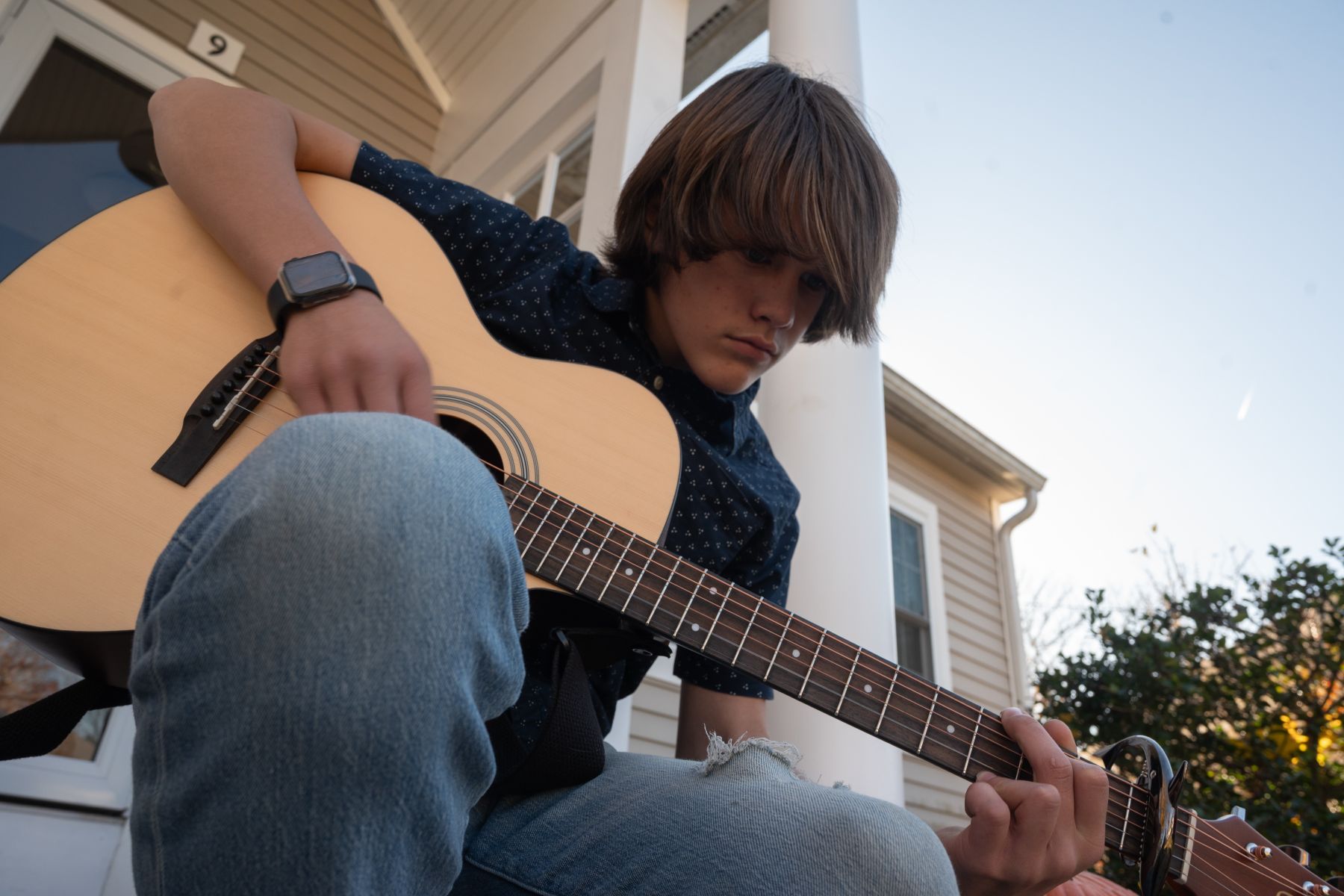
The transition has not been without its setbacks. Max, now 15, was suspended from school for five days after a portion of a marijuana joint was found in his backpack. But he was honest when asked about it and served his suspension. At home, his parents said he has taken the removal of a lock on his bedroom door, multiple long conversations about substance use and regular drug testing in stride.
Although Max is struggling to focus in class and keep up with his workload — which, having not regularly attended traditional school since third grade, is heavier than he’s used to — he is hoping to catch up.
The family is grateful for Max’s chance to start over and hopes that, by sharing their story publicly, they can help others avoid the turmoil and pain they experienced.
“We’re only as good as how we treat our most vulnerable constituents,” Angela said. “If we’re treating children this way, and that is just the status quo, I can’t accept that.”
Max’s progress is uncertain, and Angela and Steve remain on edge, anxious that they made the wrong call at some point.
“It’s hard to have regression,” Angela said. “When things aren’t going well, the past will crash down on me.”