


The first time Lisa Austin fell, she was startled but left with only a few bumps and bruises. The second time, she broke her elbow.
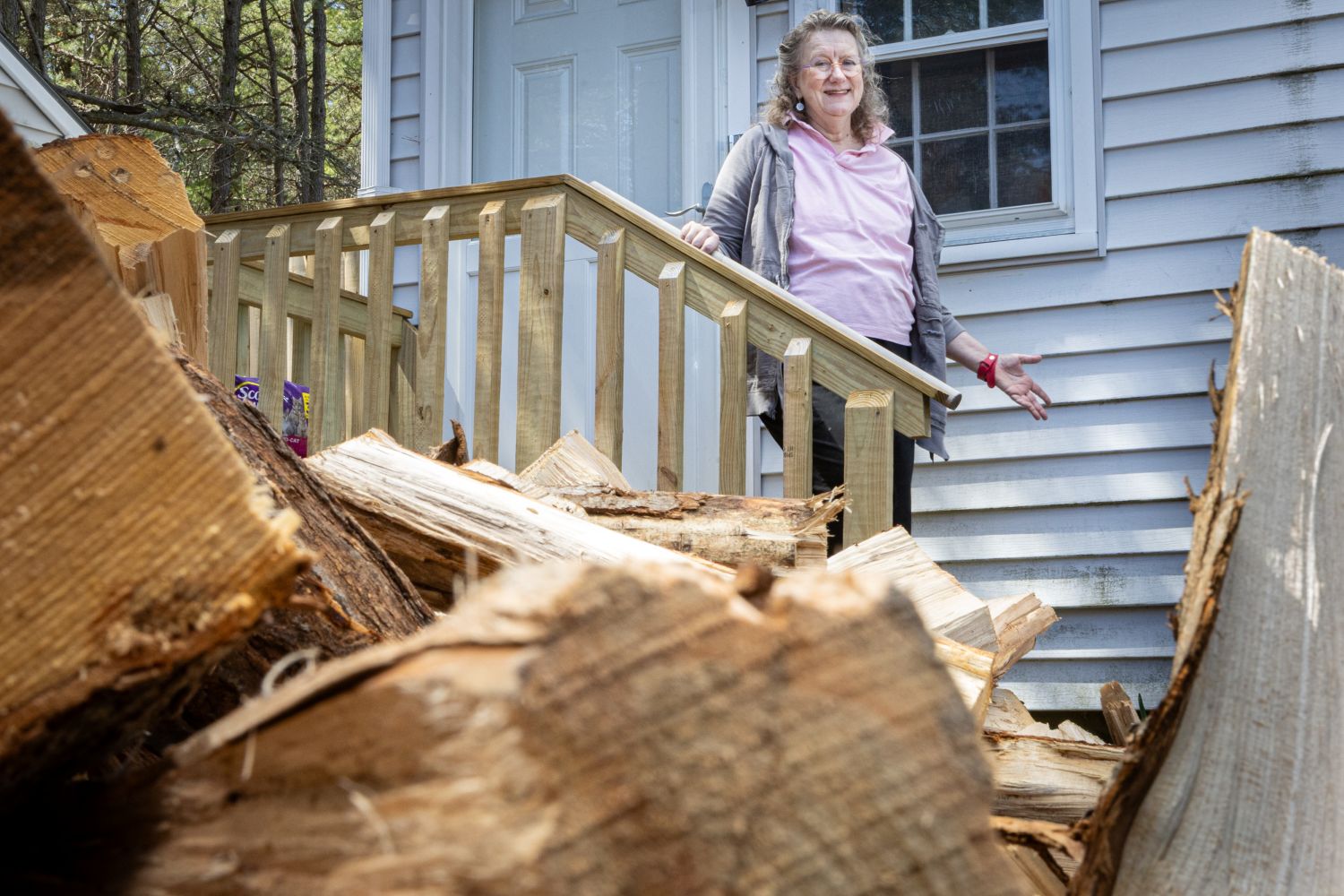
Both falls happened at her Cape-style home in Brunswick. The first was on a steep flight of stairs near her bedroom; the second was on the icy steps of her front porch, as she went to get wood on a snowy February morning.
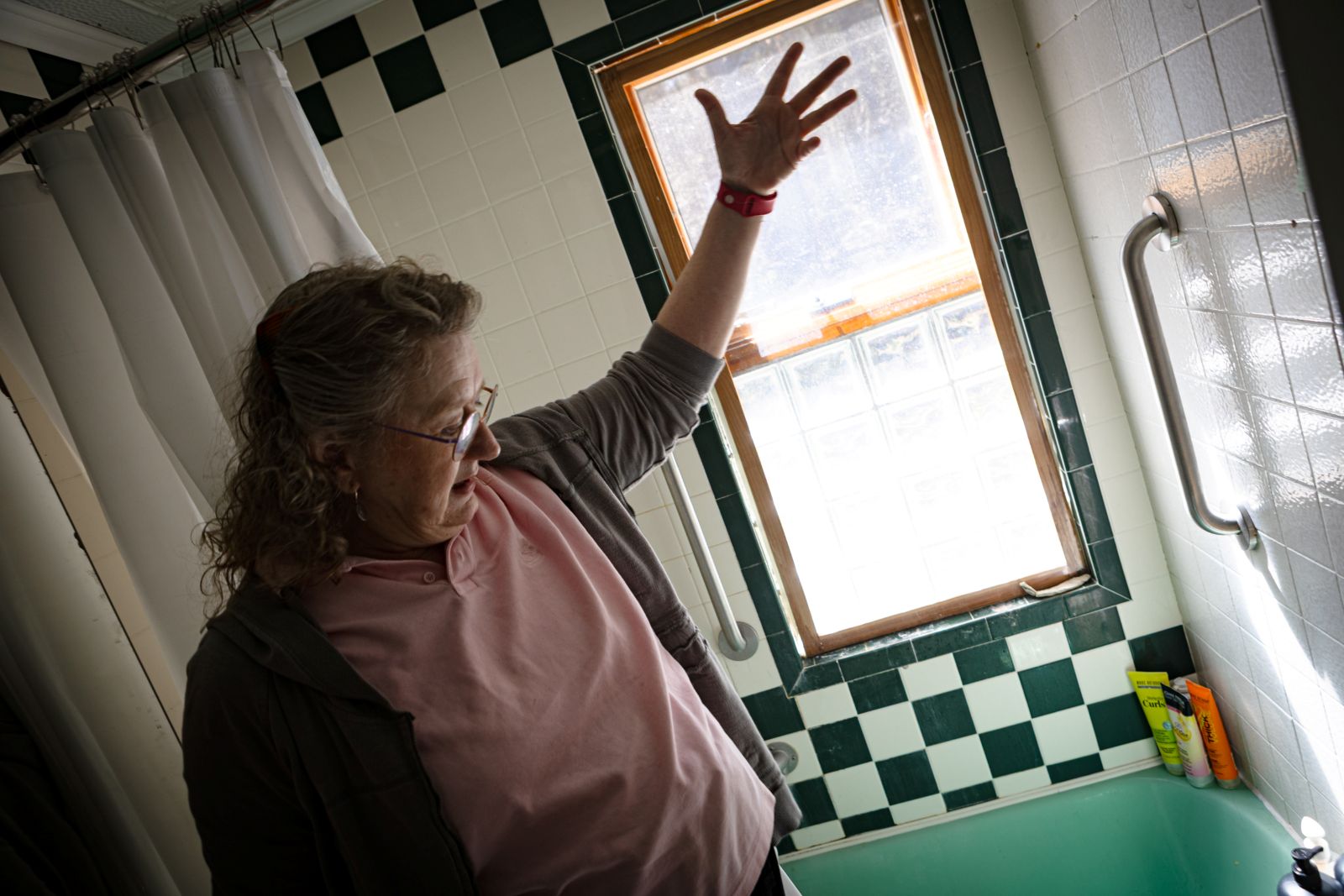
Austin, 66, said she had not realized how uneasy she felt going up and down stairs in her home until she fell. The realization prompted her to reach out to the local housing authority in Bath about its Comfortably Home program, which provides small-scale home improvements for older adults living anywhere in Sagadahoc County or Brunswick who meet certain eligibility requirements. Now, grab bars and rounded railings have been installed near her main points of entry, in her bathroom and up the stairs to her bedroom.
The change felt immediate, Austin said.
“I’ve been going out in my yard almost every day this spring,” she said. “Last spring, I did not go out at all.”
Bath Housing Executive Director Debora Keller launched the aging-in-place program in 2015, one of the ways the local housing authority’s function has expanded beyond managing vouchers and low-income public housing to address different housing needs. The goal of the Comfortably Home program is to provide older Mainers under a certain income threshold with minor home improvements so that they can safely stay in their homes as they age. This can range from accessibility and safety modifications to minor home repairs that would otherwise be too expensive for people on fixed budgets.
While small, Keller said, these repairs can be the difference between older adults moving out of their homes before they are ready and being able to age safely in their homes. Originally funded by the John T. Gorman Foundation, Comfortably Home now receives most of its funding from the Maine State Housing Authority, also known as MaineHousing, and was the blueprint for several other similar programs across Maine. A federal grant program that launched in 2019 was modeled after the Bath initiative.
The original program is now at a crossroads, as shifting funding priorities in Augusta, growing material costs and limits on the kinds of repairs the authority can do have made the work more difficult. A decade of working in older residents’ homes shows people could benefit from more advanced repairs, spurring Bath Housing to look for additional sources of funding.
“We are so thankful for MaineHousing’s continued investment over the years,” Keller said. “Now, I think, because everything’s more expensive than it was, we’re at a place where we’re wanting to make sure we have consistent long-term resources.”
Resources that could go toward replacing a door, for instance.
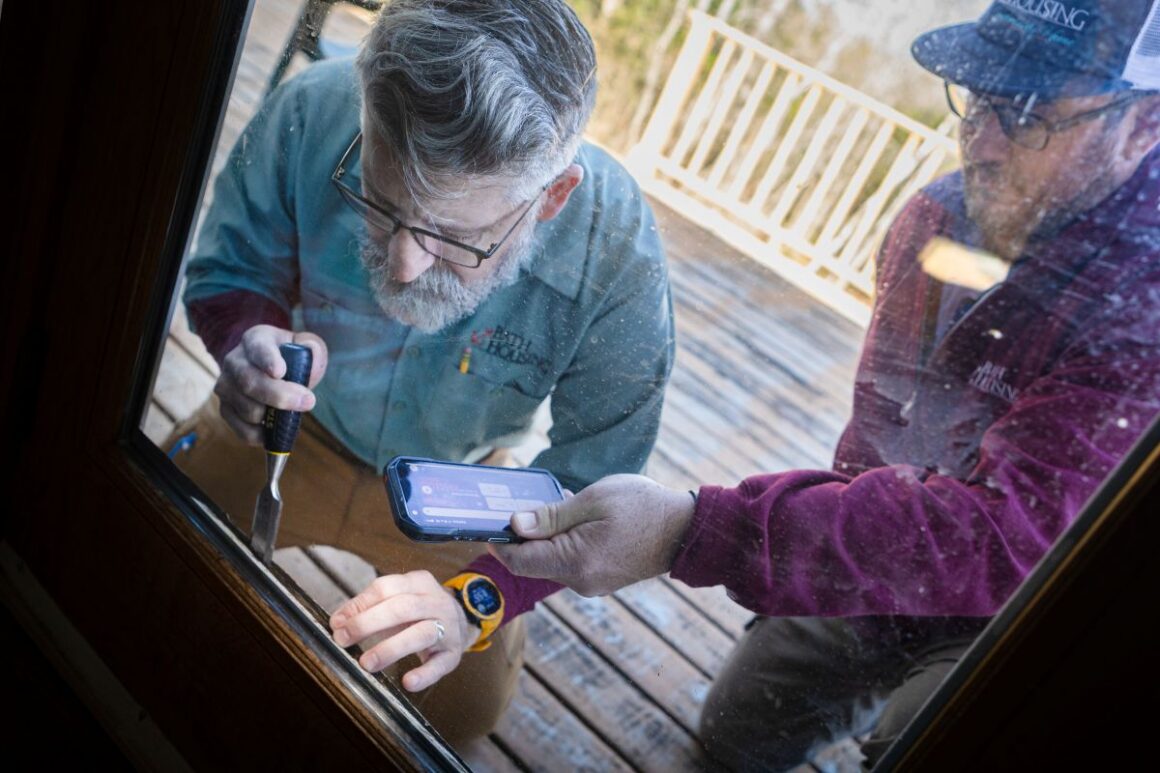
An older couple in Brunswick recently called Bath Housing to look at a windowed slider door, where a draft was coming in. But when Josh Manahan, the Bath Housing director of facilities, peeled the tape back from around the frame, he discovered long-term rain and snow damage was causing the door to rot. What seemed like a simple window glazing fix at first revealed a much bigger problem.
“We can buy you some time,” Manahan told the owner, who allowed The Maine Monitor to view the project in early May but declined to be interviewed. But they couldn’t replace the door, Manahan explained.
Complicated fixes, such as replacing doors or toilets, are not typically done by Comfortably Home because they might be connected to bigger, structural problems in the house, such as foundational issues or subfloor rot. Doing those repairs could put the program on the hook for liability issues and would likely exceed its budget.
The program is limited to spending around $3,000 per house, and the cost of repairs has been increasing. Bath’s Comfortably Home program has been spending about $800 per home this year on materials alone.
When the program had more money, Manahan said he might have considered calling a contractor to make more technical repairs. But with materials alone costing $800, “I am not going to even make a phone call,” he said.
MaineHousing has typically funded its Community Aging in Place grant program with $1 million a year. The money comes from the HOME Fund, a flexible source of funding fueled by real estate transfer taxes. The housing authority typically has discretion over how it allocates these funds.
MaineHousing reduced its aging-in-place spending to $500,000 last year after lawmakers reduced the amount of money allocated to the HOME Fund by $10 million during the budget process, leaving the authority with less money to work with, said MaineHousing spokesperson Scott Thistle.
Lawmakers then took the unusual step of allocating money directly to the aging-in-place program this year in the supplemental budget signed by Gov. Janet Mills. They directed $2 million in one-time funding to the program, which will be split evenly between 2026 and 2027. Organizations can apply for those funds later this year through MaineHousing’s request for proposals process.
Comfortably Home typically has an annual budget of around $100,000, and Keller said the agency had budgeted a similar amount for this year. But because of the budget changes, it only received $48,785 from MaineHousing, its primary funder since 2017.
To make up for the reduction, Keller said, Bath Housing embarked on its first private fundraising campaign. The agency raised $40,000 through private donations and is considering applying for the federal Older Adults Home Modification grant managed by the U.S. Department of Housing and Urban Development to make up the rest. The federal program is forecasted to award between $1 and $2 million to eligible projects this year.
Maine started its Community Aging in Place initiative in 2017. Collectively, it has served 1,639 households between then and 2025, according to a policy brief. In the same time period, the program documented an 85 percent decrease in reported falls from participants, from 1,346 to 200.
Aging-in-place initiatives fill a similar niche as the state’s home repair program for homeowners who make at or below 80 percent of the area’s median income and Fortify Maine Homes, a state-funded pilot program set to launch later this year to help Mainers replace their roofs. The goal is to help Mainers on tight budgets stay in their homes and to keep problems plaguing Maine’s older housing stock from getting worse.
Bath Housing Deputy Director Jess Irish said Comfortably Home rarely has a wait time longer than a month. People often learn of the program through word of mouth or by seeing a Comfortably Home van in the neighborhood.
To be eligible for Bath’s Comfortably Home program, candidates must be 55 or older or have a disability. Income guidelines for Sagadahoc County residents range from $72,240 to $103,200, depending on the household size; the program also serves Brunswick, for which income limits are around $4,000 to $6,000 higher. Irish said the average income of those they serve is typically around $25,000 a year.
Still, people are sometimes reluctant to seek help, Irish said.
“People have this notion of, ‘I don’t want to take resources that someone else might need more than me,’” she said.
Comfortably Home already cleans dryer vents and refrigerator coils to prevent fire risks and lower electric bills. Fixing doors and water heaters is the next step up, but Keller said funding needs to be consistent before Comfortably Home can begin offering those services.
And not all modifications are initially welcome. Mobility repairs can be particularly sensitive, Manahan said, such as adding a bed rail. He has found people dislike the solid white rails because they remind them of hospitals; finding a black or nickel finish can help ease discomfort. Once he’s in the home, Manahan said, it is easier to see where other additions could be helpful.
“It’s just a little bit hard to come to grips that this is stuff you need,” he said.
Austin, the homeowner in Brunswick, agreed. She said she was not conscious of how nervous she was going up and down the stairs before her fall.
With a second railing and new grab bar now at the top of the stairs, she said, “I don’t even think about it.”