



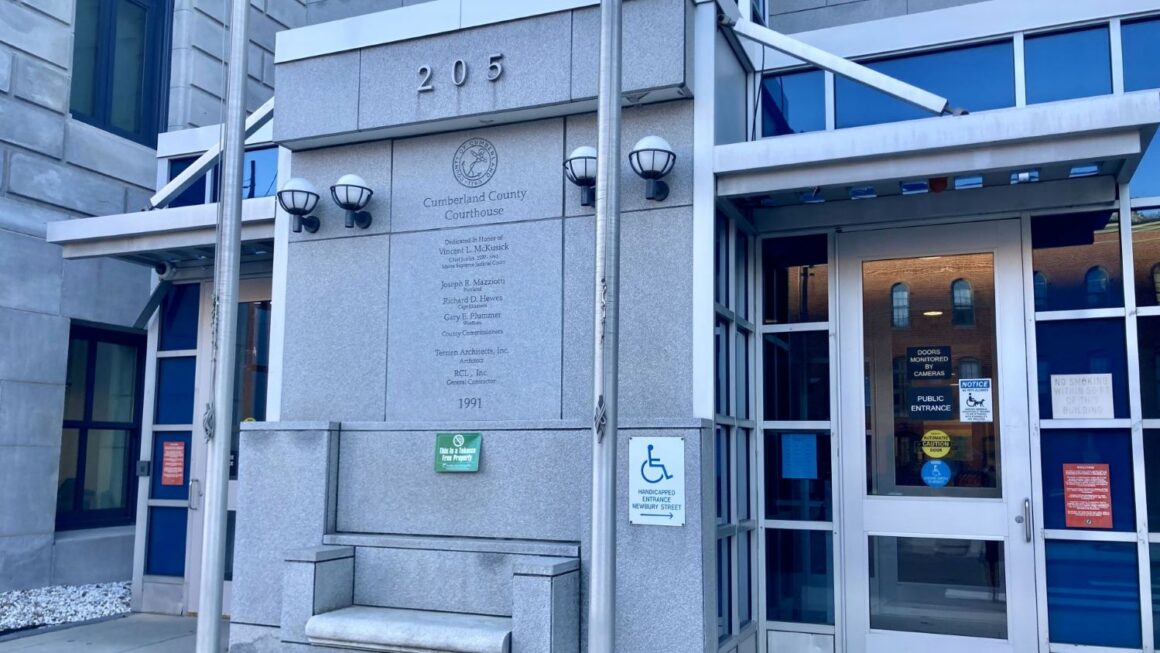
A Portland District Court judge was correct in giving a father the power to decide whether his daughter could attend an evangelical church following a clash with the girl’s mother over her religious upbringing, the Maine Supreme Judicial Court ruled on Sept. 1.
The decision keeps in place the lower court’s ruling on a 2024 dispute between Matthew Bradeen and Emily Bickford regarding the religious upbringing of their daughter, who was then 11 years old. Bickford had been bringing her daughter to multiple services a week at Calvary Chapel Greater Portland, an evangelical church in Westbrook.
Bradeen argued the church was a “dangerous and harmful environment” that had caused his daughter to suffer from anxiety. He said she had a panic attack after hearing the church’s teachings on the rapture, a belief that Christians will join God at the end of the world and nonbelievers will be left behind.
The lower court ruled in his favor, saying some of the church’s language was “psychologically damaging the child” because of how it characterized her father, and the state’s high court affirmed this decision on Tuesday.
The lower court ruling gave Bradeen the right to decide whether his daughter could continue to attend Calvary Chapel services or interact with members of the church other than her mother. It also said the pair must “continue to share parental rights and responsibilities” regarding their daughter’s exposure to other religious organizations, but that if they disagreed the father has the right to make final decisions.
Bickford’s lawyer, Mathew Staver, told The Monitor he plans to appeal the case to the U.S. Supreme Court. Staver’s law firm, Liberty Counsel, which describes itself as a “Christian ministry” focused on religious freedom, has been involved in other cases before the U.S. Supreme Court including a 2022 case in which the court ruled in favor of a private religious group that Boston had barred from flying a Christian flag.
In a brief to the Maine Supreme Court, Liberty Counsel argued that the 2024 order violated Bickford’s First Amendment rights through its “open hostility” toward religious beliefs and by preventing her from directing the “religious upbringing of her child as she sees fit.”
“What Maine has done in this decision is put the Supreme Court of Maine at odds with the courts of a number of other states,” Staver said. “I think it will be a case that will be very significant and catch the attention of the Supreme Court because of how far-reaching it is with regards to the First Amendment exercise clause.”
Michelle King, an attorney representing the father, said she “anticipated all along” that the case could end up before the Supreme Court. She called the Sept. 1 decision “well thought-out and reasoned” and said Bradeen was happy with the result.
“Anytime you’re in court, it’s stressful,” King said. “But this case has definitely garnered a lot of media attention, and I think that’s always difficult for parents.”
Part of the case centered on one service where Bradeen himself was mentioned by the church’s pastor. While hearings for the original dispute were ongoing, Bickford brought her daughter to a service at Calvary Chapel Greater Portland in which pastor Travis Carey led a six-and-a-half-minute prayer focused on the case, referring to the parents and child by name “almost 30 times,” describing Bradeen as “in need of salvation” and calling the proceedings “an attack on God’s Word.”
According to the Maine Supreme Court, Bickford made no attempt to remove her child from the service and later called it “appropriate.” She “is unwilling to recognize, much less mitigate, the risk that these messages alienate the child from Bradeen or otherwise cause her harm,” the court wrote.
In the 2024 order, Maine District Court Judge Jennifer Nofsinger wrote that the harm caused to the daughter stemmed not from “a belief system that is rooted in the Bible” but from the mother’s “inability to co-parent” on the topic of religion and the fact that she had given control of decisions about her daughter’s best interests to the church and its language had disparaged the father.
“The court found that the child was harmed by Bickford’s decisions to expose the child to messages that characterized Bradeen as an ‘enemy’ who seeks to ‘persecute’ the child and her faith, and by Bickford’s unwillingness to prevent the child from receiving those messages or to take any other steps to reduce the risk of alienating her from Bradeen,” the Maine Supreme Court wrote in its Sept. 1 decision affirming the order.
The final finding “reflected simply that it is harmful for a child to hear negative and frightening messages about one parent from the other parent or the other parent’s authority figures.” The court found that the order rested on the parents’ inability to co-parent on matters of religion, not on the substance of Bickford’s religious beliefs, making it necessary for one parent to be granted decision-making authority over the other.
While Calvary Chapel Greater Portland was not an official party in this case, churches in the evangelical network been at the center of several lawsuits in recent years, including a 2020 lawsuit brought by Calvary Chapel of Bangor against the state for its pandemic restrictions and an ongoing lawsuit brought by Calvary Chapel Belfast alleging religious discrimination after the University of Maine System rescinded its agreement to sell a building to the church. Liberty Counsel represented both churches in their cases.
Bickford and her counsel have 90 days to appeal the decision to the U.S. Supreme Court.