



JONESPORT — In a room noticeably thin on fishermen and Planning Board members, about 50 residents voted overwhelmingly Wednesday night to carve out special ordinance variances exclusively for Kingfish Maine, the land-based aquaculture project first proposed by the Netherlands-based company in 2019.
The amended ordinance extends the deadline for Kingfish to demonstrate a “substantial start” on its proposed $100 million plant from 24 to 30 months, while exempting the company from the standard requirement that 30 percent of a project be completed within the first year.
Under the revised ordinance, a “substantial start” for Kingfish specifically requires tangible evidence of physical work at the 22-acre site that is significant enough to show both the intent and capacity to finish the project.
A second ordinance was amended to authorize the Planning Board to approve permit revisions without requiring a full site plan review.
The Maine Department of Environmental Protection must now review the changes adopted by voters.
Kingfish Maine first proposed building the recirculating aquaculture system in November 2019. The plant would annually grow an estimated 8,500 metric tons of yellowtail kingfish, a species that prefers warm water.
Environmental concerns sparked immediate opposition and legal challenges that stalled the project for years. However, the Maine Supreme Judicial Court cleared Kingfish Maine to proceed in April 2025, affirming a lower court decision that upheld the state DEP permit.
Planning Board Chair Frank Smith told attendees Wednesday night that the 30-month construction period would begin with their vote. After the meeting, however, he corrected himself: Towns cannot legally alter shoreland zoning ordinances to undercut DEP regulations without state approval.

Smith was the only full member of the five-person board in attendance. Kingfish was represented by lawyer Adrian Kendall of Norman Hanson DeTroy LLC and communications consultant Dianna Fletcher of Fletcher Media.
“I’m half right because on the land use, I’m right. It starts tonight,” he said. “But on the shoreland zoning, I’m wrong because it’ll start when the DEP approves it.”
The land use changes relocate the definition of a “substantial start” for Kingfish into the town’s shoreland zoning ordinance, and allow permit holders to request permit modifications without undergoing a full site plan review.
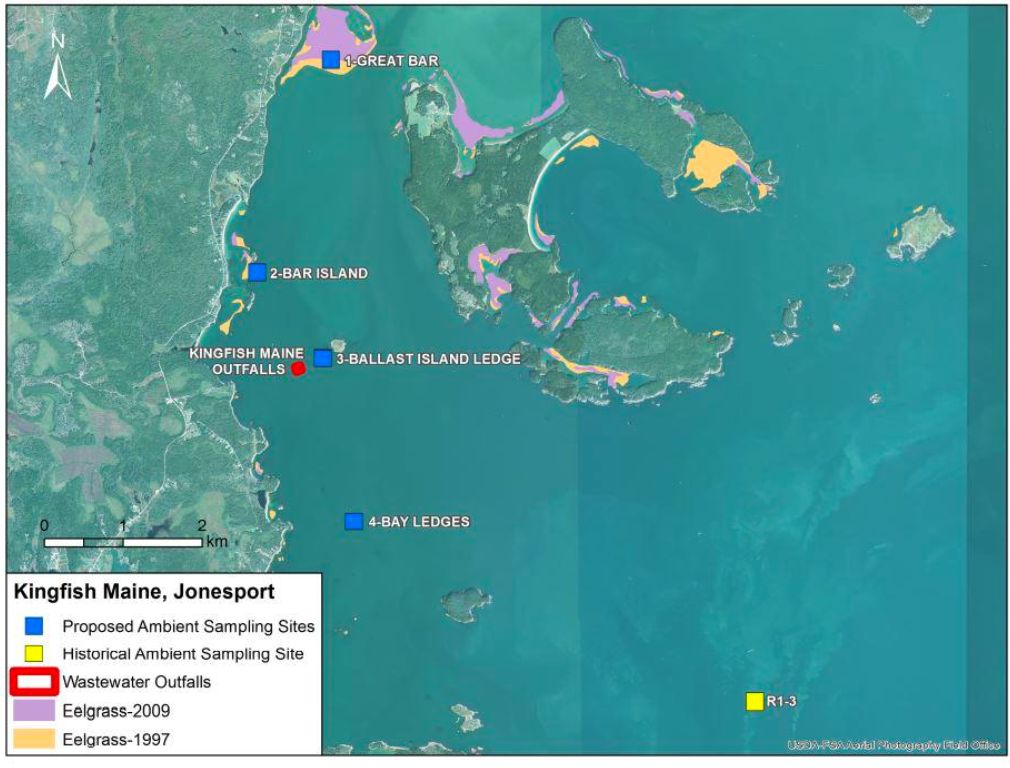
Smith was one of five or six lobster fishermen who attended the vote. Few local fishermen support the large-scale aquaculture facility, which would discharge wastewater, including warm water, into Chandler Bay. Many of the fishermen who work the bay live in adjacent towns and were ineligible to vote on the Jonesport ordinances.
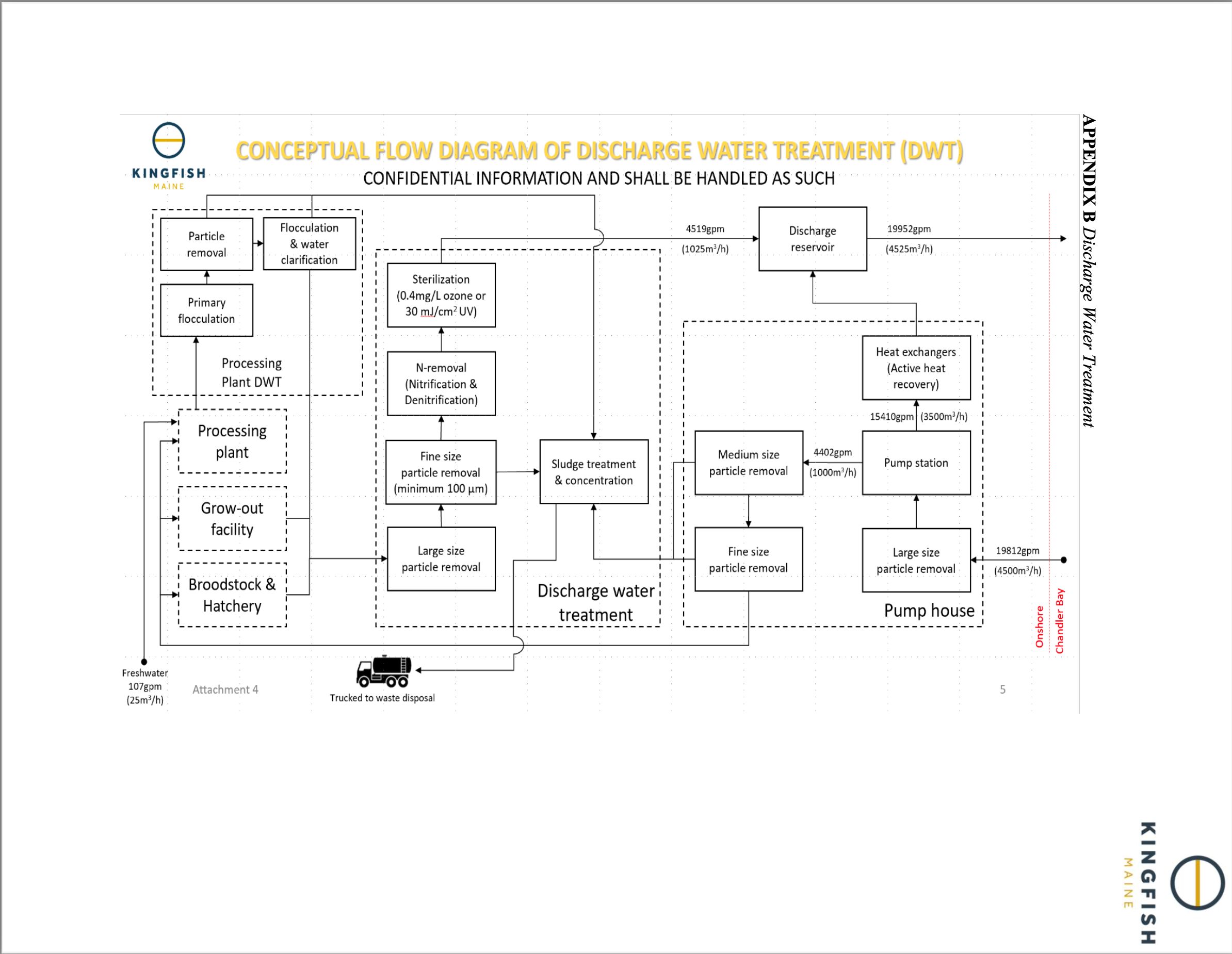
Of particular concern has been the amount of water the facility would pull in and the impact of cleaning that water to make it safe for the kingfish the company intends to farm. The proposed plant would use an estimated 28 million gallons of water per day.
Mary Look’s husband, Bert “Binky” Look, is one of about 20 lobster fishermen with traps in Chandler Bay. The Look family is recognized as the first lobster dealer in the United States, and first began selling marine supplies and groceries — including lobster — from the wharf at Old House Point in 1910.
Mary Look has fished with her husband for years and said she thinks “It’s going to change the bay.”
“It’s gonna kill plankton. It’s gonna kill eelgrass. And when you change that bay, you change the beginning of the river that goes up into Jonesboro,” she said. “It’s a no-win situation for our fishermen. Now, if I thought we were gonna make enough money to offset what the fishermen weren’t gonna make, and my tax pool was gonna get better, it’s not.
“They’re not gonna make enough money in my town to compensate what I’m going to lose. The people who are gonna work there need way more education than my people here have got.”
Glenda Beal, chair of the Beals Select Board, has also been a vocal critic of Kingfish.
“Kingfish told us there’s a very small mesh screen which will separate the tiny sea larva so they won’t be killed” during processing, she said recently.
“My whole family has had major concerns once we learned the extent of the intake and discharge into the bay. Mason’s Bay area will be changed forever, and not for the better,” she said. “You’ll see it from Sandy River Beach and its discharge will go that direction. What was shocking to me was the group from the bay who live along its shores, but still supported it.”
Glenda Beal’s uncle, Robert Beal, has fished Chandler Bay for 60 years. He estimates he has 110 traps in the bay this year, and 200 in adjacent Englishman Bay.
“I’m afraid Kingfish is going to cause an algae bloom in the bay,” he said, citing recent die-offs in ocean-based salmon pens owned by Cooke Aquaculture. He said he doubts there will be many employment opportunities offered to locals beyond the construction of the facility.
John Drouin, vice president of the New England Fishermen’s Association and a fisherman out of Cutler, has also raised alarms.
“You know, it’s one thing when they just say, ‘Well, yeah, we’re gonna pump some water out of the bay,’ and nobody thinks nothing of it, until you start to hear the volume of it,” Drouin said. “That’s when we should be paying more attention and having more input and more conversations because that’s definitely not something that’s good.”
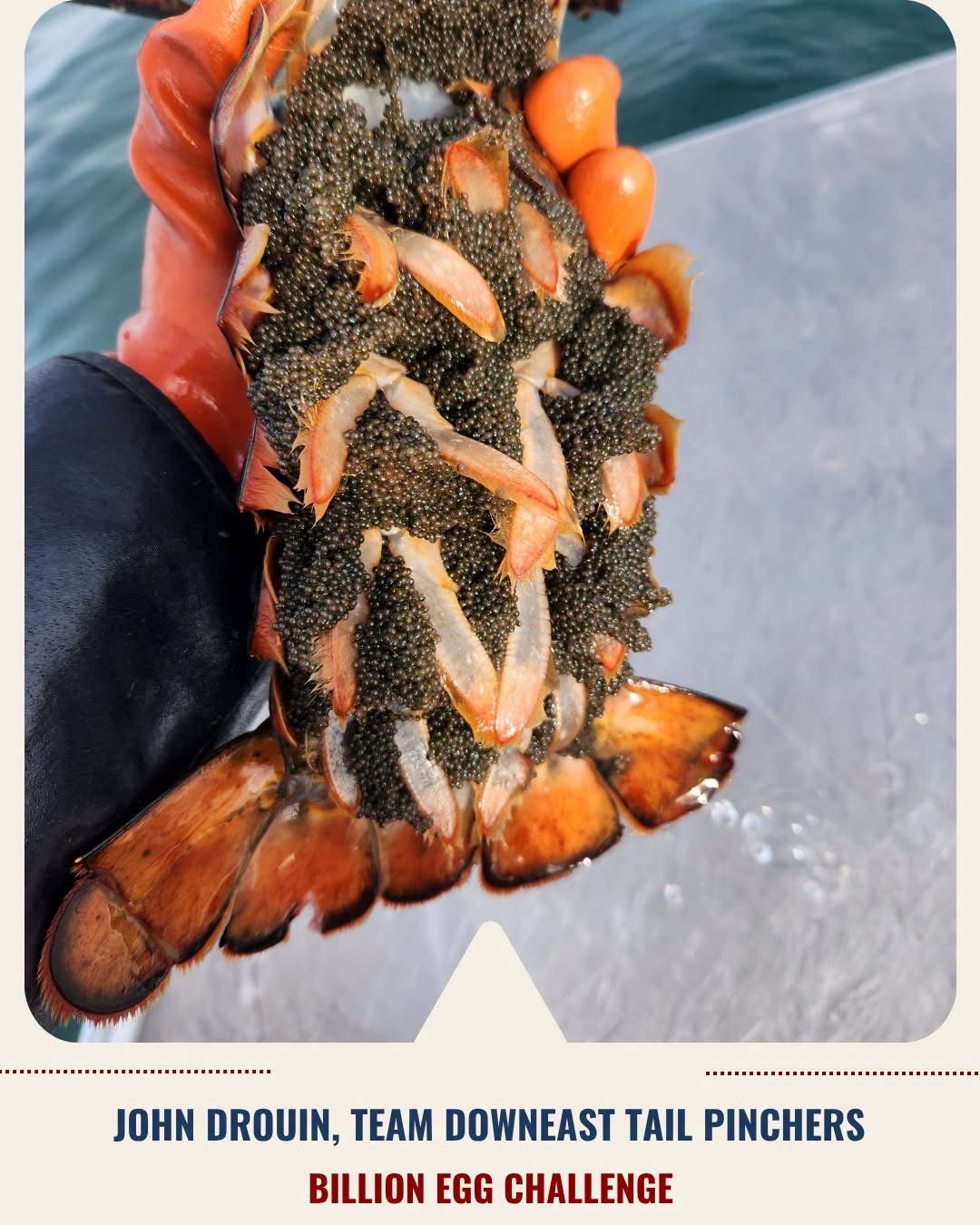
Drouin is part of the Billion Egg Challenge, a stewardship effort where Maine lobster fishermen compete to see who can notch the most female lobsters.
“So the lobster larvae will be swimming around for the next four weeks, until they get to the stage where they’re large enough to settle at the bottom,” he said. “So, anything that is anywhere near that would get sucked in. Scallops, sea urchin, any type of roe, any type of larvae from any species, would get sucked into that, especially this time of the year.”
Kingfish’s 30-month construction period will not start with last night’s vote, and it might not begin before the end of the year.
The company’s five-year Maine Pollutant Discharge Elimination System (MEPDES) permit is also before the DEP. However, according to an Aug. 3 email to Holly Faubel, who has fought Kingfish in court, the agency will not review the renewal until early 2027. Public comments are still open and can be viewed in the DEP’s online project folder.
If a review of Jonesport’s proposed ordinances is rolled into that delay, Kingfish could have closer to 36 months to show progress on the project.
While Kingfish has successfully navigated five years of legal challenges, the company has also suffered significant financial setbacks. It failed to meet its financial obligations for two years and this summer announced a restructuring and a new majority owner.
With the completion of the restructuring, the Icelandic private equity firm Eyrir Invest is now the largest shareholder, owning 31.4 percent of the company.
This story was updated August 10 to correct that Holly Faubel did not go to court as part of Protect Downeast and to clarify that the land use changes create two separate allowances.