


For Secretary of State Shenna Bellows, Election Day was relatively normal.
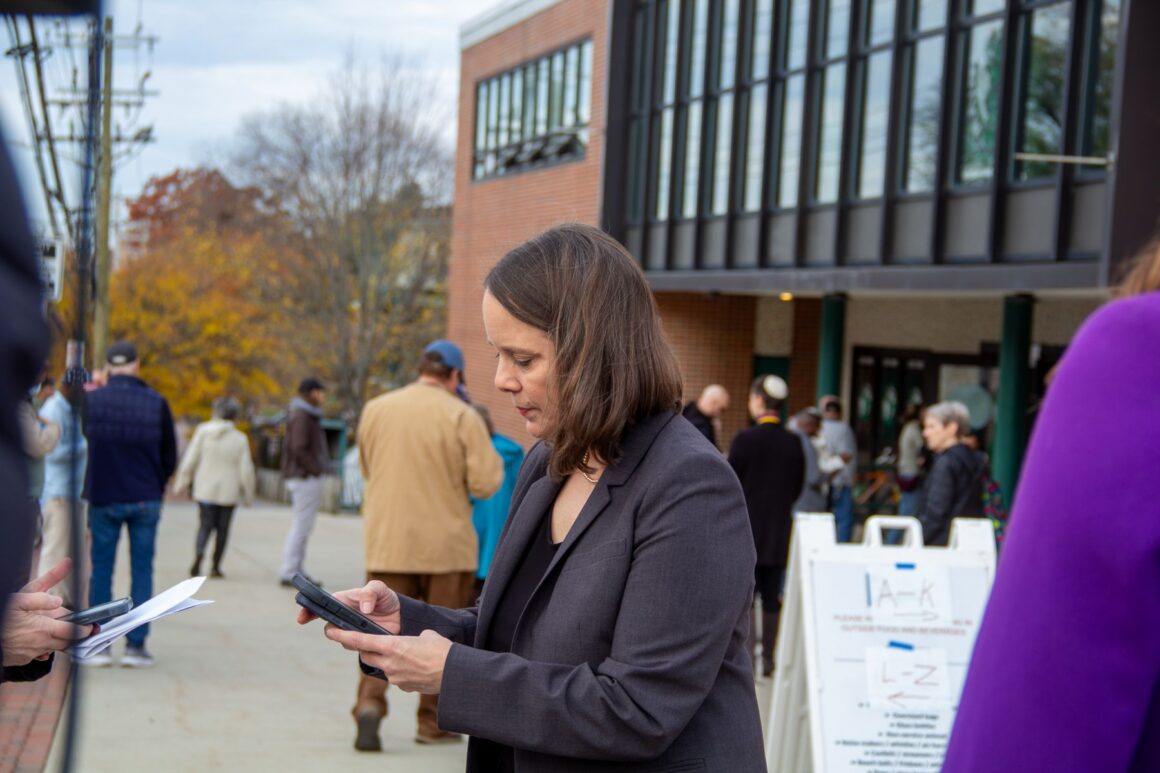
The state’s top election official began her day at 6 a.m. in Westbrook and traveled north, visiting polls and dropping off sweets for election workers. She ended the day by concurring with the Maine League of Women voters: There were no major disruptions or instances of voter interference.
The quiet, if busy, day stood in contrast to the anxiety that has been building around the country as President Donald Trump has sought to gain influence over the election process, typically seen as the states’ domain. Those efforts have run the gamut from requesting voter information to preemptively suing Alaska if an incumbent Republican loses, a lawsuit that a federal judge tossed on Sunday. The U.S. Supreme Court declined to hear a case that could have nullified thousands of California ballots.
That atmosphere, Bellows said, raised questions for poll workers about what could happen on Election Day as Trump’s Department of Justice sent federal election observers to Portland, South Portland and Lewiston, part of the administration’s sweeping effort to monitor the midterms in all 50 states. She said “nothing was off the table” coming into Election Day, and her office spent more time than usual training poll workers and running scenarios.
“Oftentimes, the rhetoric is heated,” she said. “The good news is, we saw what has happened every election cycle, which is: People turned out to vote and, for the most part, had a positive voting experience.”
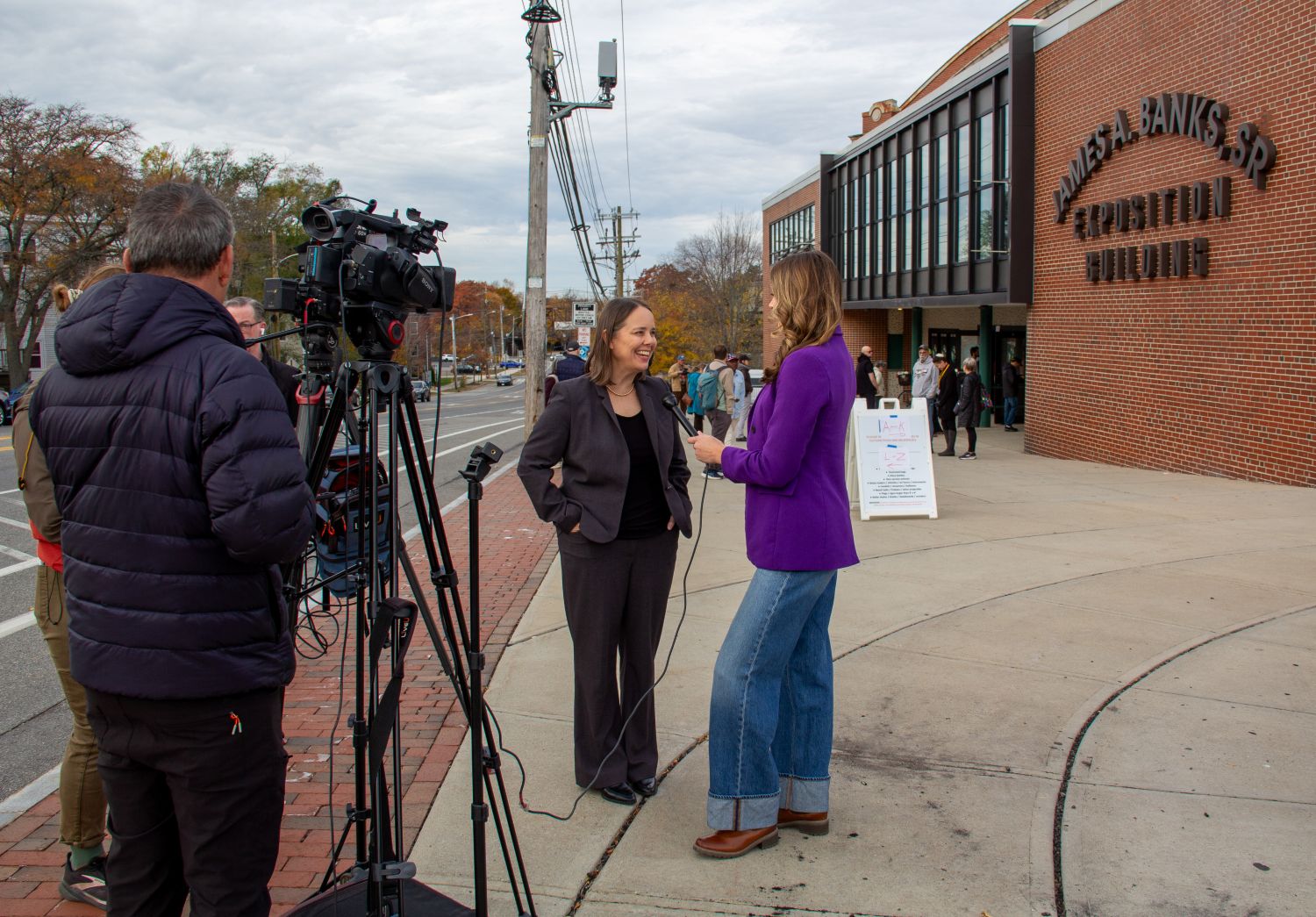
But even as the day appears to have been uneventful, the stakes are still high for Bellows, now in her third term and looking to run for a final one this fall. Maine’s high-profile, high-dollar U.S. Senate race is being closely watched, as it could decide the balance of power in Congress. It could be her biggest test in office yet if the Trump administration moves to investigate Tuesday’s results.
Election experts said the scrutiny Bellows will likely face illustrates the tightrope election officials must walk as their nonpartisan work is increasingly subjected to partisan attacks.
“The decisions she makes are always going to be seen through an ideological lens, even if it’s a bureaucratic or technical decision she is making,” said Carrie LeVan, an associate professor of government at Colby College.
High scrutiny
Maine officials have clashed with the Trump administration several times in the past two years, including for refusing to comply with an executive order banning transgender athletes from women’s sports and for issues related to how the state has handled alleged Medicaid fraud.
Some of those fights have spilled over into Bellows’ domain, including a prominent clash around the 2024 presidential race. She declared Trump ineligible for Maine’s 2024 Republican primary ballot because of his role leading up to the Jan. 6 attack on the U.S. Capitol, citing the Constitution’s insurrection clause. She later reversed that decision after the U.S. Supreme Court overturned a similar move in Colorado, and fended off an impeachment attempt by Republicans. The Trump administration sued Maine over refusals to hand over voter information; that complaint was dismissed in May but is being appealed by the federal government.
Bellows also drew the ire of local conservatives for her wording of a ballot referendum to require voter ID last year, which supporters claimed misrepresented the initiative’s intent. Her description was upheld by the Maine Supreme Judicial Court, and the referendum ultimately failed. This year, she determined a citizen’s petition to restrict transgender students from participation in school sports did not have enough valid signatures to qualify for the ballot in November, a decision also upheld by Maine’s highest court.
Tuesday’s vote could once again put Bellows in the limelight, particularly if the contest between Democrat Troy Jackson and U.S. Sen. Susan Collins, the long-serving Republican incumbent, goes to ranked-choice voting and there are delays in determining a winner, said Mark Brewer, the chair of the political science department at the University of Maine.
When Maine’s 2nd Congressional District race went to ranked-choice tabulation in 2018, the results took a little over a week to finalize. During the primary this summer, three different races went to a ranked-choice runoff, pushing results out by 10 days.
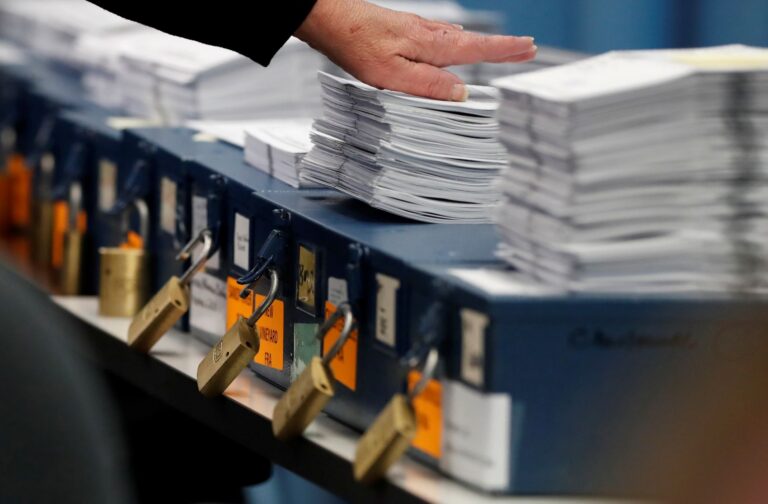
Brewer said Bellows has taken steps to make the ranked-choice process more transparent by providing a livestream of the process and detailing how ballots are securely transported to Augusta. She asked clerks to send her office their towns’ results tonight, rather than waiting the two days the law gives them, to try and speed up a final determination.
Still, “the unfortunate reality is some folks out there believe fraudulent activities are happening as soon as there is a delay,” Brewer said.
That distrust means state election officials have had to defend the integrity of their work.
“In the days and weeks to come, election officials will count every eligible ballot, including provisional ballots, mail ballots, and ballots cast by military and overseas voters,” the National Association of Secretaries of State and National Association of State Election Directors said in a statement on the eve of the election. “Accurately counting millions of ballots takes time.”
Administering elections has also increasingly come with risks to officials’ safety: Bellows has received threats since 2020.
A quiet day
Across some of Maine’s biggest cities, the refrain from election workers was largely the same: Election Day was busy, but things went smoothly. Many Mainers did not even have to go to the polls: More than 300,000 people voted early, over a third of registered voters.
Jonathan Hartford, a warden for District 4 in South Portland, said the calm atmosphere was due in part to the extensive training poll workers had received in the weeks leading up to Election Day, including a special training for poll workers in his city, Lewiston and Portland last Friday.
“In my opinion, Maine has the best election system in the country,” he said. “It’s just a great place to work as an election warden, knowing we have such safe and secure elections.”
There were concerns about voter intimidation during early voting in Lewiston after Bellows’ office received complaints about harassment of voters who needed help from interpreters to cast their ballots, according to reporting by the Lewiston Sun Journal. Voters are allowed to bring an interpreter, relative or friend to help read or mark a ballot, and Bellows said her office worked with the city on signs making it clear poll watchers cannot photograph voters.
A few minor problems were reported throughout the day. This included instances of voters mistakenly being given the wrong ballots, which were then replaced with new ones and the spoiled ones not counted. In Standish, a man wearing an anti-Trump T-shirt was swiftly removed from the public safety building for violating the state’s ban on political speech in polling places.
Bellows said those mistakes are unfortunate, but are quickly caught and fixed, and “are no different from what happens in other elections.”
Assistant U.S. Attorney Andrew McCormack said his office would not comment on any investigations if they were ongoing. But he had gotten no calls about any election problems from northern Maine, the region he was responsible for overseeing, by mid-afternoon.
“I’ve been doing this for 15 years, and I always think I’m going to get a bunch of calls, and I never do,” he said.
His counterpart, Assistant U.S. Attorney John Osborn, was responsible for the southern part of the state, where the U.S. Department of Justice poll watchers were circulating. He did not return a reporter’s phone calls by press time.
The Maine Republican Party had observers in at least 150 municipalities across the state, according to Jason Savage, the group’s executive director. The observers had seen few problems throughout the day, he said, and the issues they noticed were “the type of things you could expect from any large system and process that is heavily reliant on human beings.” Those problems, such as incorrect documentation for someone’s voter registration, were quickly amended, he said.
Things running smoothly, he said, could be attributed to volunteers, clerks and wardens, and poll observers flagging problems, not to the work of the secretary of state’s office, he said.
As polls closed around Maine at 8 p.m., Bellows was headed back to Augusta, where she would work with her staff into the late hours collecting results — hopefully, to expedite decisions around whether ranked-choice voting will be necessary in the Senate or 2nd Congressional District races.
“We know that all the eyes of the nation will be watching, and we want to deliver results as efficiently as we can,” she said.