


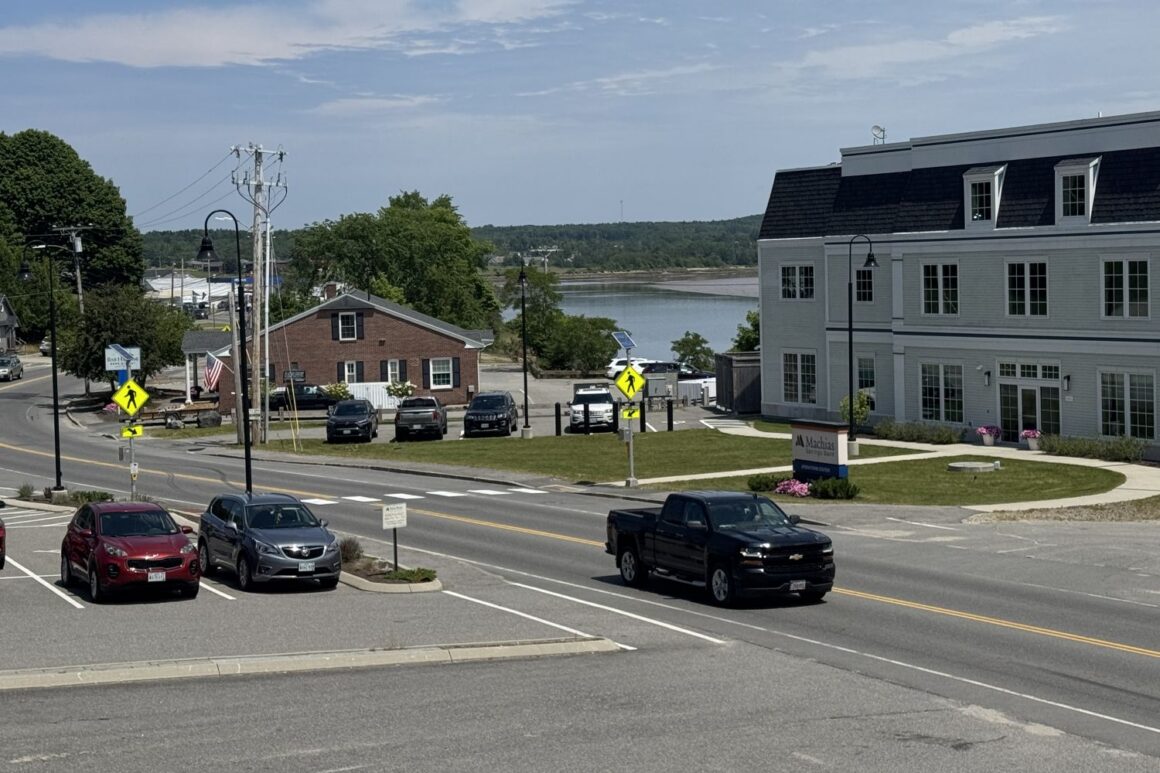
MACHIAS — An overabundance of deer in downtown Machias prompted a Select Board discussion with state wildlife officials last month, including a report of 17 deer feeding on private property at the Water Street extension.
“I hit one coming in here today,” Select Board Vice Chair Ben Edwards said after the topic came up. “Just touched it. Nobody got hurt. The deer wasn’t hurt, the car wasn’t hurt.”
Town Manager Sarah Craighead Dedmon said the Police Department has recorded 70 deer strikes in the past five years, counting only those that cause at least $2,000 in damage.
Public Works Director and Road Commissioner Mike Schoppee also counted 27 deer in a narrowly defined area downtown, Craighead Dedmon said.
Maine Game Warden Joseph McBrine, the state’s 2021 Warden of the Year, and Regional Wildlife Biologist Steve Dunham, based in Jonesboro, represented the Maine Department of Inland Fisheries and Wildlife at the meeting. They said residents who feed deer are the main cause of the growing population in town.
“One of the best ways to reduce the number of deer and the conflicts is if we could reduce the feeding,” McBrine said. “I think 98 percent of the people in Machias are fed up with it, and 2 percent are feeding them.”
McBrine said he has issued warnings and summonses, which have helped reduce intentional feeding.
“It doesn’t help that on social media, there’s posting of feeding deer like it’s a joke,” he said.
McBrine said Maine law prohibits placing salt, bait or food to attract deer from June 1 until the start of an open deer hunting season. If all open deer hunting seasons close before Dec. 15, the prohibition also applies from the close of the last season through Dec. 15.
The Department of Inland Fisheries and Wildlife recommends against feeding deer, saying in its guidance that it “will do more harm than good in most of the state and in most winters.”
McBrine cited Tremont, on the western side of Mount Desert Island, as a potential model for Machias. The town is launching a special hunt this year.
“It sounds like they have a pretty good plan,” he said. “It’d be worth talking to them about it.”
Tremont has developed rules that the state wildlife agency can enforce, McBrine said.
“They’re really thinking ahead in terms of eliminating a lot of issues and making it enforceable,” he said.
Tremont’s special deer hunt is scheduled for each November from 2026 to 2028, unless the Select Board or the Department of Inland Fisheries and Wildlife suspends it after the first season, the Bangor Daily News reported.
Hunters must get permission from the Tremont Town Office and register harvested deer at a town-designated tagging station. The town will manage permit selection for residents and nonresidents. Deer taken during the special hunt will be in addition to the statewide bag limit, the newspaper reported.
McBrine and Dunham agreed that a special hunt would need to allow “bonus deer,” or animals taken in addition to the statewide bag limit, as Tremont’s plan specifies.
McBrine said his department cannot enforce town ordinances, and enforcing a deer feeding ban could be difficult for the town.
“It’s very expensive for the town to enforce ordinances because you have to have your own attorney to prosecute the case,” he said.
Dunham said hunters harvested 57 deer in the area in 2022 and about 50 a year in recent years.
“We haven’t had limiting snow in a long time. The winters have been very soft. The deer don’t have to move much,” Dunham said, noting that mild winters have contributed to the growing herd.
The board discussed whether a special hunt could help address the problem.
“We’re starting at a good time to maybe do it next year,” Craighead Dedmon said.
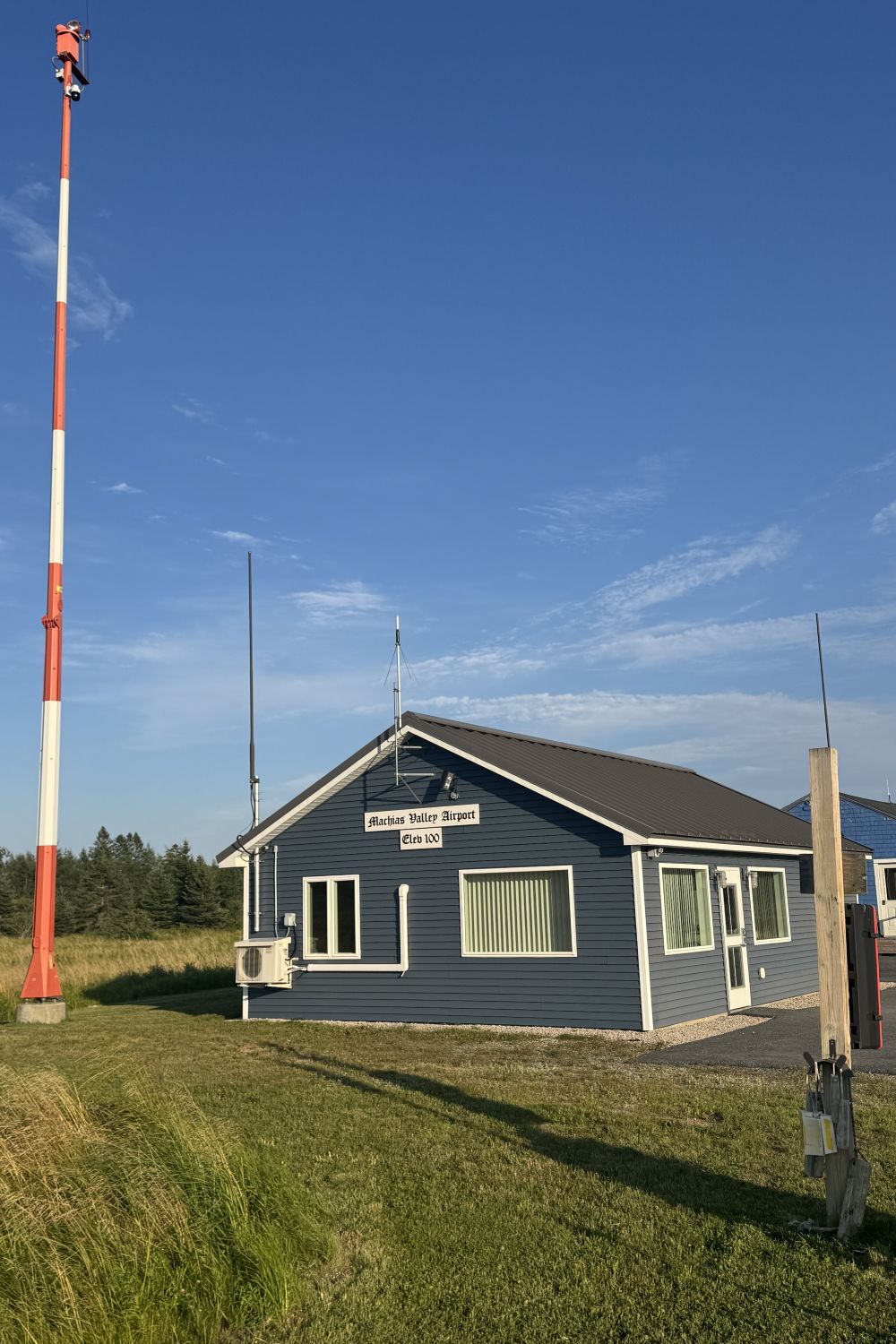
At a meeting last month, Michael Boucher, commander of the Machias Civil Air Patrol Composite Squadron and assistant director of emergency services for the Maine Wing, discussed the squadron’s work and its request to take ownership of the terminal building at Machias Valley Airport.
The Civil Air Patrol wants to maintain the building and use it as a base for training and emergency over-water response.
“I can’t overstate how much of an asset that is to a local squadron,” Boucher said of owning the building.
Craighead Dedmon suggested transferring ownership of the building to the Civil Air Patrol and leasing the land to the organization for a nominal amount. She proposed a clause requiring the building to revert to the town if the organization leaves.
“It’s a very active organization,” Craighead Dedmon said. “There’s quite a lot of youth who participate, and they really do get amazing aviation experience.”
The board agreed to continue the discussion at a future meeting.
The board also accepted a $67,697 state-funded Community Action Grant to install solar panels on the roof of the Machias Bay Area Transfer and Recycling Center. The panels are expected to save the town at least $8,000 a year in electricity costs, Craighead Dedmon said.
The Machias Select Board’s next meeting is scheduled for 5 p.m. Wednesday, Oct. 14.