


Organizers are seeking volunteers for the first‑of‑its‑kind Maine Citizens’ Assembly on Education Priorities, a new statewide effort to gather public input on learning opportunities and the future of the state’s schools.
The event, organized by the University of Southern Maine’s Center for Education Policy, Applied Research, and Evaluation, or CEPARE, is expected to bring together Maine residents to discuss education issues and offer recommendations to policymakers.
“The problems we face in education can’t be solved with quick fixes or politics. We need Maine citizens to come together to wrestle with the issues and identify where our highest priorities for action should be, to shape education policies that will impact the future of our state. The Maine Citizens’ Assembly on Education Priorities is a way to do just that. Our job is to listen and then get it done, together,” reads a message on the organization’s website.
CEPARE co‑directs the Maine Education Policy Research Institute with the University of Maine. According to its site, MEPRI “provides policymakers with objective data, policy research and evaluation to define and assess education needs, services and impacts.”
The assembly seeks to bring together 64 Maine residents — four from each county — to discuss issues relating to education. Participants must be 16 or older, but otherwise there are no restrictions on who may join.
CEPARE hopes to recruit a politically and socially diverse group that reflects the state’s population and its range of priorities.
Participants will be asked to answer the question: “What should Maine’s next governor and legislators consider their highest priority for action when it comes to improving Maine pre‑K through 12 education?”
Jennifer Chace, the assistant director of CEPARE/MEPRI, said she believes a variety of voices is essential to the program’s success because Maine’s municipalities have widely different needs.
Although the effort is unprecedented for this topic at this scale and format, Chace said she is optimistic that bringing together people with differing perspectives will produce meaningful feedback for policymakers.
“We’re not looking to change anyone’s mind,” Chace said. “We’re looking to find where there is agreement already.”
Mainers’ educational priorities and school systems vary significantly by location, but some themes are consistent. Residents want students to have practical “adulting” skills, such as filing taxes or understanding how to pay rent, Chace said. Defining these kinds of essential outcomes, beyond mandated test scores, is important for shaping the future of Maine’s education policies.
“What’s really important for people to be willing to volunteer is for them to believe that something is going to happen as a result,” Chace said.
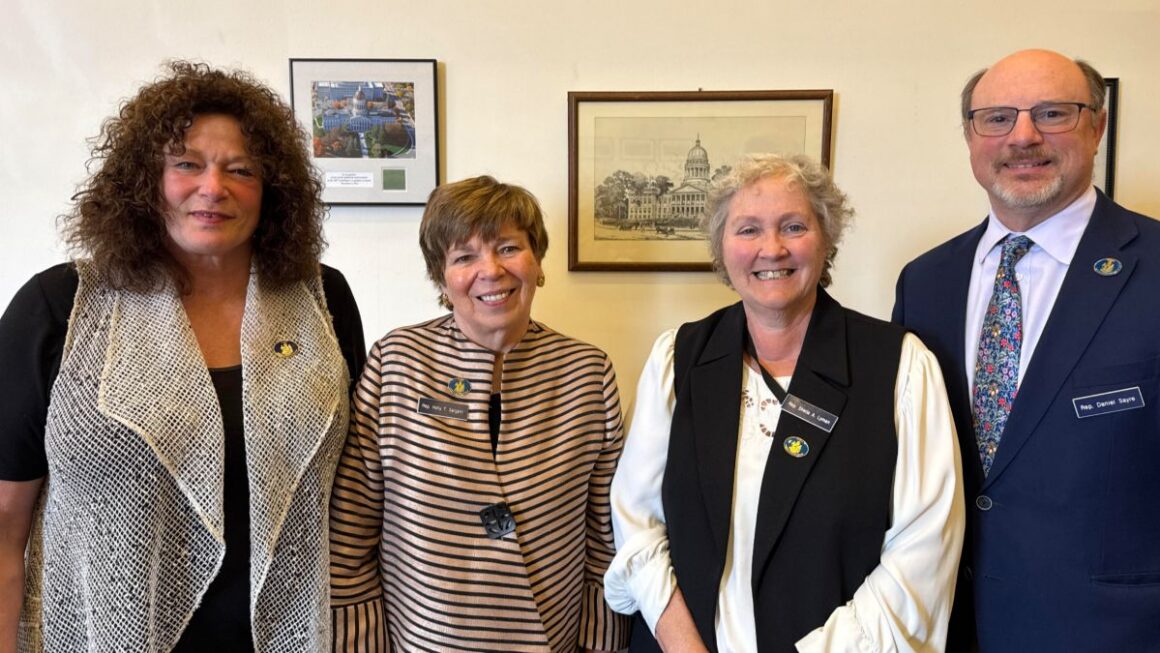
To help turn the assembly’s findings into policy, a bipartisan group of four legislators will attend the event, and organizers hope to host gubernatorial candidates to engage directly with participants.
“My service in the Legislature allows me to see how difficult it is for regular people to get their thoughts and ideas through to elected officials. I look forward to listening and learning from the participants in hopes we can utilize the input for policy moving forward,” state Rep. Holly Sargent, D-York, said.
“The Citizens’ Assembly on Education does two things. It highlights the critical importance of the topic for Maine’s future and it introduces an innovative process for regular citizens to discuss and deliberate on priorities that public officials should heed.”
The groups are still seeking participants. The event will take place in person in Bangor on June 17 and 18, and online Aug. 28. Anyone 16 or older may sign up, and full participants will receive a $750 stipend, along with hotel accommodations and meals. Signups close May 10.
For more information, visit the Maine Citizens’ Assembly on Education Priorities website.
This article was updated May 4 to reflect that the signup deadline is May 10, not May 7.