


Scott Reed, the Republican strategist leading a super PAC spending heavily to reelect U.S. Sen. Susan Collins, was paid last year to lobby Congress on her signature issue by a group that has never said who funded it.
The group, Keeping America’s Edge, took its name from an April 2025 hearing Collins chaired on biomedical research. It formed nine days later and paid Reed’s firm and two others a combined $850,000 to lobby on funding for the National Institutes of Health, according to federal lobbying reports. It dissolved in July, telling regulators it never “commenced business.”
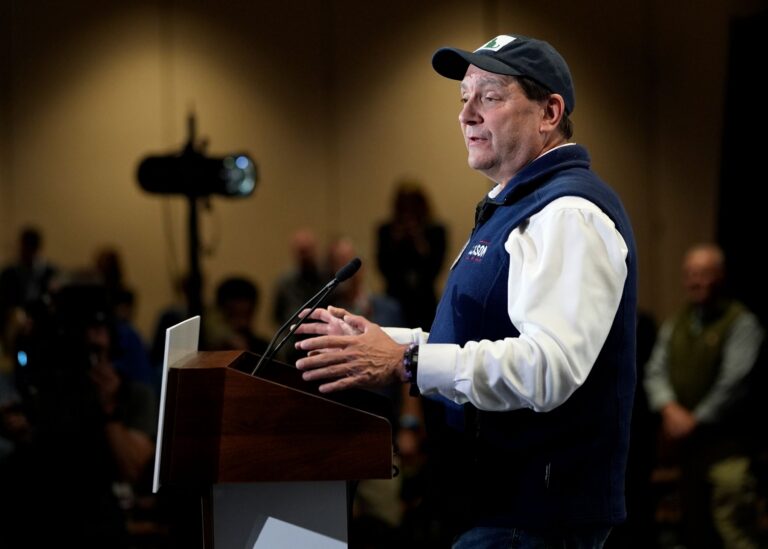
Nothing indicates Collins knew of the group or had a role in it, and her office said it had never heard of it until the Bangor Daily News asked questions. But the group adds to a web of ties between Collins and Reed, a longtime friend and former colleague of her husband, that has drawn scrutiny in the final weeks of her race against Democrat Troy Jackson.
Reed chairs Pine Tree Results, the super PAC that has booked nearly $32 million in ads backing Collins, according to AdImpact data. His lobbying firm, Chesapeake Enterprises, paid her husband, Tom Daffron, a consulting fee in 2025, according to her financial disclosure. Neither Reed nor Collins’ office has said what Daffron did or how much he was paid.
“There is always the risk of an appearance of a conflict of interest when a lobbying firm pays a lawmaker’s spouse, especially if the firm lobbies that lawmaker,” said Brendan Fischer of the Campaign Legal Center, a left-leaning watchdog group.

Reed has drawn complaints from watchdogs before. About a decade ago, the Campaign Legal Center accused a Reed-linked group of violating campaign finance law. Around the same time, the liberal Citizens for Responsibility and Ethics in Washington said Chesapeake had failed to file required lobbying reports.
Last month, ProPublica reported that FBI agents had examined a now-imprisoned defense contractor’s claim that Reed promised Collins would know the source of an illegal $150,000 donation to his previous pro-Collins super PAC in 2019. Collins called the report a “smear job,” defended Reed’s integrity and denied wrongdoing.
Few issues are closer to Collins than NIH funding. She founded the Senate Diabetes Caucus and the Bipartisan Congressional Task Force on Alzheimer’s Disease. Her father died with the disease in 2018. She chairs the Appropriations Committee, which writes the NIH budget, and sits on the health committee, which oversees the agency.
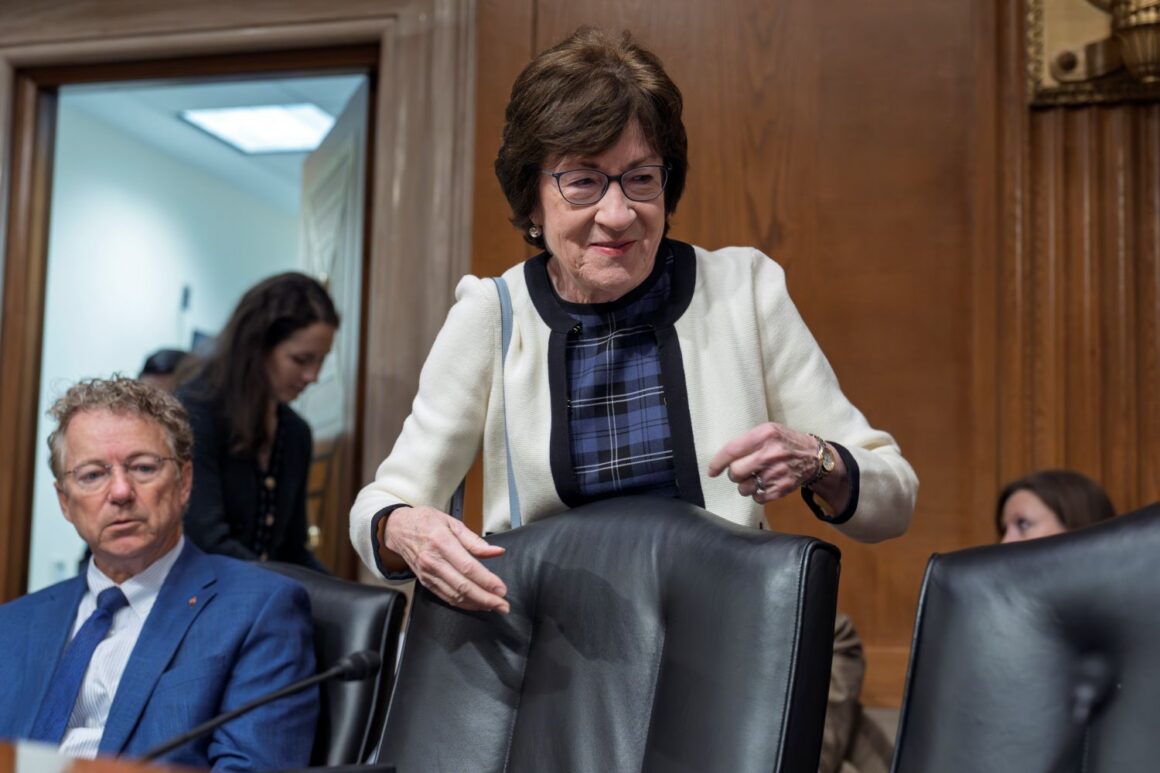
She has used those posts to push back on the Trump administration’s cuts to NIH research grants. She opened the April 30 hearing, titled “Biomedical Research: Keeping America’s Edge in Innovation,” by warning of proposed funding cuts, the firing of federal scientists, and policy uncertainties in the subject area.
Keeping America’s Edge was incorporated May 9. Five days later it hired Chesapeake, which listed Reed as its only lobbyist on the account and reported $250,000 for work on “NIH Funding” before the House and Senate. In June, the group added Miller Strategies, which reported $460,000, and Venture Government Strategies, which reported $140,000 and whose lobbyist Hamilton Bloom is a former Senate Appropriations subcommittee staff director. The work ended by January 2026.
While Chesapeake was lobbying for the group, Reed gave Collins’ campaign $7,000. Bloom and a Venture colleague gave Collins committees a combined $9,000 in March 2026.
The lobbying reports name no bill provision or dollar figure. Collins’ office said nothing in the Senate’s ensuing health spending bill reflected the group’s requests.
The group’s paperwork reveals little more. Its incorporation filing used language common to 501(c)(4) nonprofit groups, which can lobby without disclosing donors. It listed no directors, and its incorporator was Elliot Berke, a Republican political lawyer. It does not appear in IRS records of tax-exempt groups. Reed and Berke did not respond to requests for comment.
Now that the group has dissolved, it may never file a return showing what it spent. Federal lobbying law requires firms to disclose any outside group that helps fund and direct their work. None of the three firms listed one.
“At worst, this use of an unknown [nonprofit] is intended to hide who is actually behind the lobbying effort,” Fischer said. “I have not seen anything particularly like this.”
Berke attested in July that the group “has not commenced business” and that “no debt of the corporation remains unpaid.” That is difficult to square with lobbying reports listing the same Pennsylvania Avenue suite as the client’s address and $850,000 in fees.
Asked whether the group’s lobbyists had contacted Collins, her office or her committee staff, Collins spokesperson Phoebe Keller said: “None of these people lobbied our office about increasing NIH funding.” The office has long said Daffron has not lobbied anyone, including Collins, during their 14-year marriage.
The group left behind little but a name borrowed from Collins’ hearing, where she argued that cutting research money would cost the country its lead in medicine.
“We must preserve and strengthen America’s leadership for the sake of families all across this country,” she concluded in her opening remarks.