


A new wave of foreclosure cases have been filed against poor Maine homeowners who bought homes under a federal program seeking to collect on crushing amounts of debt.
The U.S. Department of Agriculture filed 14 more foreclosures in Maine District Court Wednesday against people who had purchased homes through a special loan program for people with very low incomes. Both last year’s cases and the new ones filed Wednesday target homeowners who had obtained a mortgage known as a Section 502 direct loan.
This is the second time in a year the agency has specifically targeted Maine with a wave of filings. Last spring, the USDA filed more than 50 foreclosures in Maine, a move that prompted a Bangor Daily News and ProPublica investigation into the neglected loan program. Homeowners in those cases had been in default for more than a decade on average.
Government delays in foreclosing have led homeowners to face down astronomical levels of debt long before the cases were filed in moves that violated the program’s guidelines, the BDN and ProPublica found. The USDA’s internal guidance says the agency should act quickly when borrowers fall behind on payments to minimize losses to the government and borrowers.
“It’s astonishing to me,” Geoff Walsh, a senior lawyer with the National Consumer Law Center, who specializes in foreclosure cases, said of the latest wave. “It does reflect very poorly on the oversight of the program. No lender in their right mind would do this, and ultimately it’ll be left to the taxpayers to make up the difference, because the government is not going to get their money back.”
It’s unclear why the agency has suddenly started filing new cases after nearly a year without doing so. It also remains unclear why Maine has seen the vast majority of them. The USDA has not systematically filed cases in any other state, and those in Maine make up a little more than a third of cases nationwide.
The USDA last year denied specifically targeting Maine with more foreclosures than other states. In a statement Thursday, the agency acknowledged that it should have moved forward with foreclosures long ago.
“These foreclosures should have happened years ago, which is why we are moving forward with the necessary foreclosure actions on long‑delinquent properties to reduce further losses and providing resolutions for the affected borrowers,” the USDA said in a statement.
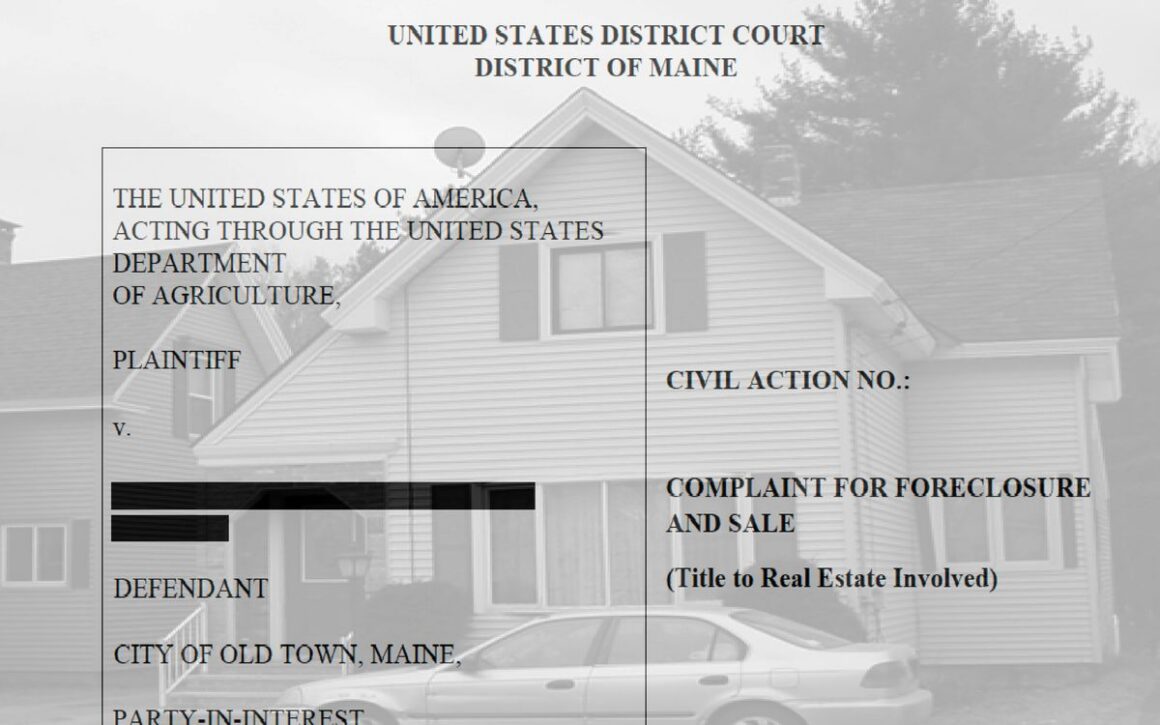
In one case, the owner of an Old Town home first defaulted in February 2014. The home was purchased with a $113,500 mortgage. After 12 years in default, the homeowner could owe the federal government nearly $312,000, according to the complaint against the homeowner.
Similar to the filings made last year, homeowners in this new batch have been in default for an average of about 12 years and owe nearly $300,000. Because the federal government backs these loans, it can garnish borrowers’ wages and federal benefits like Social Security.
Most of the foreclosure cases filed last year have dragged on in court, pushing borrowers deeper into debt. Only 14 of the 56 cases filed last spring have closed. Many of those cases are languishing in court because a USDA official has yet to sign basic documents, according to a BDN review of the cases this winter.