


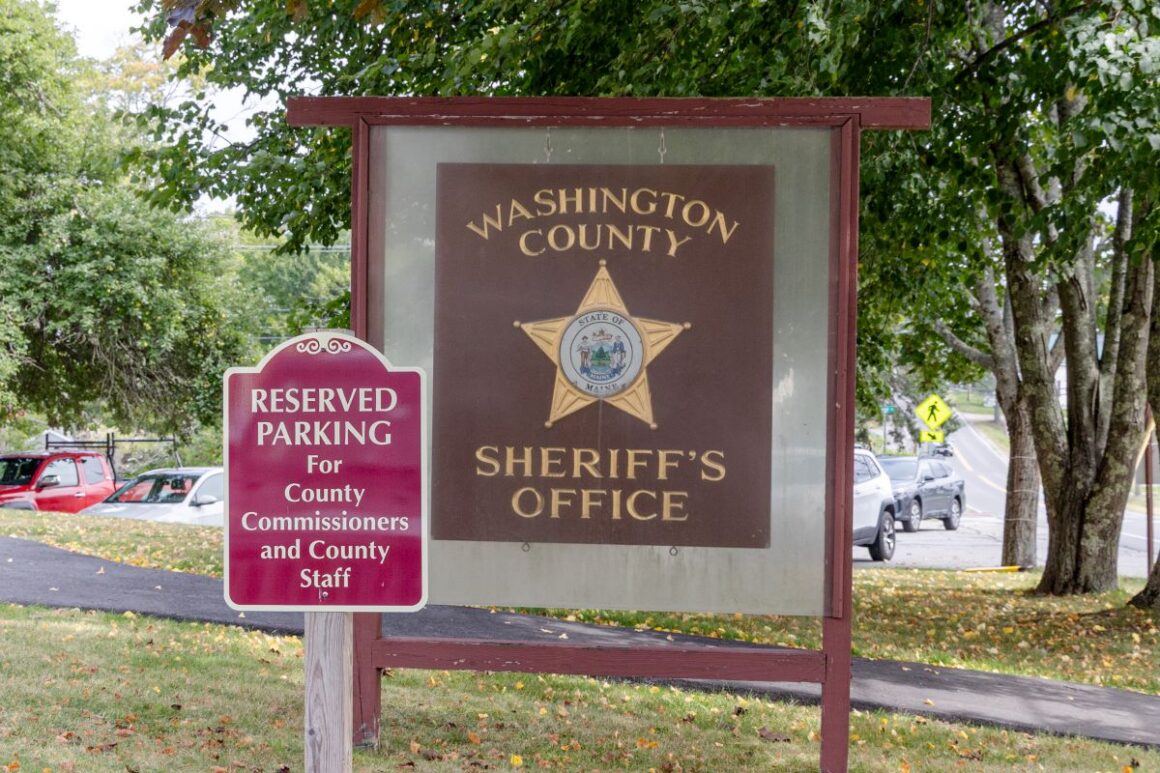
MACHIAS — Washington County Jail Administrator Capt. Rich Rolfe held nothing back Tuesday when he urged the county’s Budget Advisory Committee to recognize the dedication of jail employees who have compensated for years of “aging infrastructure, inadequate funding, staffing pressures and an increasingly distorted wage structure.”
Rolfe was the latest county department head to present a budget request to the committee Tuesday. He acknowledged at the outset that the jail had the county’s largest departmental budget and was a natural target for cuts. But he said years of overcrowding, deferred maintenance and increased demand for medical care have taken a toll on the building and its staff.
“My request is not that the county fund everything we’d like to have,” Rolfe said. “My request is we adequately fund what we’re required to provide, protect the people who are responsible for providing it, address legitimate infrastructure needs before they become emergencies and establish a wage structure that appropriately recognizes responsibility, experience and leadership.”
The county budgeted $4 million for jail operations in 2026. Rolfe’s initial request for fiscal 2027 is $3.2 million, or $782,957 less than the 2026 budget. But the comparison is skewed by a change in the budget process: The county moved costs such as electricity, fuel, sewer, water and computer upgrades out of the jail budget and into the budgets for buildings and grounds and information technology. Insurance costs also moved out of the jail budget and will be paid from other administrative accounts.
For comparison, if those costs remained in the jail budget, the proposed budget would be nearly $4.6 million, an increase of about $1.4 million from 2026.
As part of its effort to reorganize and improve accounting practices, the county moved utilities and other general costs out of several departments, including the Sheriff’s Office and Regional Communications Center. This makes year-over-year comparisons artificially low for those departments and high for administration and buildings and grounds.
The county also prorated costs such as audits across departments. Those costs had previously come from finance and administration budgets, further complicating year-over-year comparisons. The changes are intended to better align spending and improve future reporting.
At the jail, the largest requested increases are for full-time wages and food.
Rolfe said the “jail population continues to plague us significantly and put pressure on the facility.” The average daily population was 57 inmates in 2025 and closer to 60 in 2026.
The jail is rated for 42 inmates. Its second floor has 41 medium- to maximum-security beds and 11 minimum-security beds in an open dormitory-style setting. The first floor has one minimum-security bed and multiple intake cells for short-term housing.
The intake cells, Rolfe said, “frequently also serve as special management cells for individuals experiencing serious mental health crisis, substance-related issues, withdrawal or a combination of all these conditions.”
Rolfe said corrections officers routinely deal with “individuals experiencing serious mental health crises, drug and alcohol withdrawal, behavior problems, and significant medical needs.” They also supervise people who may be angry, combative or uncooperative, or unwilling to accept that they are incarcerated.
Rolfe said these pressures have created conditions in county jails often described as “the emergency rooms of the correctional system.”
The jail, built in 1988, has had no significant upgrades beyond general maintenance and repairs, he said. Major needs include replacing the aging air handling system and modernizing the control room.
Rolfe said that when the jail’s freezer has malfunctioned in recent years, Maine Wild Blueberry Co. has allowed the county to store frozen food at its facility temporarily.
“Without that community partnership,” he said, “these failures could have resulted in significant food loss and additional expense to the county.”
Though he emphasized the need to upgrade the building, Rolfe requested flat funding for building maintenance in 2027. He said staff members have so far taken the structural issues in stride.
“It’s part of the process for us,” he said.
Rolfe’s budget includes an additional $134,888 for full-time wages, bringing the total to $1.9 million. It also includes $330,000 for regular full-time overtime, a $152,000 increase from 2026.
Jail overtime costs were already over budget as of Aug. 19, totaling $183,757, compared with the $178,000 budgeted for the year.
For the first time, the jail budget assigns $150,000 to comp time. It also requests $50,000 for part-time wages, $30,000 less than in 2026.
The budget allocates $90,000 for inmate medical costs in 2027, an increase of $20,000 from the current year. It also includes $60,000 for a motor vehicle reserve account.
The jail’s food budget rises from $114,000 in 2026 to $135,600 in 2027, an increase of $21,600. The request for kitchen supplies also increases, from $9,000 this year to $20,000 in 2027. Rolfe attributed the increases largely to higher food costs and a larger jail population.
Rolfe projects a $152,407 drop in revenue, almost entirely because of reduced funding from the Maine Department of Corrections.
The Budget Advisory Committee also reviewed budget requests Tuesday from District Attorney Robert Granger and Emergency Management Agency Director Lisa Hanscom.
Granger’s request is $475,191, an increase of $89,033 from 2026. Much of the increase would pay for a part-time clerk at the prosecutor’s Calais office, which handles juvenile cases and some drug court cases. The Machias office handles all other cases, including jury trials.
One clerk now works in the Calais office. When she is away, the office doors are locked. Budget Advisory Committee Vice Chairman Ben Edwards asked Granger whether adding a part-time clerk was a convenience for the public or essential to the office’s ability to conduct business.
Granger said the work gets done, but when the sole employee is away, including when she calls in sick, the public does not know the office is closed until someone finds the door locked.
“So, just so I’m clear: We’re looking at roughly $30,000 to make sure we’re open during the business hours we post, but it’s not going to affect your ability to get work done,” Edwards said.
“Exactly,” Granger replied.
He added that he understood the commissioners wanted to keep the office open. The office also serves as a workplace for assistant district attorneys, the victims’ advocate and others handling cases there.
Committee Chairman Brian Schuth, who appeared to support Granger’s request, said adding a part-time employee “is not just about keeping the door open and everything else. It’s about running the functions of the office, even in the absence” of the full-time clerk.
Granger agreed, noting that some law enforcement officers still file reports on paper. Most officers e-file, he said, but “sometimes we get paper, paper reports, and the officers show up at the office and the door’s not open, and it makes it difficult.”
Edwards thanked Granger for managing costs in the prosecutor’s office when the part-time position went unfilled last year and for holding the line on spending.
Edwards said many spending decisions last year reflected the financial crisis.
“We don’t have that anymore, and I think now I’m trying to figure out how we can best utilize our resources and be efficient,” he said.
He asked Granger whether he would consider phasing in the part-time position over several years or starting it halfway through the year “as a way to buffer the increase that we’re about to ask of the municipalities, given that we hurt them so badly last year, and also realizing that you guys made sacrifices (last year) and we need to work our way back.”
Granger said a one-day-a-week position might attract few applicants. The training required for so few hours of work could also discourage interest, he said.
As with other department requests considered so far in the budgeting process, the committee made no recommendation on the part-time position.
Granger’s budget also projects a $21,500 increase in revenue, helping offset the requested spending increases.
Hanscom requested a budget of $147,683, up 6.13 percent, or $8,534, from the previous year. Her budget includes modest increases for wages, fuel, equipment repairs and maintenance, as well as $1,000 for computer upgrades. Hanscom also projects a $2,194 increase in federal and state matching funds.
The Budget Advisory Committee is not scheduled to meet next week. It has until Nov. 16 to submit its budget recommendation to the Washington County Commission.