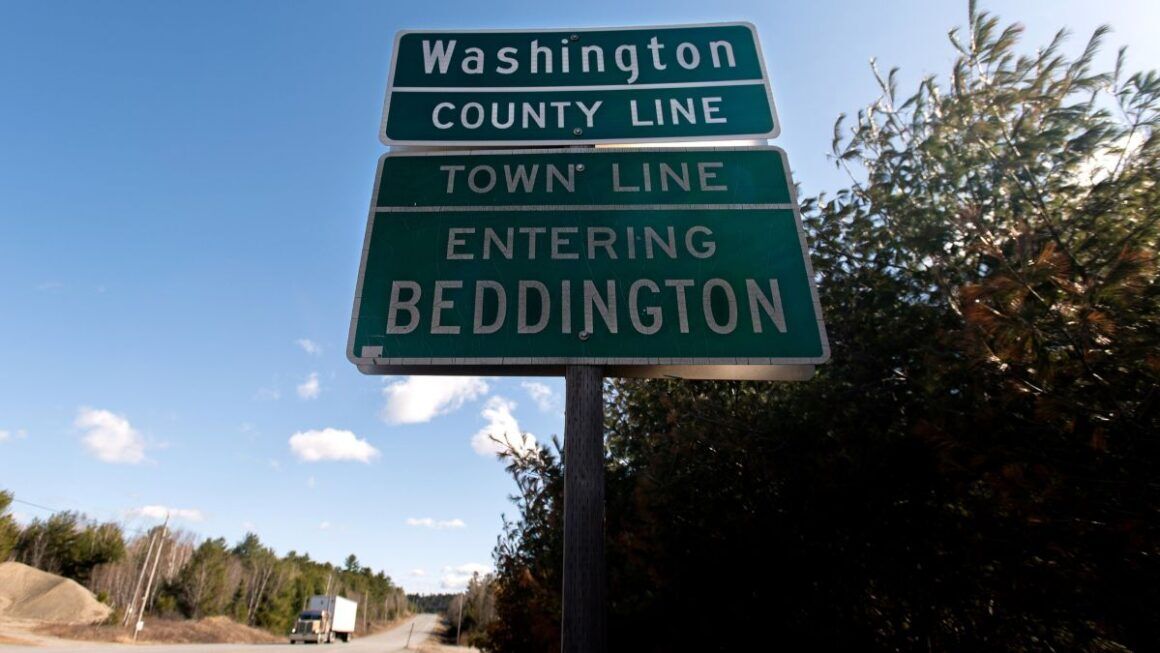
MACHIAS — Washington County commissioners are moving forward with plans to make the treasurer an appointed position and to shift county spending from a calendar year to a fiscal year that runs July 1 through June 30.
County Manager Renée Gray told commissioners Thursday that Heidi Peckham, director of elections and voter registration at the Maine Department of the Secretary of State, had responded to their question about whether November’s ballot could confuse voters by asking them both to elect a treasurer and to eliminate the position.
Peckham said her office’s interpretation of state law “is that if both the question and the office are on the ballot in November, and the voters vote to abolish the position, whoever is elected treasurer would have no office to serve in.”
If a majority of voters approve abolishing the elected position and replacing it with a treasurer appointed by commissioners, state law says the “position of elected county treasurer shall be abolished after the term of the current elected county treasurer expires.”
Peckham also clarified how her office interprets the statute’s reference to the treasurer in office at the time of the election.
“We view ‘current’ treasurer under the statute to mean the outgoing treasurer serving at the time of the election,” not someone who may be elected to a new term, she said.
Commissioners also reviewed feedback Thursday from 14 Washington County towns and from Franklin, Kennebec, Lincoln and Waldo counties on whether to move the budget from a calendar year to a fiscal year.
Gray sent surveys to all municipalities in Washington County and said many of the towns that responded support the change, though some had questions about how tax bills would be handled during the transition.
Officials in Addison raised concerns about due dates for tax bills during the shift, but said that “after the initial transition, it seems logical.”
Baileyville officials also support the plan, particularly if it allows the county to stop borrowing tax anticipation notes to cover the gap between its budget cycle and that of municipalities, though they acknowledged the process “is not without pain.”
Harrington officials raised similar concerns about the timing of tax bills, which they said could create cash flow problems for some towns.
Lubec officials were enthusiastic in their support.
“If the county were to move to a July 1-June 30 fiscal year, it could potentially benefit Lubec by allowing for more flexibility in how the county tax is paid,” they wrote, noting it would let the town make monthly or quarterly payments instead of the current full‑year payment due in September.
“Aligning the timing more closely with municipal revenue cycles would help ease seasonal cash flow constraints for Lubec.”
Beals and Eastport were not as supportive, and Machias officials questioned how early the county would need to adopt its budget in order to capture funding approved at various town meetings. They also questioned whether adopting a budget that early could adequately account for fluctuations in spending, raising the question of whether that risk was worth the benefit of reduced borrowing.
“Changing the county fiscal year may make sense from a county level, but it is going to add an increased burden for our town and we oppose the change,” Beals officials responded, “because of the structure of our town government and fiscal year, as well as the extra tax payment it will require.”
They went on to criticize county officials, writing: “The burden on our citizens is unreal, and the county did us no favors in refusing to make large cuts in the new budget. The situation is discouraging, to say the least.”
Franklin County, which budgets on a fiscal year with payments due Sept. 1 and Feb. 1, offers a 60‑day grace period on tax payments to ease the load on towns.
Officials in Kennebec County discouraged Washington County’s move to fiscal year budgeting, saying the change “only benefits locals and inhibits your ability to earn interest. It also may cause cash flow problems for you.”
Waldo County attempted to move to fiscal year budgeting last year and proposed an 18‑month budget to make the shift. Officials there said the “budget went down in flames early in the budget process, so we remain on a calendar year with a one‑time annual tax payment.”
If Washington County decides to move ahead with a fiscal year budget, it would need legislative approval.
Washington County Commission Chairman David Burns said Thursday he thought commissioners needed to hear more opinions from towns and counties about the process, which he said would affect communities across the county.
“Every other county is in the same situation and looking for solutions, too,” he said.
Commissioners said they will review the feedback Gray presented and revisit the discussion at their next regular meeting.
In other matters, Gray told attendees Thursday that the Legislature passed the bill establishing municipal cost components for unorganized territories, which includes a one-time payment of $640,671 for Washington County — rounded up to cover the UT portion of the 2025 debt, plus interest.
The bill, presented as emergency legislation requiring a two‑thirds majority, passed nearly unanimously in both chambers Monday, with House approval of 108-1 and Senate approval of 30-1.
Gray said the bill is now on the governor’s desk awaiting her signature. Payment is expected by June 30 and will come from the American Rescue Plan Act State Fiscal Recovery Fund.
The commission’s next meeting is a work session scheduled for April 23, during which commissioners are expected to review bids from auditors submitted in response to a request for proposals for a new auditor.
The county’s auditor resigned in February after saying he could not meet the deadline set by commissioners and Machias Savings Bank for completing the 2023 and 2024 audits.