


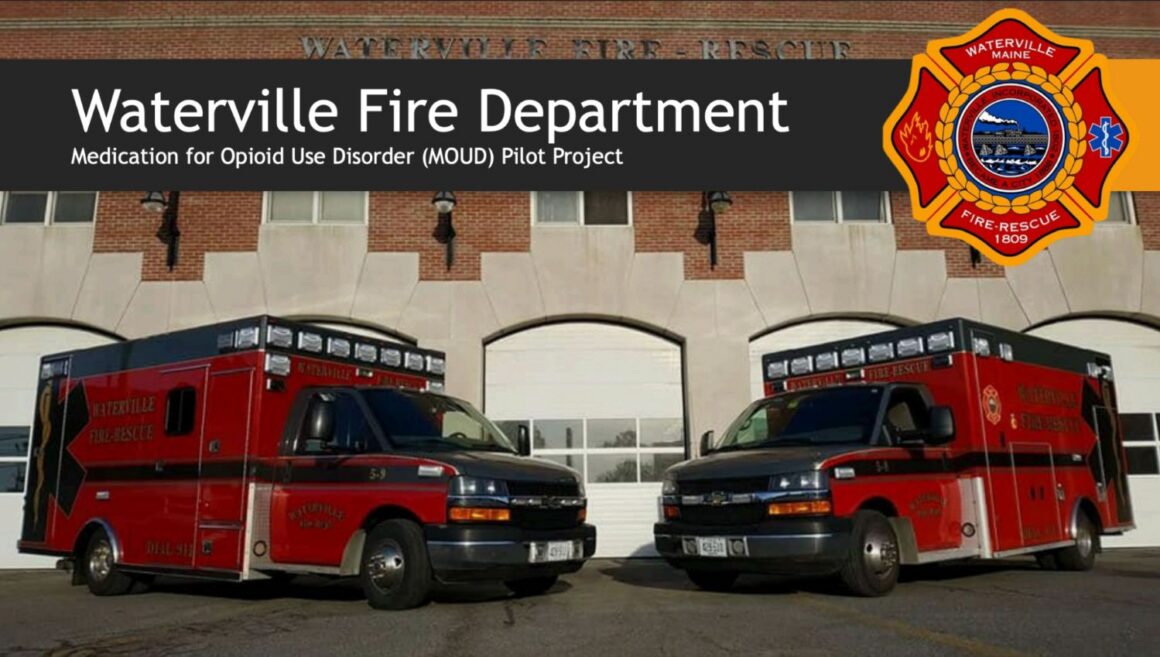
WATERVILLE — The Waterville City Council approved a pilot program Tuesday that will allow Fire Department paramedics to provide medication‑assisted treatment in the field to people experiencing opioid withdrawal or recovering from an overdose.
Fire Department officials told the council that opioid use disorder remains a major public health challenge in Maine and described the program as a way to offer immediate, evidence‑based care to patients at high risk of repeat overdose.
The program allows advanced life support clinicians — paramedics trained to provide the highest level of prehospital care — to administer buprenorphine directly in the field.
Buprenorphine is a medication that eases withdrawal symptoms and reduces cravings. It is also a key ingredient in Suboxone, a commonly used treatment for opioid use disorder.
Officials said the program aims to “initiate treatment that reduces withdrawal symptoms, decreases risk of recurrent overdose and improves engagement in ongoing care.”
Naloxone, commonly known by the brand name Narcan, is a fast‑acting medication that reverses opioid overdoses by blocking the effects of opioids in the brain.
Officials noted that patients often experience immediate withdrawal symptoms, including nausea, agitation and intense cravings, after receiving naloxone. Some also decline transportation to a hospital after being revived, leaving them at risk for another overdose.
Fire officials said providing buprenorphine in the field is expected to create a “practical bridge to ongoing care.” Buprenorphine is a partial opioid agonist, meaning it activates opioid receptors just enough to ease withdrawal and cravings without producing the same high as drugs like heroin or fentanyl.
Under the program, eligible patients experiencing opioid withdrawal, including those whose symptoms begin after naloxone administration, could receive buprenorphine after evaluation under established medical protocols and with informed consent.
Fire officials cited research showing that medications for opioid use disorder, including buprenorphine and methadone, significantly reduce overdose‑related deaths.
They also highlighted a Minnesota Emergency Medical Services program that has administered buprenorphine more than 120 times without major complications or documented cases of precipitated withdrawal, a condition in which a medication triggers sudden, severe withdrawal symptoms.
The pilot program in Waterville is expected to operate under guidelines established by Maine EMS, which emphasize harm reduction, an approach focused on reducing the negative consequences of drug use rather than requiring abstinence, along with patient‑centered care, low‑barrier access to treatment and efforts to reduce stigma surrounding substance use disorders.
A key component of the proposal involves connecting patients with ongoing support services. Individuals receiving treatment would be referred to Waterville’s Community Impact Team, a multidisciplinary group that includes a community police officer, social worker, OPTIONS liaison, community paramedic and a peer support specialist.
An OPTIONS liaison is a state‑funded outreach worker who helps people at risk of overdose access treatment, recovery services and basic needs.
The team would help connect individuals with treatment providers and recovery resources, including Better Life Partners and MaineGeneral Health. Follow‑up contact would be attempted within 24 hours of the EMS encounter, with an in‑person meeting targeted within 48 hours whenever possible.
The presentation also included local opioid‑response data. Since the beginning of 2025, the Waterville Fire Department has responded to 62 opioid‑related incidents, including 33 overdoses involving patients classified as comatose, meaning they were unconscious and unresponsive. Eleven of those patients received naloxone from EMS personnel, while many others were revived by naloxone administered by bystanders before first responders arrived.
Of the 62 opioid‑related calls, 44 patients were transported to a hospital emergency department, while 18 declined transport.
During the presentation, a Waterville fire official referenced the city of Westbrook’s program, noting that its Fire Department recently received state approval to provide Suboxone and is expected to launch its program July 1.