



WATERVILLE — The City Council is considering a proposal to create a Fire/EMS Department Study Committee to evaluate current services and assess future needs.
The move comes as Waterville continues to grow and officials express increasing concern about sustainable expansion and emergency resource allocation.
The recent addition of four EMTs and ongoing discussions about forming a Local Public Health Board are two key issues in Waterville’s ongoing debate over public safety funding.
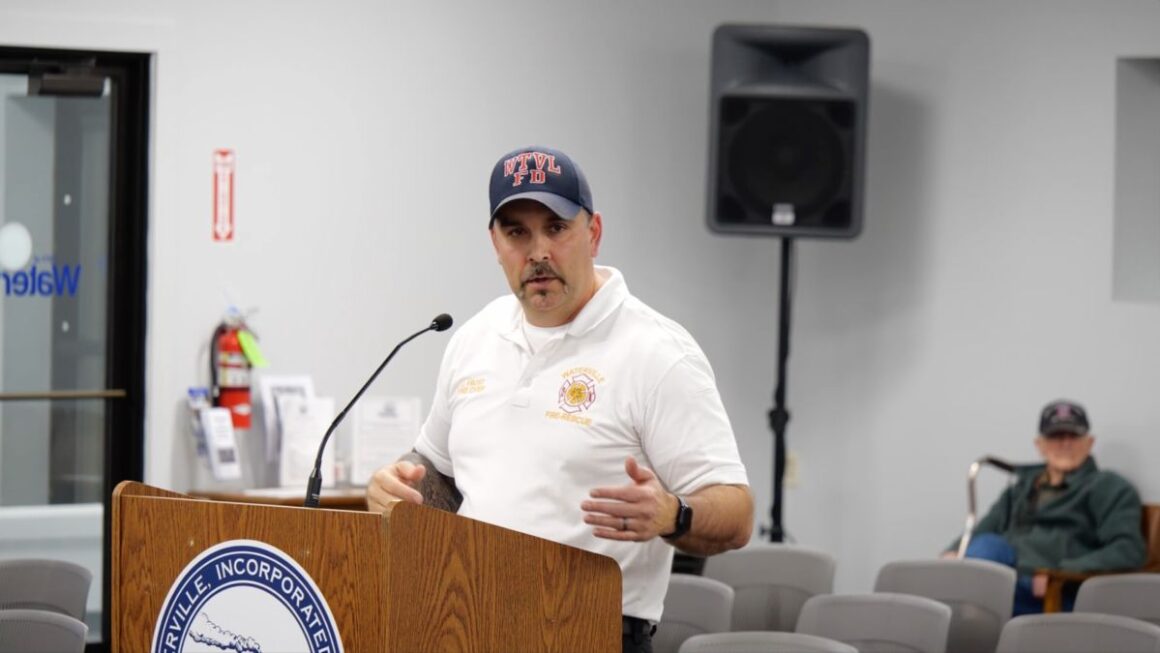
“How do we continue to grow with the growth?” Fire Chief Jason Frost asked repeatedly at a recent City Council meeting.
Ideally, the department would hire eight new EMTs to meet rising demand, but officials agreed to settle on four.
One of Frost’s key initiatives after joining the department as deputy chief in 2022 was making Waterville a “delegated review community.”
The designation allows developers to obtain building and other approvals directly from the city, rather than through the state. Frost said the change has eased development by eliminating administrative burdens, accelerating growth in both pace and scale.
Frost said he is a proponent of growth, but he was quick to point out the 300 to 400 new residential units in the pipeline, the potential for a new hotel and a proposed Colby College research facility — all in a city that also serves as a regional service center. Each, he noted, adds pressure on municipal services.
As a service center, Waterville’s daytime population swells to between 30,000 and 35,000, placing even greater strain on city resources.
With a population of about 17,000, Waterville already handles an emergency call volume comparable to more populous communities in southern Maine.
Lewiston, for example, handles about 1,000 emergency calls per month with nearly 80 uniformed police officers. Waterville, by comparison, responds to about 900 calls with just 30 uniformed officers, Frost said.
As of 2023, Frost said, Waterville ranked as the seventh busiest emergency department in Maine, despite the city being about half the size of the other municipalities in the top 10.
Ultimately, resources depend on available funding — and that funding is tied directly to the tax base.
About 20 percent of Waterville’s population is considered low-income, with many residents relying on public and social services. At the same time, residents in higher income brackets have significant expectations of public services, including dependable emergency and medical response teams.
At the Nov. 4 meeting on establishing an emergency response study committee, Councilor Thomas Klepach, D-Ward 3, said, “The main way municipalities pay for themselves … is through property tax, one of the most regressive taxes there is.”
Frost recommended a two-pronged approach: studying emergency services in other municipalities and evaluating Waterville’s internal systems as a whole.
“We need to look at other services in the area,” he said.
A study committee, he added, could help examine how other communities operate compared to Waterville, which faces its own set of challenges.
Waterville has a large elderly population, and with the recent closure of Northern Light Inland Hospital, some residents have lost access to their medications. Many are unfamiliar with online platforms for renewing prescriptions, while others no longer have primary care providers to issue them.
Frost said 78 percent of calls to Waterville’s emergency services are for EMS. To help reduce that volume, officials have suggested alternative approaches that might be more appropriate and cost-effective, such as deploying social workers, expanding age-in-place initiatives or investing in community paramedicine programs, which have paramedics provide nonemergency care and preventive services at homes or other community settings to reduce 911 calls and hospital visits.
Since the closure of Inland Hospital, EMS call times have increased as ambulance teams now travel to Augusta.
Frost said he wants city councilors to examine municipal systems as a whole and, specifically, all the services residents fund through their taxes.
The point was made that increasing the load on trained emergency personnel without relief can lead to burnout and high turnover.
“It’s about retention. We don’t want people to burn out,” Klepach said. “Adding more personnel isn’t just about expanding the service. It’s about protecting the service members we already have.”
Frost and Councilor Scott Beale, D-Ward 6, noted a desire to attract more young people to Waterville. Although the city is home to Colby College and Thomas College, few students stay in the area after graduation.
Officials said they hope more students will choose to remain in Waterville because, as Frost said, they “are the future.” To make the city more attractive, he added, there needs to be “a fine balance of sustainable growth and trying to provide services.”
As development adds more taxable properties to the city and boosts revenue for social services, it also brings more people who rely on those services — a balance city officials said is a fine line to walk.
“We need to take a holistic approach and really look at where we’re headed as a city – to make sure we are really growing as a city, too — when people move here, to provide the resources that they want,” Frost said.
Beale said he wonders whether “we would be able to achieve much savings from a study,” and also questioned the process of “taking these studies and then turning them into actual results.”
Ultimately, he said he is not sure whether he would support the study, and believes more time is needed to fully understand the impact of Inland Hospital’s closure and the city’s ongoing growth.
He added that he is concerned about keeping property taxes reasonable — a measure he acknowledges is highly subjective. Beale, who has focused on school systems and other social services, said, “If you have extra money to spend, do you spend it on EMS or on growth opportunities?”
While expressing concern about funding for health systems, Beale said he also wonders if the city’s EMS system is “good enough,” and whether money could be funneled into other channels.
Klepach favored the study, saying, “In my mind, the biggest reason to have this committee … (is) it keeps the conversation going, and it creates the structure for whatever entity is going to have to be considering regionalization.”
No date was given for when the committee proposal is to be discussed. The next City Council meeting is scheduled for 6 p.m. Tuesday, Nov. 18, at City Hall.