



Mae Wyler first learned about big nights, those early spring evenings when amphibians migrate from their winter habitats to breeding grounds, while walking into the Marden’s in Ellsworth three years ago. On her way into the store, Wyler stopped to admire a woman’s tote bag that had a salamander design on the side.
The tote bag, the woman said, had been a giveaway from Maine Big Night, a nonprofit organization that works to conserve amphibian populations. In addition to conducting community outreach and monitoring road salt levels, the organization recruits and trains volunteers to shepherd species across busy roads during warm, rainy nights between mid-March and mid-May.
Wyler, who completed Maine Big Night’s certification process in 2023 to monitor a site near her family’s home in Hancock Point, is now a member of the organization’s board. She said the mission has changed as more volunteers have gotten involved with roadside monitoring.
“One of the biggest goals of the nonprofit is to not only do our part to transport individuals across the roads and get their data, but also in the long run, when it comes to municipal planning and roads being developed, having amphibians in mind,” Wyler said.
Since the project began in 2018, founder and biologist Greg LeClair said that volunteers have recorded more than 50,000 amphibians crossing roads at hundreds of sites throughout the state.
LeClair, who works as a municipal planning biologist at the Maine Department of Inland Fisheries and Wildlife, said that interest from the public continues to grow, with more than 1,000 volunteers participating during the 2025 season.
In Madawaska, retired biology teacher Linda McDermott has been spending spring nights outside with her flashlight and rain gear since shortly after she retired in 2020.
“It’s like a secret world that other people don’t know about, and I think that’s partly what makes it cool,” McDermott said. “This is kind of our only chance to see all these guys.”
Last year, McDermott said she counted more than 50 amphibians on the road at one time.
During a big night, volunteers might observe wood frogs, spotted salamanders, spring peepers, great tree frogs and bull frogs, among others. Wood frogs are typically part of the first wave of species to emerge from winter hibernation, and they can travel up to a kilometer, a great distance relative to their three-inch body size.
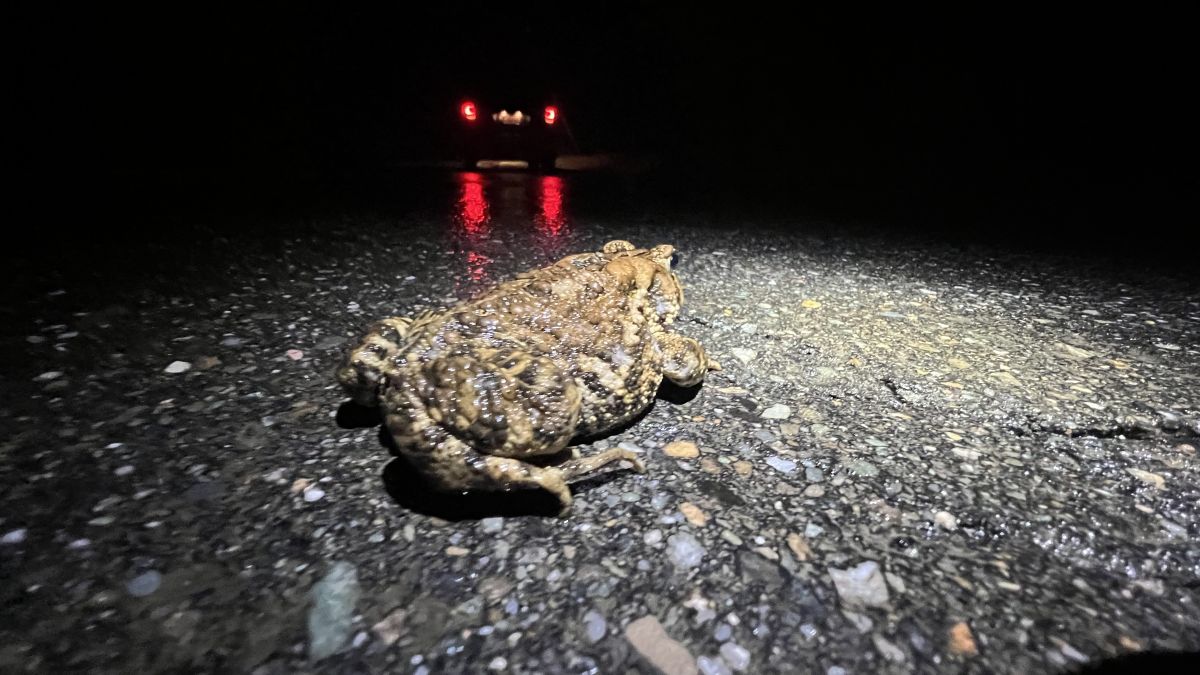
“It’s comparable to a caribou migration in the tundra — it’s larger than the migration of the wildebeest in the Serengeti,” LeClair said. “And it’s happening every springtime, right in our backyards, right under our noses, and many of us have no idea what’s going on.”
As more volunteers get involved with Maine Big Night, more crossings are tallied and added to the organization’s database. LeClair projects that the number of all-time recorded amphibian crossings will top 70,000 this spring, if keeping with past years’ trends.
Over the short term, the data collected by volunteers can help researchers identify areas where amphibians are particularly vulnerable.
Maine Big Night’s current data has shown that the average mortality rate, or share of frogs and salamanders found dead on the road, is around 25 percent. That rate increases on roads closer to cities, per the data.
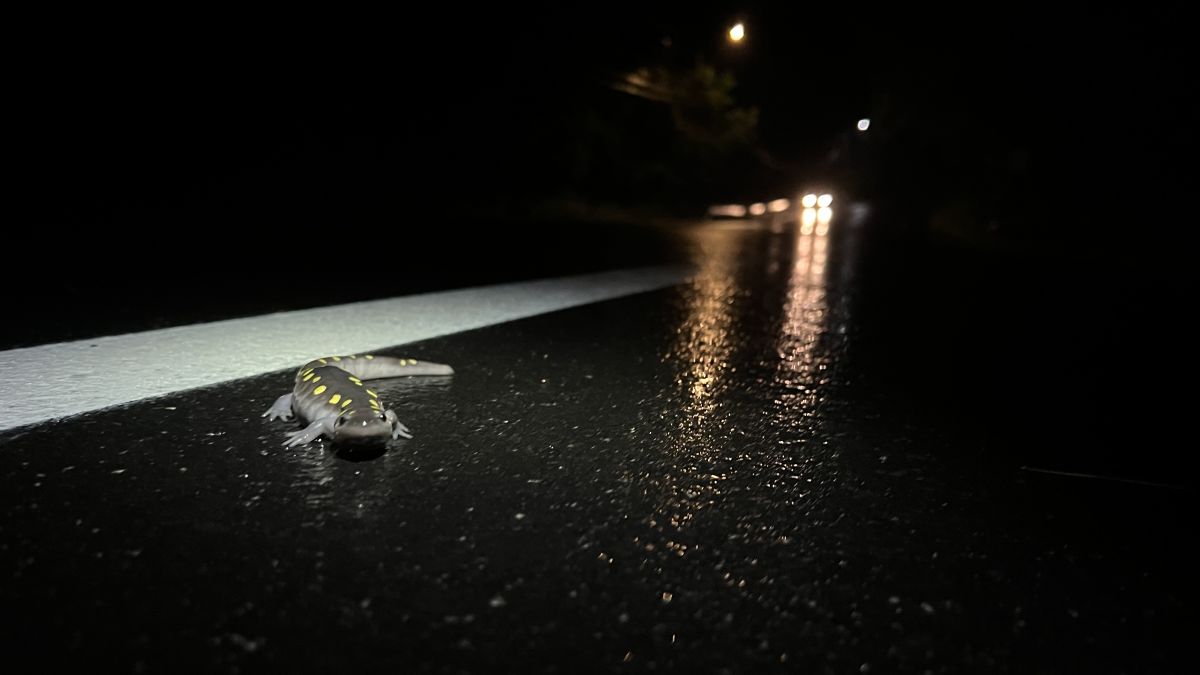
As high-mortality sites are identified, another part of Maine Big Night’s work is to start conversations with state and local officials about infrastructure solutions, such as culverts and wildlife crossings.
Later this year, Maine Big Night will be working with the town of Orono to experiment with using fencing to create a makeshift wildlife crossing on Forest Avenue, which has seen amphibian mortality rates of up to 80 percent in years past.
Cameras will be installed along with the fencing to observe whether the structure can effectively direct amphibians and other wildlife into existing culverts underneath the road, LeClair said.
Across the state, warmer temperatures and shifting precipitation patterns associated with climate change are changing amphibians’ migration window.
In 2024, amphibian movements were recorded in February for the first time since Maine Big Night began, which LeClair said was unusual. Additionally, dry conditions can disrupt the formation of vernal pools, where amphibians migrate to in order to begin their breeding processes.
“If they dry out too early in the summer or even in the springtime, if we have a drought, that’s not good news for amphibians,” LeClair said.
Correction: This story was updated March 23 and March 25 to correct that amphibian movements were recorded during the month of February in 2024 (not 2023 and 2024) for the first time since Maine Big Night began, to correct Maine Big Night began in 2018 (not 2019), to correct that Orono is a town, not a city, and to correctly identify the amphibian in the second photo (an American toad, not a wood frog).