



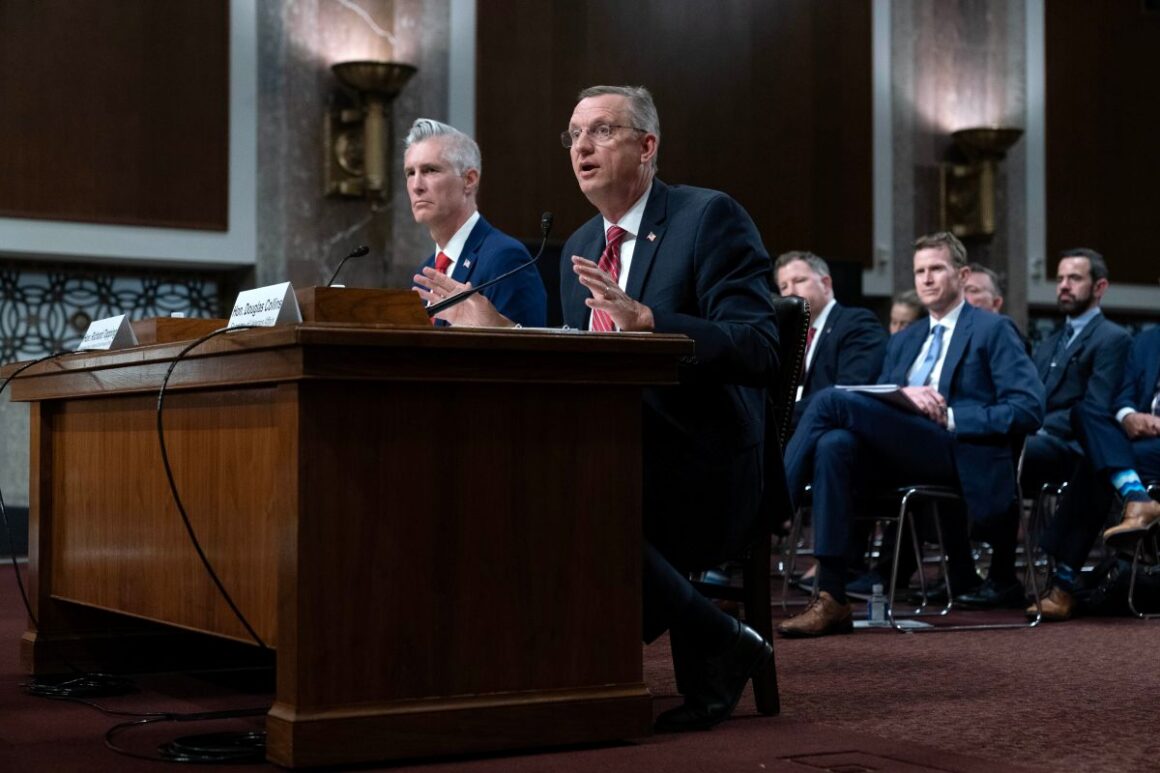
On Wednesday, independent Sen. Angus King of Maine pressed Veterans Affairs Secretary Doug Collins on the agency’s proposed spending during a Senate committee hearing on its budget plans for the next two fiscal years.
Why, King asked, did the 2028 plan propose putting billions more toward private medical care for veterans — or community care, as the initiative is known — and no more toward health care services within the VA system itself?
“There’s a $17 billion increase for community care and a zero increase for VA care,” King said, noting that the allocation for the latter is so slight that when adjusted for inflation it amounts to a decrease in funding.
The federal agency, which provides health care to veterans at hundreds of government-run medical facilities across the country through the Veterans Health Administration, has seen significant staffing cuts since President Donald Trump took office last year and vowed to slash “wasteful spending.”
After years of growth, more than 48,000 full-time employees left the VA in 2025, according to federal workforce data from the Office of Personnel Management. Roughly 86 percent of those departures were from the Veterans Health Administration, including more than 7,000 nurses and 2,000 physicians, along with 1,500 psychologists and hundreds of social workers, custodians and benefits claims processors. Meanwhile, the VA hired fewer than 25,000 new employees.
In Maine, the VA health system lost 258 full-time workers and made 111 new hires last year, a net loss of 57 percent, according to a Maine Monitor analysis of the data. Three-quarters of these departures were from Togus VA Medical Center in Augusta, the state’s only VA hospital.
The hospital saw 34 nurses, 17 medical assistants, 12 doctors and 9 psychologists leave last year, according to the same data, and fewer new hires for each role.
On Capitol Hill, King pointed to these cuts and the new budget request and said it appeared the VA was making a “not so subtle move toward community care.”
The community care program allows veterans to receive private medical care under certain circumstances, including when services are not available from VA health providers, at the VA’s expense. The agency announced a plan to expand this program with a $1 trillion investment earlier this year. While some argue this could improve access and help address long wait times, others believe the increased investment in private care will lead to worse care for veterans and higher costs.
“You put all those things together and I do see a trend toward what looks like an abandonment or a severe diminution of the role of VA direct care,” King said.
Collins disputed King’s analysis, saying the administration that oversees benefits for millions of eligible veterans — including nearly 88,000 in Maine — has “no intention to privatize at all.”
King appeared to find this explanation unsatisfactory, pushing the VA secretary to provide an answer for the loss of thousands of employees.
“Someone is predicting that you’re going to need $17 billion for community care and no more for VA care. That certainly indicates to me you’re expecting community care to gobble up the remainder, the lion’s share, eventually, of the VA health care,” King said. “If you’re not increasing direct care expenditures, that’s going to diminish the quality. And you’re going to end up with people not wanting to go to the VA hospital.”
———
The Maine Monitor is interested in reporting on how recent changes to the VA’s health system have affected Mainers. If you are a veteran who is receiving health care at Togus VA Medical Center in Augusta or another VA clinic, or an employee or former employee of the Veterans Health Administration, and are interested in speaking with us, please get in touch with reporter Emily Bader at [Show Email].