


In the “frontier county” of Piscataquis, there’s generally one rule of thumb for anyone trying to make a difference in the lives of its 17,000 residents: Be creative.
In one of the largest counties by land area east of the Mississippi River with a population smaller than the city of Bangor, the most vulnerable people aren’t living in encampments or hanging out downtown or sleeping at a shelter.
They’re “living in campers deep in the woods or couch surfing,” said Crystal Hoffman, the county’s OPTIONS (Overdose Prevention Through Intensive Outreach, Naloxone, and Safety) liaison.
“Being in a remote area creates independent, resilient people. These are people who are not used to asking for help, because, honestly, historically, help hasn’t been there,” Hoffman said at the annual Opioid Response Summit in Bangor on Thursday.
There is no Health and Human Services office in the county. Speciality medical providers are mostly clustered in Bangor. Many residents do not have access to reliable transportation. And until a few years ago, resources for people in recovery from addiction were few and far between — something Hoffman and others have worked to change.
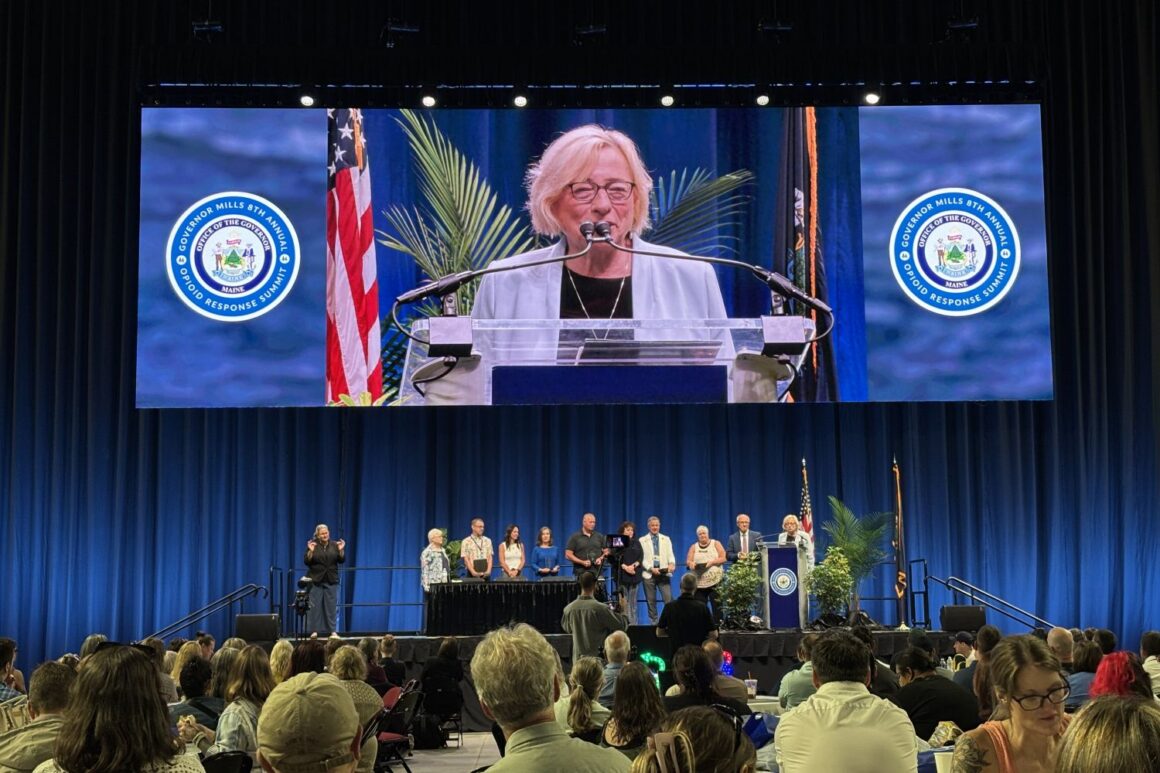
Hoffman’s talk was one of 39 sessions at Thursday’s summit that explored strategies to help Mainers affected by addiction. It was the 8th and final summit for Gov. Janet Mills, who has made the opioid crisis one of the key issues of her administration, and used the event to highlight the progress made over her two terms in office.
This included the growth of recovery community centers, where people with substance use disorder can attend support groups and get guidance from others in recovery. There are now 19 such centers across the state, at least one in each county, including the Recovery Wellness Community Center in Sangerville, near Dover-Foxcroft.
But figuring out how best to reach residents struggling with substance use disorder in the state’s most rural county has not been straightforward, said Alan Burgess, a Guilford native and the program director at the Sangerville center. Hoffman, who grew up in nearby Milo, agreed.
“If we hang an ‘open’ sign on the door and we wait for people to show up, no one’s going to show up,” Burgess said.
The fact that they both grew up in the area has helped them understand local attitudes and connect with people, they said. But they knew they would need to take the first step and be proactive about reaching different communities.
Soon after the two connected, they decided to host an all recovery meeting, an inclusive peer-support meeting that is not affiliated with a 12-step program. Hoffman suggested the local bakery in Milo, a suggestion that Burgess initially balked at.
“What? They’re not going to let us have a meeting in a bakery,” Burgess recalled saying.
Sure they will, Hoffman said. She has known the owners her whole life.
“We need to think less about trying to bus hundreds of people to us and think more about us going to them,” Burgess said. “That’s what we’re seeing moving the needle. Then they’ll start coming to us.”
Getting into jails and schools and working with police — in a careful, measured way — was also critical, they said. The chief medical officer at Northern Light Mayo Hospital in Dover-Foxcroft made arrangements so Hoffman could meet clients right in the emergency department. Burgess said they “basically banged on the [jail’s] door for a year,” before they were able to get in to provide peer coaching and other support services.
The result of all this work is that outreach now sometimes looks like grocery shopping, Burgess said. One minute he’s looking for pork chops and the next he’s talking to his fifth grade teacher about her grandson.