


FARMINGTON — Farmington residents face a decision Nov. 3 on whether to establish the town’s first rent stabilization board, a measure supporters said will protect mobile home owners and opponents warned will curb housing investment.
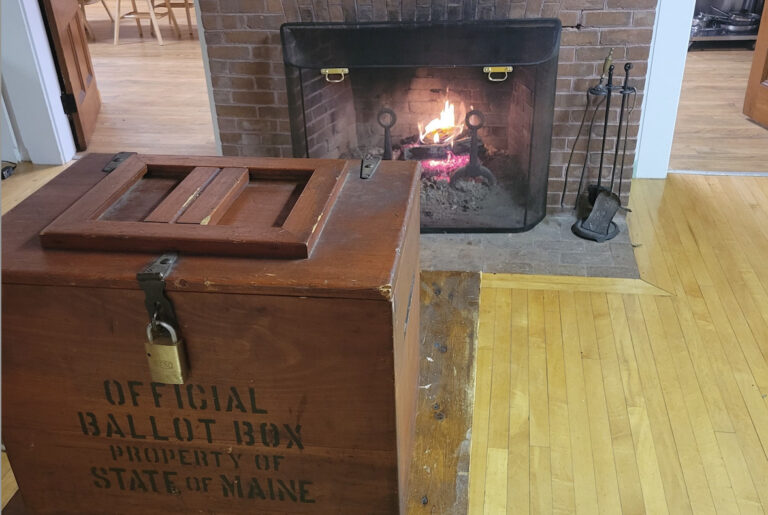
The ordinance is set to appear before the town following a citizen petition, which mandated a secret ballot vote. Copies of the proposed ordinance are available at the town office. A public hearing was held Oct. 6, drawing more than 30 people to the Farmington Community Center.
Residents of local mobile home parks and members of the Maine Labor Climate Council, a coalition of labor unions supporting mobile home park residents, said the ordinance is necessary to protect renters who own their homes but not the land beneath them.
Opponents of the proposed ordinance, who included local landlords, expressed concerns that it was overly restrictive, would discourage investment in affordable housing and could lead to further restrictions on other forms of housing, such as apartments.
The Farmington Municipal Lot Rent Stabilization Ordinance is based on a state model created in response to L.D. 1765.
It allows lot owners to make a single increase over a 12-month period, specifies how residents are to be notified of the increase and sets the maximum increase at the most recent annual percentage change in the Consumer Price Index, capped at 3 percent. In the case of a vacancy, the rent may be increased by 5 percent.
Increases beyond those limits to “cover the cost of excessively increased operating expenses” would require the owner to petition a rent stabilization board. The board would be composed of five members: at least one mobile home park resident, no more than one mobile home park owner or employee and no more than two members who are affiliated with owning or managing residential rentals. The majority of the board would be Farmington residents.
The owner would need to prove that the proposed increase was covering an expense that was “extraordinary, necessary, reasonable and not due to deferred maintenance.”
The ordinance would apply retroactively to July 14, with violations triggering a $100 fine for each lot.
The ordinance references Exhibit A, which outlines filing standards, capital improvement eligibility and decision criteria for the board. The document also requires park owners to submit three years of financial data. However, organizers did not circulate Exhibit A with the petition, and it is not part of the ordinance voters will consider.
Robert Fredericks, a resident of Twin Birches Mobile Home Park in West Farmington, said his lot rent doubled in three years. Despite the increase, the owner refused to remove pine trees threatening nearby homes, telling the 20-year resident to move if he did not like the trees.
“Our rent doubled in three years, from $300 to $604. And I say that’s a little steep,” Fredericks said.
Zach Rabin, a Livermore resident and managing partner of Guardian Communities, which operates Cascade Leisure Park, said the current economy is difficult for everyone, but noted that the state has already passed legislation on the issue. He argued that the town’s lot rental costs align with local averages.
“This new ordinance is on steroids,” Rabin said.
Other landlords who do not own mobile home parks expressed concern that the ordinance would mark the start of a broader trend. They suggested residents contact the code enforcement officer if life-safety issues impact their homes.
Other opponents took exception to the 3 percent cap, arguing it is insufficient and would stifle development.
“We will essentially stagnate one whole segment of housing,” resident and landlord Benjamin West said, “which is one of the entry points into nonsubsidized housing.”
Some landlords and residents criticized the timeline for developing the ordinance, calling the process rushed. Others questioned the motives of the Maine Labor Climate Council, or MLCC, and whether outside organizations should draft ordinances affecting Farmington.
“I feel like if we’re going to have an ordinance in this town, it should be generated by the people of Farmington, regardless what it is,” resident Josh Bell said.
Lorri Nandrea, a Canton resident with the MLCC who worked with local residents, pushed back on the idea that the ordinance was sudden. Organizers met with the Select Board in June following initial discussions with residents in May. They felt they were not making progress with the board, Nandrea said, contrasting Farmington with the town of Jay.
“We tried to go through the Select Board, and the Select Board took no action,” Nandrea said. “So we’ve done it on our own because, as you can hear, the situation of these residents is urgent. It is dire. People are at risk of losing their housing.”
Another MLCC representative, Doug Hall, said out-of-state investment companies buying parks and raising rents should concern the town more than the MLCC.
“Those are the outsiders you ought to be worried about, because that money’s not staying in Farmington,” Hall said.
Julie Smith, executive director of the Manufactured Housing Association of Maine, or MHAM, which represents manufactured housing communities, including those in Farmington, said there are no out-of-state park owners in town.
“We do not have the issues that have been erupting in other towns,” Smith said. “I do want to make it very clear that this is the worst, most restrictive ordinance that I have seen in the entire state.”
MHAM has previously indicated it could take legal action if towns support ordinances such as the one proposed in Farmington.
Responding to a resident’s question, Town Manager Erica LaCroix said the ordinance is legal and must proceed to a vote. Without taking a position for or against the measure, she highlighted administrative issues causing concern for town officials.
The issues include the retroactive start date of July 14 and the structure of the rent stabilization board. LaCroix said the town might prefer using an existing entity, such as the Board of Appeals, rather than creating a new board.
“The way that it’s written and structured, it basically doesn’t leave the town a whole lot of room to create our guiding council and to manage the situation,” LaCroix said.
LaCroix added that the ordinance would obligate work for the town manager and the code enforcement officer without providing additional town resources.
Town officials have discussed holding a special town meeting after the Nov. 3 vote to adjust the language of the ordinance.
While copies of the ordinance are available through the town, voters will receive a ballot with a simple yes/no question on whether to enact the measure.
Mt. Blue Community Access TV recorded the public hearing.