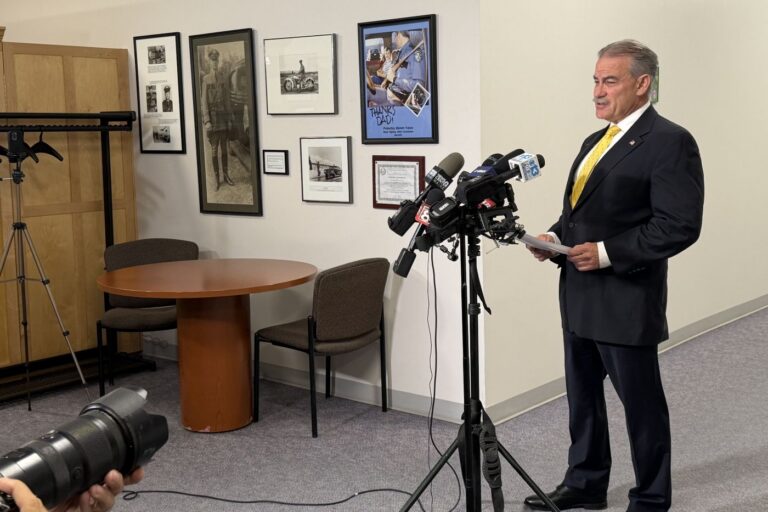




FARMINGTON — Some members of the Franklin County Commission are weighing whether to end their health insurance stipends after separate meetings this week with commissioners and the Farmington Select Board.
The Select Board met Tuesday, Dec. 9, and the commissioners met Thursday, Dec. 11.
Commissioner Tom Skolfield of Weld said he will no longer take the stipend, joining Commissioner Tom Saviello of Wilton, who ended his stipend July 1, 2025, which was the start of the current fiscal year.
Commissioner Fen Fowler of Farmington is circulating a proposal that would end the stipends retroactive to that same date. The measure is expected to be discussed Dec. 16.
Most commissioners had been receiving a $6,000 annual health insurance stipend, guaranteed under the personnel policy and supported by recent precedent. The 11‑member Budget Advisory Committee cut the stipends, removing $87,000 from the budget.
Questions about the statutes governing that decision were the focus of two letters from the county’s attorney in late summer and fall.
Commissioners were told the committee’s budget cut was legal and that they could not transfer money from another department or from contingency funds to replace it.
Commissioners asked Maine Attorney General Aaron Frey for guidance. In November, the attorney general said his office had no role in the matter, but noted the county attorney had “capably addressed” the commissioners’ questions.
Saviello was at the Farmington Select Board meeting Tuesday.
While updating the Select Board on the developments of the past few months, Saviello noted Farmington could have up to four Select Board members on the committee after next year’s caucus.
“You have a big say next year in how this budget’s run,” Saviello said.
Commissioners have argued at public meetings and in interviews that much of the law governing county government is archaic. They contend the interpretation put forward by attorneys gives the Budget Advisory Committee too much power and limits commissioners’ flexibility to handle issues that arise after the budget process ends.
On Tuesday, Board member Richard Morton, one of two Farmington representatives on the Budget Advisory Committee that approved the cuts earlier this year, disputed that the law was “remotely archaic.”
“It’s a process that was established by the Legislature,” Morton said, “and it’s used by numerous counties.”
What was different this time, he said, was that the committee had sustained an actual cut to the budget.
“From my perspective, that means the budget committee worked,” Morton said. “It did its job. It functioned appropriately. The commissioners just don’t like the end result.”
Morton said commissioners should move on from the issue and focus on running the county.
“I think it’s clear cut what the legal opinions are,” board member Dennis O’Neil said. “I’m hoping that the commissioners belly up and say: ‘OK, we take it on the chops on this. Figure out how else to do it.’”
On Thursday, Fowler said watching the Farmington board’s meeting motivated him to propose a ‘vote of reconciliation’ that accepted the commissioners’ legal counsel’s interpretation of budget law and cut their health care stipends retroactively to July 1, when the new budget took effect.
“Hopefully, it can get us to the next point where we really all want to be,” Fowler said, reading from his proposed resolution, which called for “establishing a strong and productive working relationship with the Budget Committee.”
On Tuesday, Saviello and the Farmington Select Board discussed ways to improve the budget committee process, including meeting earlier, increasing commissioner involvement and addressing areas where members struggled this year, such as salary adjustments.
O’Neil, who also served on the Budget Advisory Committee, said he was sure no commissioner sought office for the money. He added that the dispute came during a period of change for county government.
“I think they are in a process of learning what the role is — how it’s changed and what they do,” O’Neil said, adding that budgets everywhere are going up. “They are trying to address the needs of the county. It’s a daunting task.”