


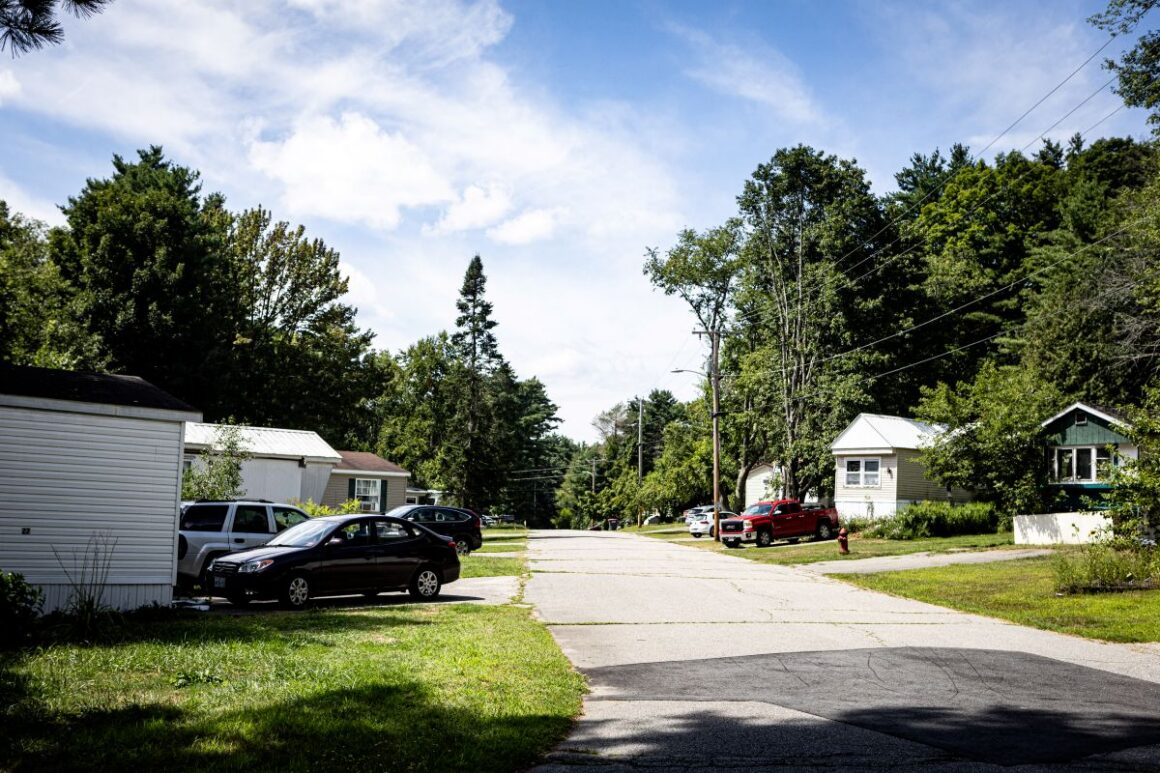
Maine has instituted new protections for mobile home park residents in recent years in an effort to keep the communities affordable as the state grapples with a housing shortage. And it is in the process of adjusting its regulatory structure to better coordinate its oversight of health and safety standards at its 475 manufactured housing communities.
The changes follow reports of skyrocketing rents and poor conditions at parks as corporate investors have purchased more and more parks. In many cases, mobile home park residents own their homes but not the land they sit on, leaving them vulnerable to rent hikes and reliant on park ownership to maintain the infrastructure that supports their homes.
A state report published late last year found that mobile home park residents often don’t know where to go when they have a problem and park management has been unresponsive. It described a “pattern of circular referrals” and cited a “systemic lack of support from state government” in addressing poor living conditions as a main reason why it advocated for moving oversight of park licensing and safety issues from the Maine Manufactured Housing Board to the Maine Office of Community Affairs.
The Maine Monitor has compiled answers to questions about various issues that can arise in mobile home parks:
What if there’s a problem with the park’s roads, electrical poles or something of that nature?
The Maine Office of Community Affairs is now responsible for mobile home park community standards. That covers issues related to electrical poles, outside oil supply tanks, unit numbering, drainage, the pads mobile homes are placed on and more. Problems can include tilted electrical meters or rotting poles, lots or roads that do not drain well, or junked furniture and trash left on a lot. These are considered health and safety issues that violate community standards. The office can also hear complaints related to rotting trees, but a licensed arborist needs to assess them first.
The office is in the process of creating resources for residents. It has complaint forms for community infrastructure violations on its website. The forms can be sent to [Show Email]. You can also call the office at 207-287-6622.
What if there’s a problem with the home itself?
This also falls to the Maine Office of Community Affairs. While manufactured homes are governed by federal standards, and modular homes are governed by state rules, enforcement of both is now under the manufactured housing program within the Office of Community Affairs.
The office recommends you reach out to your manufacturer or builder for any questions or concerns first. If that does not work, there are two different forms for manufactured homes and modular homes. The program does not have oversight of contractor issues, but it can handle complaints related to home warranties and installation.
What if there’s a problem with the septic system?
All subsurface wastewater systems are regulated by the Maine Center for Disease Control and Prevention. But the authority to fix them lies at the local level.
Code enforcement officers are town employees charged with making sure mobile home parks follow local ordinances, as are plumbing inspectors or designated building officials employed by the municipality under state law. They can be contacted for any wastewater problems if management does not respond to resident complaints.
The municipality can cite park owners or bring them to court if a sewer problem is not addressed. State law makes it clear that “enforcement of the rules is the responsibility of the municipalities rather than the department.” But the Maine CDC can choose to back a municipality trying to get a problem fixed by enjoining on a court violation order.
What if there’s an issue with the water coming out of the tap?
Water systems at mobile home parks are regulated by the Maine CDC’s Drinking Water Program. Water issues should be reported to the park’s management. The public can also contact the Drinking Water Program’s main line at 207-287-2070, Monday through Friday, from 8 a.m. to 5 p.m., or the emergency line at 207-557-4214 after hours.
Parks where the water is found to be contaminated or at risk of being contaminated must issue a drinking water notice and give a physical copy of that notice to every unit. There are three types of notices: boil water, do not drink and do not use, with the last being the most severe. These orders must remain in place until the water has been tested and found to be safe.
The Maine CDC recommends water used for drinking, brushing teeth, rinsing foods or other consumption purposes, as well as hand washing, be boiled for one minute at a roiling boil before use when a boil-water order is issued. Sensitive groups such as infants and other adults should use bottled water.
In more severe cases, boiling the water does not remove the risk of contamination, although it can still be used for bathing or laundry. These measures should be followed until the orders are lifted; those notices will come from the park as well. Current drinking water notices are posted online at the CDC’s website.
What if there’s a problem with a rent increase or park rules?
For issues related to rental increases, park rules and leases, residents need to go to the attorney general’s office or the courts for relief. Parks are required to give residents 90 days’ notice of any rent or fee increases. If an increase is significant enough, a majority of park residents can come together to request mediation, which must be paid for by the park owner.
Several towns in Maine have also recently passed rent stabilization ordinances, which limit how much park owners can raise the rent each year.
Park rules are required to be “reasonable” and cannot be changed without 30 days of written notice. Changes in how the park is being used or an owner interfering with the sale of a home would also fall under the attorney general’s domain.
What if I’m worried about being evicted?
Evictions are tricky when a person owns the home they live in because it is expensive to move a unit. Park owners have to give 45 days of notice, unless the eviction is for nonpayment of rent, in which case the notice is 30 days. A whole year’s notice is required for changes in the park’s use. Maine state law requires a court-ordered eviction notice to enforce an eviction, and there has to be a reason for doing so, such as violating the community’s rules or failure to pay rent.
If you rent the mobile home you live in, you have the same protections as tenants in an apartment or other typical rental units. That means a landlord still needs to have a reason to evict someone unless they are a tenant at will; those cases still require at least a week’s notice and a reason, such as damage to the unit, being a nuisance to others or being seven days or more behind on rent.
The attorney general’s office has an online portal for people to submit complaints if they believe a landlord is violating the law, as well as a hotline: 207-626-8849. Pine Tree Legal also provides legal services for low-income residents. It has added a Skadden Fellow dedicated to mobile home park issues.