




George Kirkwood loves to watch the nuthatches and robins that gather at the birdfeeders behind his mobile home in Eliot, a quiet community at Maine’s southern border. But his view is sometimes disturbed by a dark liquid pooling up out of a sewer cover in his backyard, or the smell of waste wafting up.
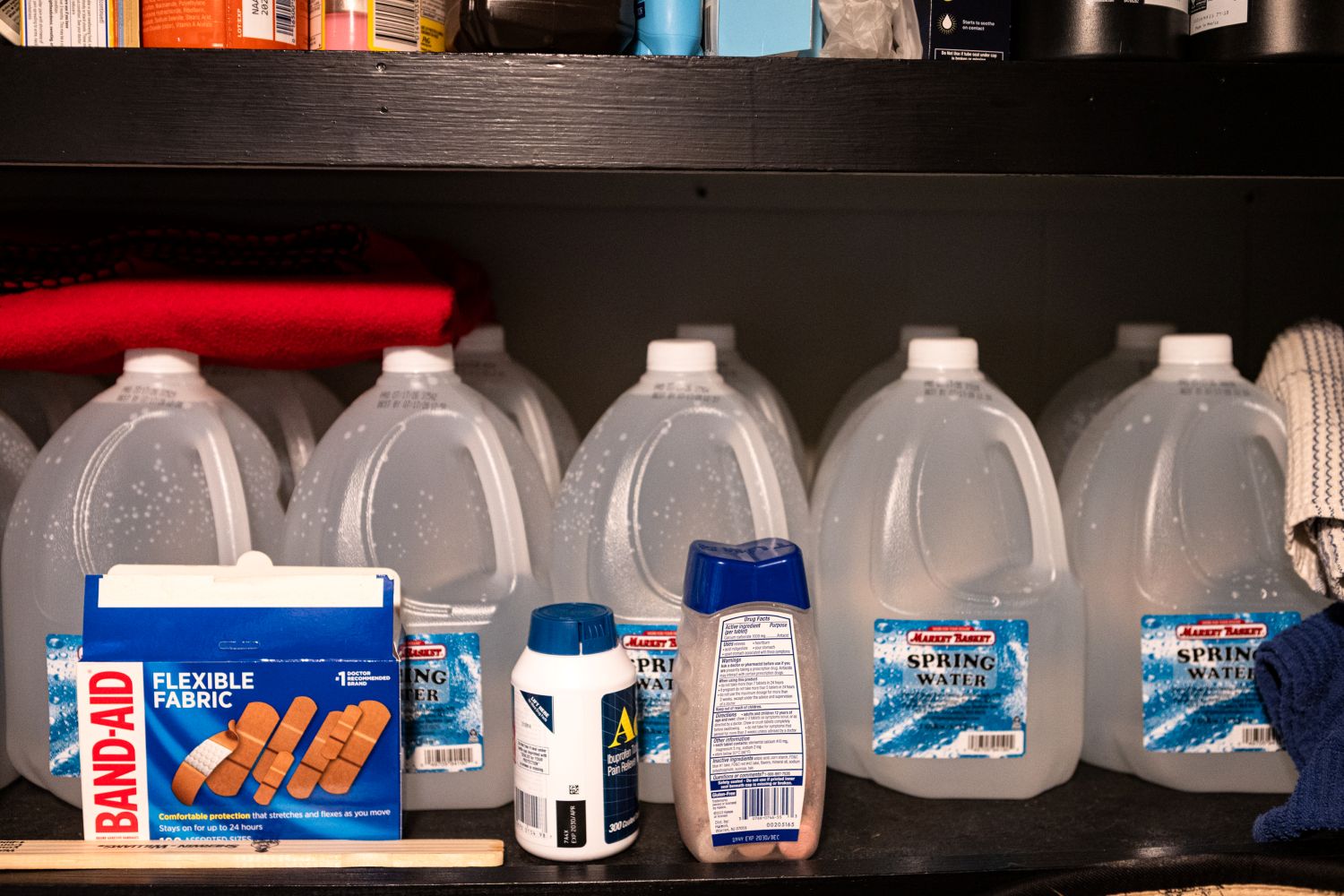
Inside his home, the water is also a concern. He changes his whole-house water filter once a month to keep the water from turning brown and sedimentary. Others don’t trust it at all. One resident reported being afraid to bathe her baby because the water was “completely black or yellow,” saying she took her child to shower at the nearby military base instead. Another resident buys jugs of water, 40 gallons at a time, so as not to drink from the tap.
Residents of the 108-lot mobile home park, Marshwood Estates, have dealt with discolored water and periodic septic problems for more than two decades, according to interviews with eight residents, state documents and emails reviewed by The Maine Monitor. The problems seemed to get worse after an out-of-state company bought the park four years ago, residents said, making it harder for them to get responses to maintenance requests.
At the same time, the rent has gone up, jumping from $465 a month in 2021 to $639 this year. This is significantly higher than Maine’s average lot rent of $479, according to new data from the Maine Office of Community Affairs, and higher than York County’s average of $566. In many mobile home parks, residents own their homes but not the land it sits on, paying a monthly fee for the land as well as for maintenance of the roads and other infrastructure in the park.
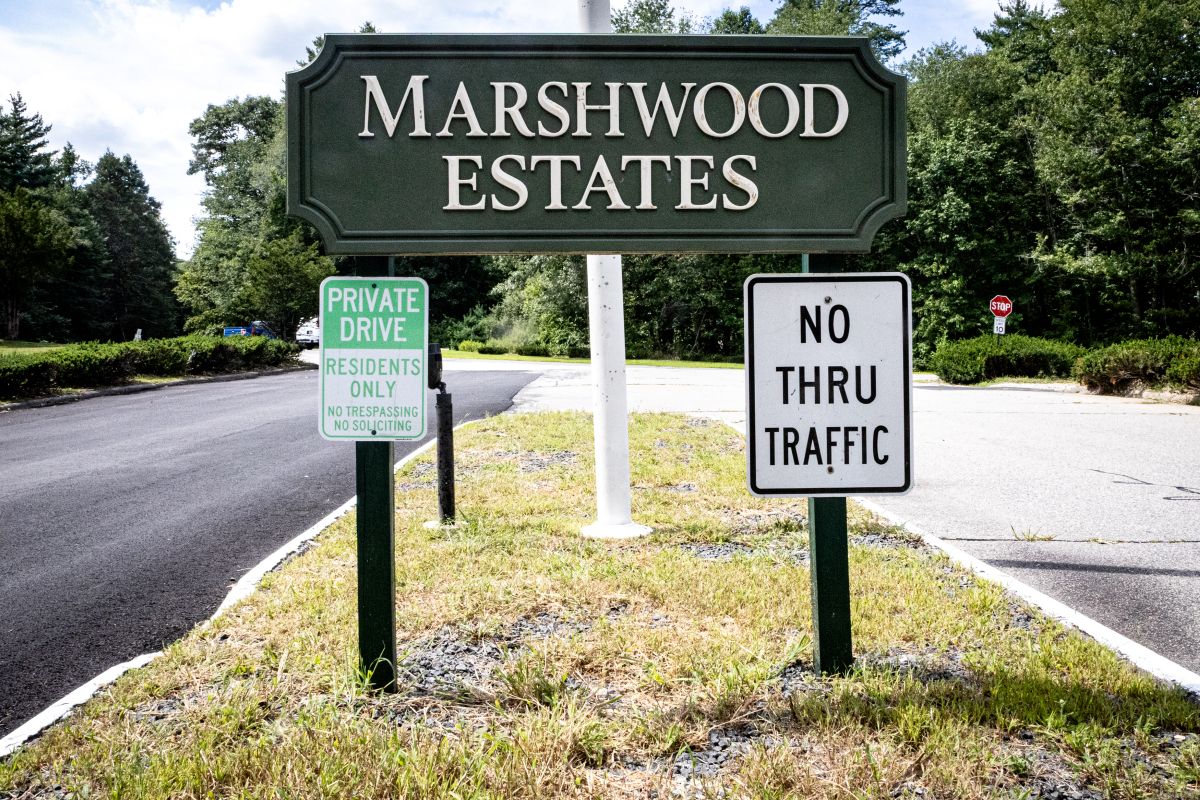
But at Marshwood Estates, residents said this maintenance fell by the wayside. In January, one of them reached out directly to the state’s top housing policy expert for help. Others followed suit.
“Our lot rent is increased yearly without the park being maintained,” one wrote, describing roads in need of replacing, streetlights in need of new bulbs and raw sewage in some yards. “Our water is deplorable with the nonstop fixes and or boil orders we receive.”
Officials from the governor’s office, Maine’s manufactured housing regulator, the state’s drinking water division and the attorney general’s office then came together to marshal a coordinated response. They moved up a scheduled drinking water inspection by a year and conducted two inspections to see if park conditions were meeting the state’s standards for manufactured housing communities. They found rotted electrical infrastructure, poorly draining lots, mismanaged water treatment protocols and more. The park’s owners told The Monitor they were unaware of the scale of problems at the park and have worked quickly to address them.
The situation at Marshwood Estates offers a window into how entrenched some of the infrastructure issues are at aging mobile home parks and how confusing it can be to find help in the face of unresponsive management.
Oversight of the various issues that have come up at the park fall to different state and local authorities: Drinking water standards are regulated by the Maine Department of Health and Human Services, while electrical infrastructure and drainage, among other things, are now handled by the Maine Office of Community Affairs. Issues with wastewater systems are first handled by local code enforcement officers, and landlord-tenant problems reside with the attorney general’s office.
But it also shows how things can change when there is a coordinated response.
State officials’ attempts to help residents of the Eliot park have played out as Maine works to strengthen its oversight of mobile home parks statewide. Problems that once went to the Manufactured Housing Board are now handled by the relatively new Office of Community Affairs, which is in the process of developing a guidebook to help residents resolve common safety and accessibility issues. Some aspects of the new regulatory structure are still being defined, and it’s possible state officials’ understanding of what needs to change will be informed by what they saw at Marshwood Estates.
“Please please help us,” the woman afraid to bathe her baby wrote to officials this spring. “I just want my home to be my home.”
Changing ownership
The park’s water quality and sewer problems go back decades.
Marshwood Estates residents complained of a “strong sewer smell” in 2003 after a leach field failed, according to Foster’s Daily Democrat. An Eliot sewer committee in 2014 named Marshwood Estates as an area where septic failures could cause problems.
In 2012, residents frequently called the Maine Center for Disease Control and Prevention’s Drinking Water Program to complain of orange water or low to no water pressure, according to emails The Maine Monitor obtained through a records request.
“I remember they opened a hydrant and the water coming out was mud brown,” a chief engineer wrote in May.
Marshwood Estates passed its last two regular sanitary surveys, inspections every three years that measure a water system’s ability to provide safe water, according to a report from the U.S. Environmental Protection Agency.
But the regulator listed 15 instances of the park violating federal Safe Drinking Water Act standards between 2016 and 2024. Violations included failing to monitor for contaminants such as lead or copper, failing to provide public education of the health risks of contaminants and failing to alert customers of potential water contamination, according to a review of reports The Maine Monitor obtained through a records request.
The biggest issue has been the water’s high levels of iron and manganese. These metals are considered secondary drinking water standards by the EPA — contaminants that are not inherently risky to human health but can affect the taste, color and odor of the water.
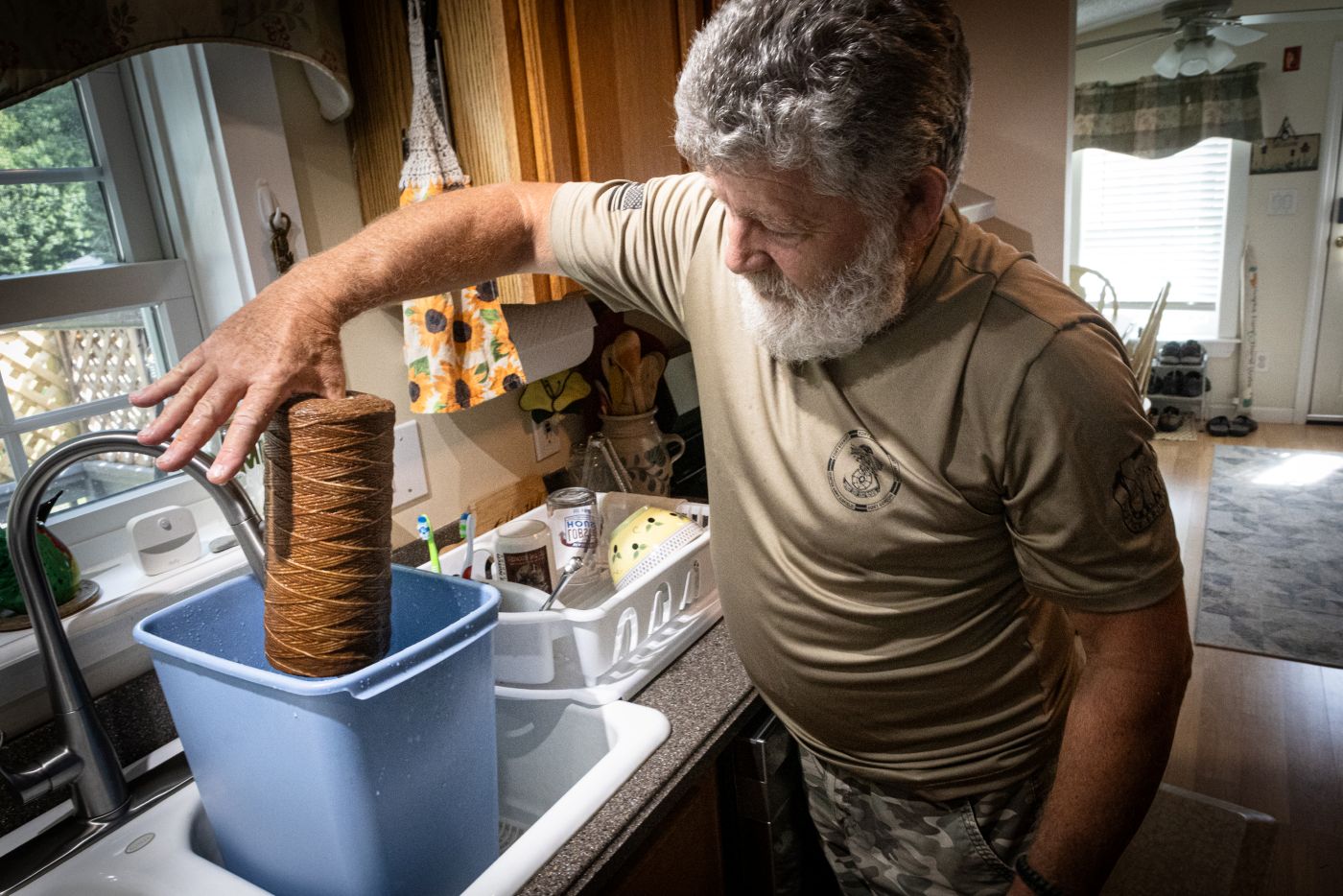
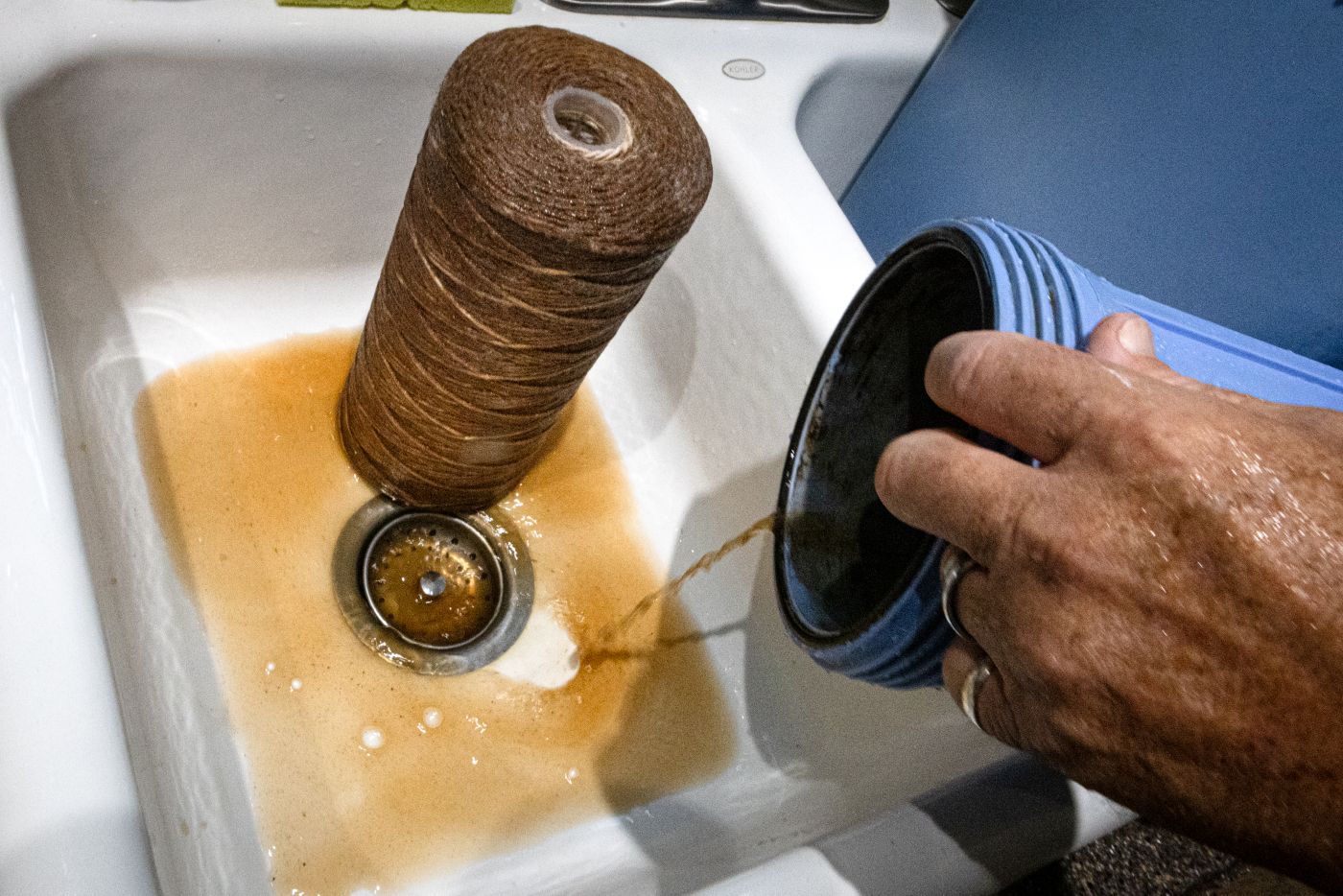
The park’s last owner, New Hampshire-based real estate agent Mark Phillips, tried to fix the water by installing a new 20,000-gallon tank and a new well house, according to a 2018 notice of a rent increase. Phillips wrote he had fronted the costs of replacement himself after unsuccessfully applying for a state grant. He also installed new filtration systems to account for the region’s high levels of iron and manganese in 2020.
Residents of the park said Phillips was around frequently and responded to concerns, even if he did not always fix them. The current owners are less hands on, residents said, and more difficult to find.
The park was sold in 2022 to Dow Highway Owner LLC, a limited liability company under The Broadway Company, a private Boston-based real estate investment platform founded by real estate investor Jason Weissman.
The park was sold for $11.4 million, nearly three times what Phillips paid for it in 2006. The Broadway Company owns several other mobile home parks in Massachusetts and New Jersey through vehicles called single-purpose investment funds. Investors can make money through tax write-offs for a park’s aging infrastructure.
Caroline Nagy, the associate director of housing policy for Americans for Financial Reform Education Fund, said it is typical for owners to create limited liability companies for each property. This can make it difficult for residents to know who to hold responsible when there is a problem.
The Broadway Company promised to be different.
“In fact, responsible and committed ownership, like The Broadway Company, will mean long needed improvements take place,” the company said on its website.
But the park’s property managers did not respond to at least 40 emails with requests between 2023 and this year, according to documents shared with The Maine Monitor, and did not address others.
One resident, who requested anonymity for fear of possible retaliation from the park, has had an open request since 2023 asking management to deal with two rotted pine trees on her lot. Another resident, Richard Buckley, said the park agreed to remove two dead trees on his lot before he bought his home in December 2024, but has yet to do so. Dealing with dangerous trees is a park owner’s responsibility under Maine’s mobile home park rules.
Other issues that went unanswered involved tilted electrical meters and questions about where to send lot rent, among other things.

The Broadway Company told The Monitor it was not aware of the scale of the problems at the park until recently, and that as of this month it has a new property management system.
For the past two years, a technology company called DOOR handled the park’s property management under the name Door Property Management.
On June 26, residents received notice that management of the park would be handled by The Broadway Company, as it was before DOOR was involved. Rent checks, which had previously been sent to a location in Virginia, would now go to the real estate investor’s address on Newbury Street in Boston.
Residents were not given a reason for the change. But Tana Weissman, the CEO of The Broadway Company and Jason’s wife, said in an interview that they made the shift after learning of the water system problems within the park, which she said were not communicated by DOOR.
“We took a deeper dive, and that’s when we realized that the residents weren’t as happy as we thought they were,” Tana Weissman said.
DOOR did not respond to three emailed requests for comment over three weeks. It announced in early August it would be dropping its property management division and reducing its workforce by a third.
‘Nasty and pretty outrageous’
Earlier this year, a group of at least five residents started meeting with Greg Payne, Gov. Janet Mills’ housing policy expert, after one saw him speaking on TV about housing issues. Payne, along with Ryan Chandler, the senior manufactured housing inspector and acting executive director of the Manufactured Housing Program, in addition to representatives from the Maine CDC’s Drinking Water Program, the attorney general’s office and the town of Eliot, spoke to residents on Zoom to talk about getting the park’s problems fixed, according to those familiar with the conversations.
Payne confirmed his office gathered other state departments and reached out to the owners of the park directly to get the issues addressed. The group met at least twice in the spring to strategize.
Behind the scenes, Payne was concerned by what he was hearing from residents, emails show.
“I know there’s a lot of incoming from this park but I wanted you to see this as well,” he said in a March 27 email chain that included a resident’s photos of stained laundry. “Nasty and pretty outrageous.”
Payne went on to say he and Chandler would speak after the housing board inspected the park to figure out what they had the authority to address, as well as what could potentially be tackled in the future “following a rewrite of the Manufactured Housing Act.”
Maraquita Hollman, the manager for the Drinking Water Program’s field services, told Payne the park was not due for a sanitary inspection for another year.
“However, given the current state of this mobile home part (sic) I’ve made the decision that we are going to do the inspection this year instead of next year,” she wrote.
An April 15 inspection by Chandler found 22 violations of the state’s manufactured housing community rules: rotted electrical poles, broken service pedestals exposing wiring, extreme water ponding on certain roads, and junk and debris scattered about on various lots.
Chandler’s division, which is charged with enforcing manufactured home retailer standards and certain quality of life issues, and has since been moved under the Office of Community Affairs, gave Dow Highway Owner 90 days to correct the issues. Unresolved problems can result in the suspension or nonrenewal of the park’s license, fines of up to $1,000 per violation, or court action.
Rep. Michele Meyer, D-Eliot, was also involved in the talks. She urged state officials to not let the water quality issues go.
“We cannot simply dismiss their valid concerns about drinking water we all know with certainty none of us would tolerate in our own homes, offering to our children, or drinking/cooking/bathing ourselves,” she wrote on April 28.
A sanitary inspection by the Drinking Water Program uncovered multiple problems with the water system, according to a May 29 letter to the park’s water system operator, Epping Well & Pump. It turned out the manganese levels exceeded health standards, a spokesperson for the Maine CDC said.
As a result, a physical bypass of the iron and manganese treatment needed to be removed. The inspection also found the 20,000-gallon tank supplying water to the park had not been inspected or cleaned since 2017; the state requires them to be cleaned every five years. The inspector required Epping to contract with a third-party water treatment company to evaluate its treatment process and said all deficiencies must be resolved by October.
The bypass was installed years ago as a way to ensure residents would have access to water while repairs were made, but the bypass option was never used, said Henry DeBoer, the founder of Epping Well & Pump and Marshwood Estate’s long-time water system operator.
The bypass was not flagged by state officials in prior inspections, DeBoer said, and he argued bypassing the iron and manganese treatments would not have posed a serious risk to residents’ health. DeBoer said the pipes at the park are old and have metal deposits that have built up over the years, which affect the water going to homes despite treatment efforts.

“There’s only so much we can do from the pumphouse,” DeBoer said. “Water at the tap can be poor, and we can’t do anything about it.”
A spokesperson for the Maine CDC said the bypass was not flagged previously because the treatment originally aimed to manage the aesthetic elements of the water. But the higher levels of manganese meant the water posed more of a health risk, and the bypass could no longer be an option.
Jason Weissman defended the park’s water quality in a written response to questions, saying the park responds quickly to residents’ concerns and spends $100,000 annually to operate and maintain the water system. The company installed a back-up generator at the pumphouse to maintain water service during power outages and avoid the need for precautionary boil-water notices. Boil orders have “greatly diminished” since that change, he said.
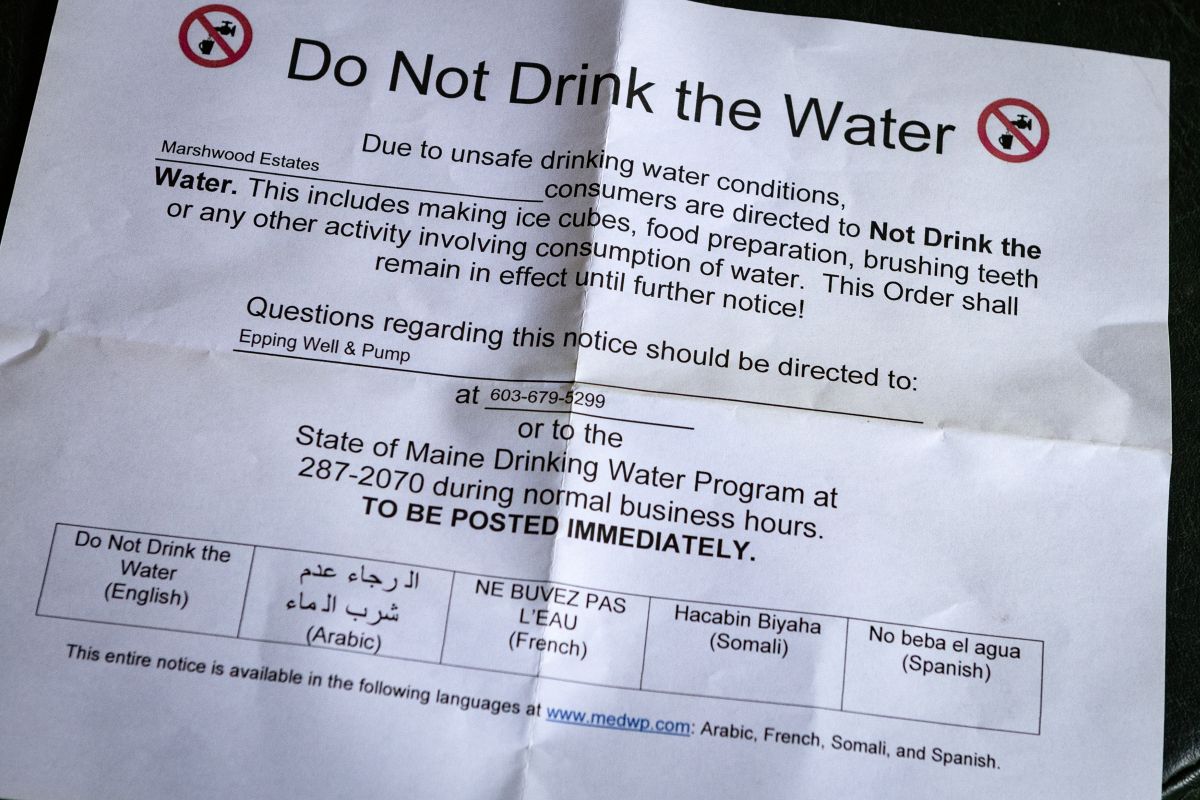
Marshwood Estates had at least eight boil-water notices last year and five so far this year due to either planned outages or broken or leaking pipes, according to state records. A separate, more serious notice called a “Do Not Drink” order — when water cannot be consumed at all — was sent out July 27, when Eppling Well & Pump was scheduled to finally clean the park storage tank.
Water quality problems are common at mobile home parks and occur for a variety of reasons, said Esther Sullivan, an associate professor of sociology at the University of Colorado Denver who studies manufactured housing communities. A lack of investment in park infrastructure is one culprit, but so is a park’s location, which is often away from public water and sewer services. They may end up in lower-lying areas or flood plains, she said, which can expose them to environmental hazards. Park water systems are also complex because of the number of homes they serve, she said.
A recent Associated Press investigation found 70 percent of mobile home parks running their own water systems across the country violated federal safe drinking water rules.
While retaliatory evictions are illegal, there is still a risk if residents speak up.
“[Landlords] have a big weapon,” said Matt Dyer, a lawyer with Pine Tree Legal Assistance.
“And that weapon is: I can take your housing away.”
Eliot has probed bringing public water and sewer up Route 236 to Marshwood Estates or from other towns, according to the town manager, Michael Sullivan, but to do so would be expensive.
The town has oversight of subsurface wastewater systems and is aware of the septic issues reported at the park, he said, but the town’s code enforcement officer has not observed anything that would be considered a code violation and has not been able to confirm that the liquid ponding in some places is raw sewage.
Eliot Code Enforcement Officer Shelly Bishop said she visited the park 22 times from 2024 to June 2026. Those visits are often for multiple purposes, such as permitting inspections or following up on complaints.
Sullivan said he was sympathetic to residents’ frustrations about the park, but the town can only act within its bounds to address problems.
“We will support them in ways we can, but it’s really for them as tenants, and for the property owners, to come up with a solution,” Sullivan said.
Moving forward
Months after state officials first intervened, most of the problems they flagged have been addressed, regulators said.
Chandler said a follow-up inspection on July 31 found the majority of the park’s issues had been resolved, with some lingering electrical, nuisance and street drainage violations.
“We will continue to work with the owners to bring the community into full compliance with all applicable laws and rules,” Chandler said in a statement.
The Maine Office of Community Affairs gave Marshwood Estates until mid-September to fix the remaining problems. After that, “we will reevaluate progress and determine appropriate action,” said spokesperson Samantha Schipani.
Jason Weissman said the park spent $150,000 to address the housing board’s violations and that the drinking water deficiencies flagged in the inspection have been addressed. He said the nuisance issues — such as piled up box springs, tires and toilets observed by Chandler — are the residents’ responsibilities under the park’s code of conduct, but noted that they hired a local junk-removal company to help. The park owners also reiterated that they recommend residents have whole-house water filters.
Residents still have complaints, and some are looking to form a homeowners association. Rebecca Turlo, who moved to the park last year to be closer to her job and because she liked the Eliot school system, has been spearheading that effort, and has pulled together a community group in the interim. The group’s goal is to “provide support for ongoing issues and concerns” and create a direct line of communication to management, Turlo said.
Turlo has been speaking with Tana Weissman, according to both parties. An ice cream social has been planned for the end of August to give residents a chance to come together and talk about issues. And Tana Weissman said the park has hired an on-site maintenance person who is scheduled to start in the next few weeks.
At an Aug. 13 Eliot select board meeting, board chair William Widi said he had been hearing about the park’s problems for decades. He encouraged a group of seven residents sitting in the audience to create a formal association in the event they ever wanted to take legal action.
The board was considering two ordinance changes that would affect the park directly. One was a lot rent stabilization ordinance similar to what several other towns have passed recently: prohibiting mobile home parks from raising the rent more than once a year, and ensuring the increase is no more than the annual change in the Consumer Price Index or 3 percent of the base lot rent.

The other would require septic systems to have a reserve area if they are located less than 24 inches below the surface and require that there be an ongoing record of maintenance that is provided to the Eliot code enforcement officer.
Board member Christine Bennett said this would prevent wastewater systems from overflowing and also force owners of those systems to provide proof of maintenance or face action from the town’s code enforcement office. She argued current state law gives municipalities little ability to respond when systems fail.
In the meantime, the Broadway Company said the septic system will be pumped more often.
Kirkwood, who likes to watch the birds in his backyard, said it has been encouraging to see some of the park’s issues get resolved, but he’s not convinced they will be lasting solutions. When he changed his water filter in late August, it was still a muddy brown. And this past Saturday, he was taking a shower when the water pressure disappeared.
“I thought, ‘Oh great,’ and went to get some bottled water to pour over myself,” he said.
The water was shut off for several hours that day because an electrical surge affected the well system, according to the park’s CEO. The Maine CDC further clarified that a water level monitoring system in the tank failed.
The park distributed cases of bottled water but not until the next morning, according to residents. A boil-water notice was issued Saturday evening, as is standard after an outage, and remained in place until Tuesday afternoon. Physical notices were distributed Sunday.
A resident since 2002, Kirkwood has seen some of the park’s problems persist for years. He worries that the water and septic systems need a more robust overhaul.
“I think when they have a problem,” he said of park management, “they Band-Aid it.”
Correction: This story has been updated to specify that the bypass in the mobile home park’s water system was never used, according to the system’s operator, and to clarify what the Broadway Company said about the septic system being pumped more often.