



Maine Democrats used an unfamiliar process to choose a familiar face as their replacement nominee for one of the most closely watched races in the country.
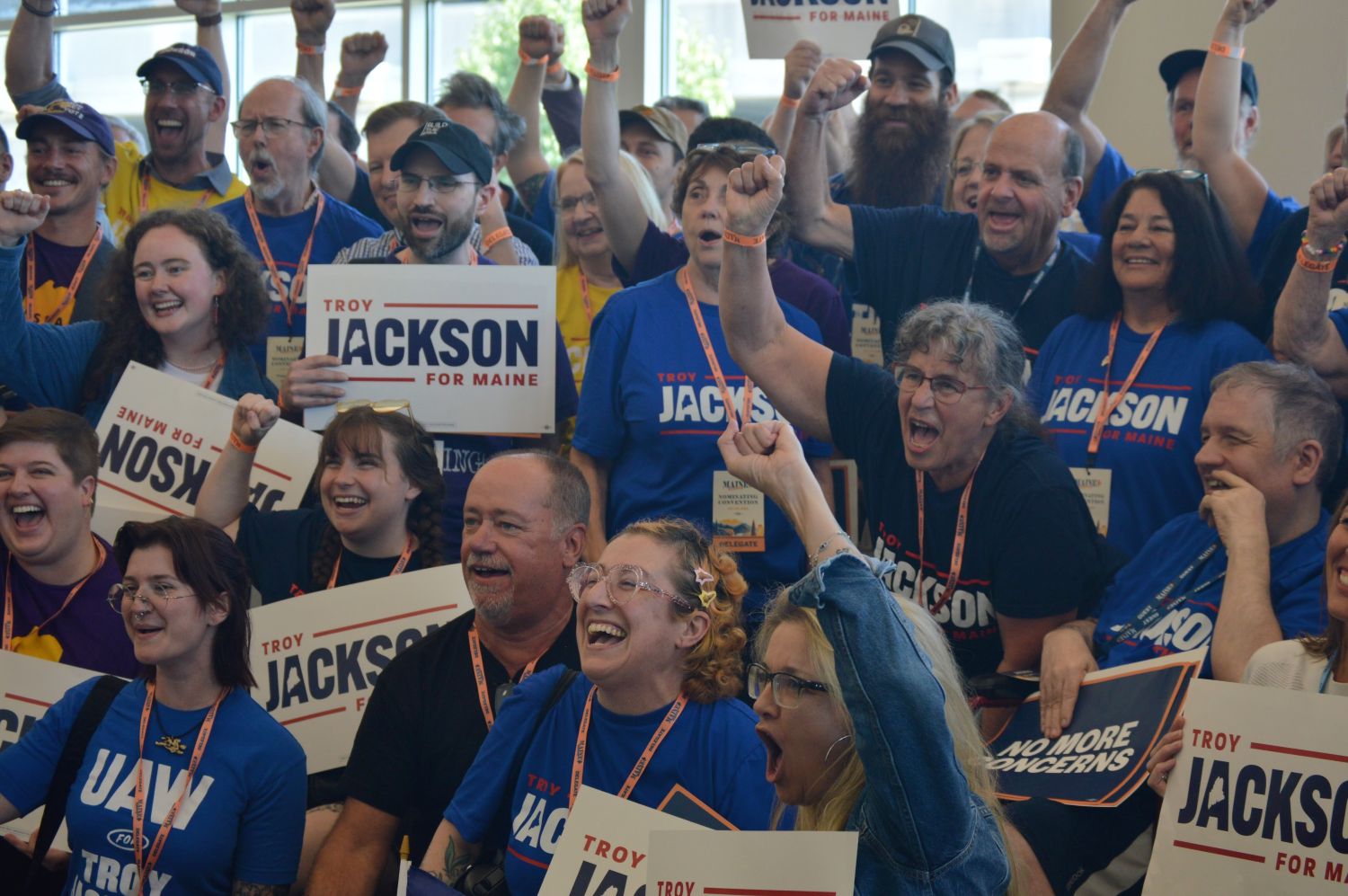
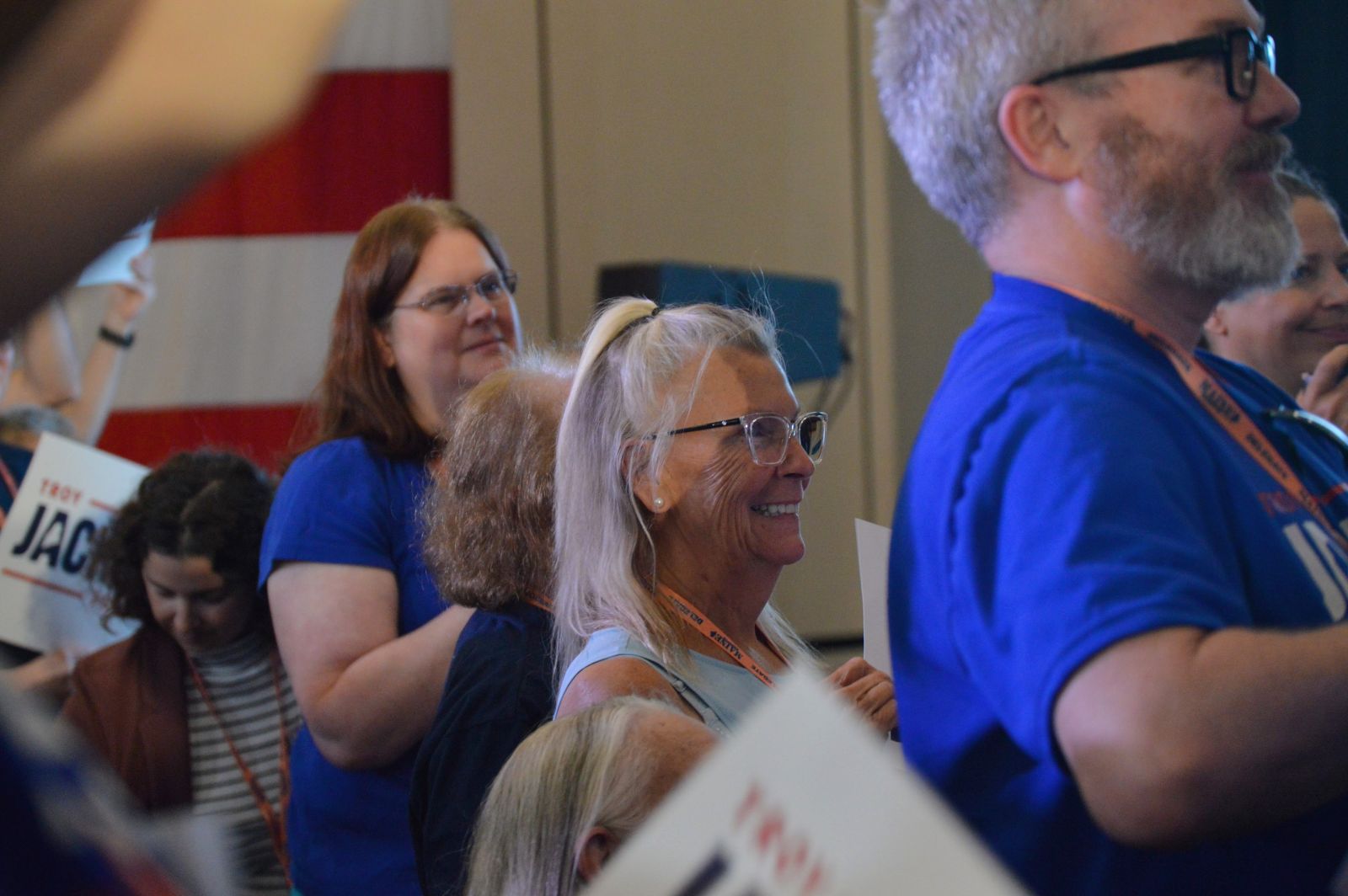
A group of nearly 600 Democrats nominated former Maine Senate President Troy Jackson to be their U.S. Senate nominee in Bangor on Saturday, ending an unprecedented scramble to replace former nominee Graham Platner on November’s ballot just days before a state deadline.
Jackson won 566 votes of the 571 cast by party delegates at the Cross Insurance Center, defeating lone remaining challenger Saundra Pelletier, a biopharmaceutical executive and political newcomer. Jackson will now face Republican incumbent Susan Collins in November.
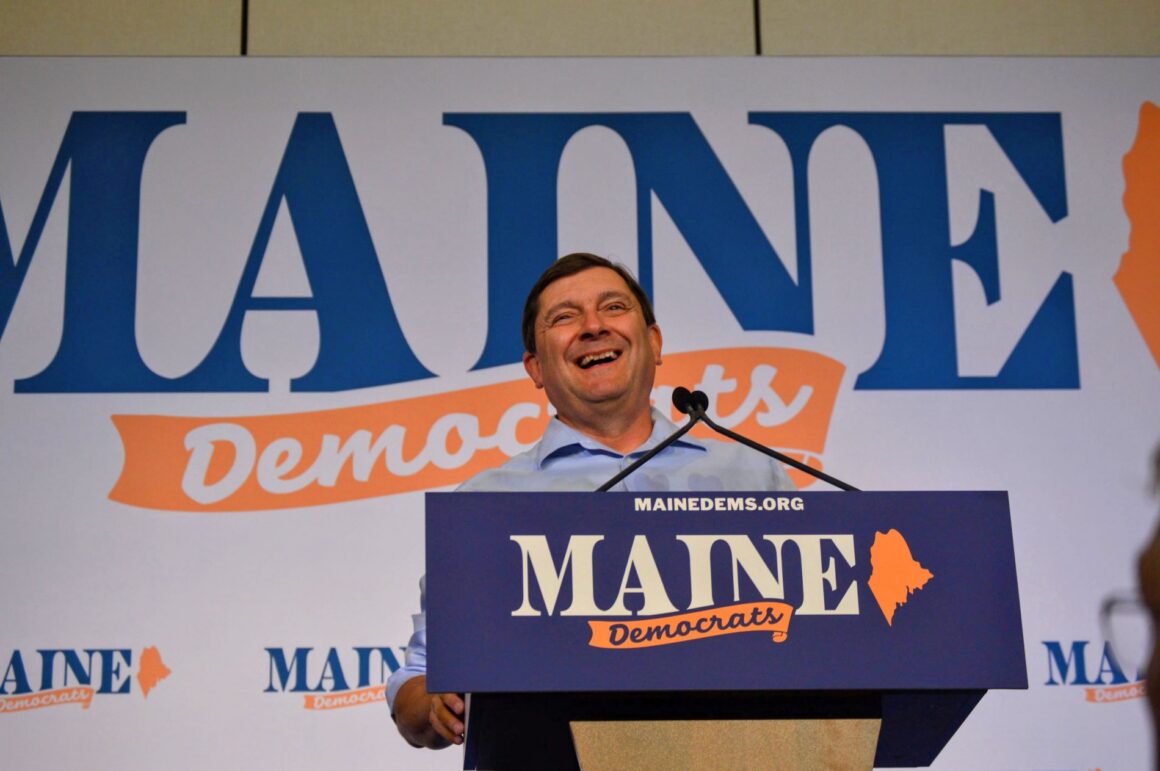
“This is the absolute honor of my life to accept the Democratic nomination for the U.S. Senate,” Jackson told the crowd in a speech after the results were announced, taking aim at Collins and styling himself as a fighter for working Mainers against corporate interests and the wealthy.
“If you’ve ever been ignored, underestimated, pushed around or told you have to wait your turn while the rich cut the line, I’m asking you to stand with us in this campaign,” he said.


Jackson quickly emerged from an initially crowded field to become the frontrunner for the nomination after Platner, who handily won the party’s nomination in the June primary, dropped out of the race on July 10, after a Maine woman accused him of rape. (Platner has denied the allegation.) With no clear process in place to replace Platner, the state Democratic Party moved quickly to plan and execute a convention of delegates from around the state to choose a replacement before a July 27 deadline.
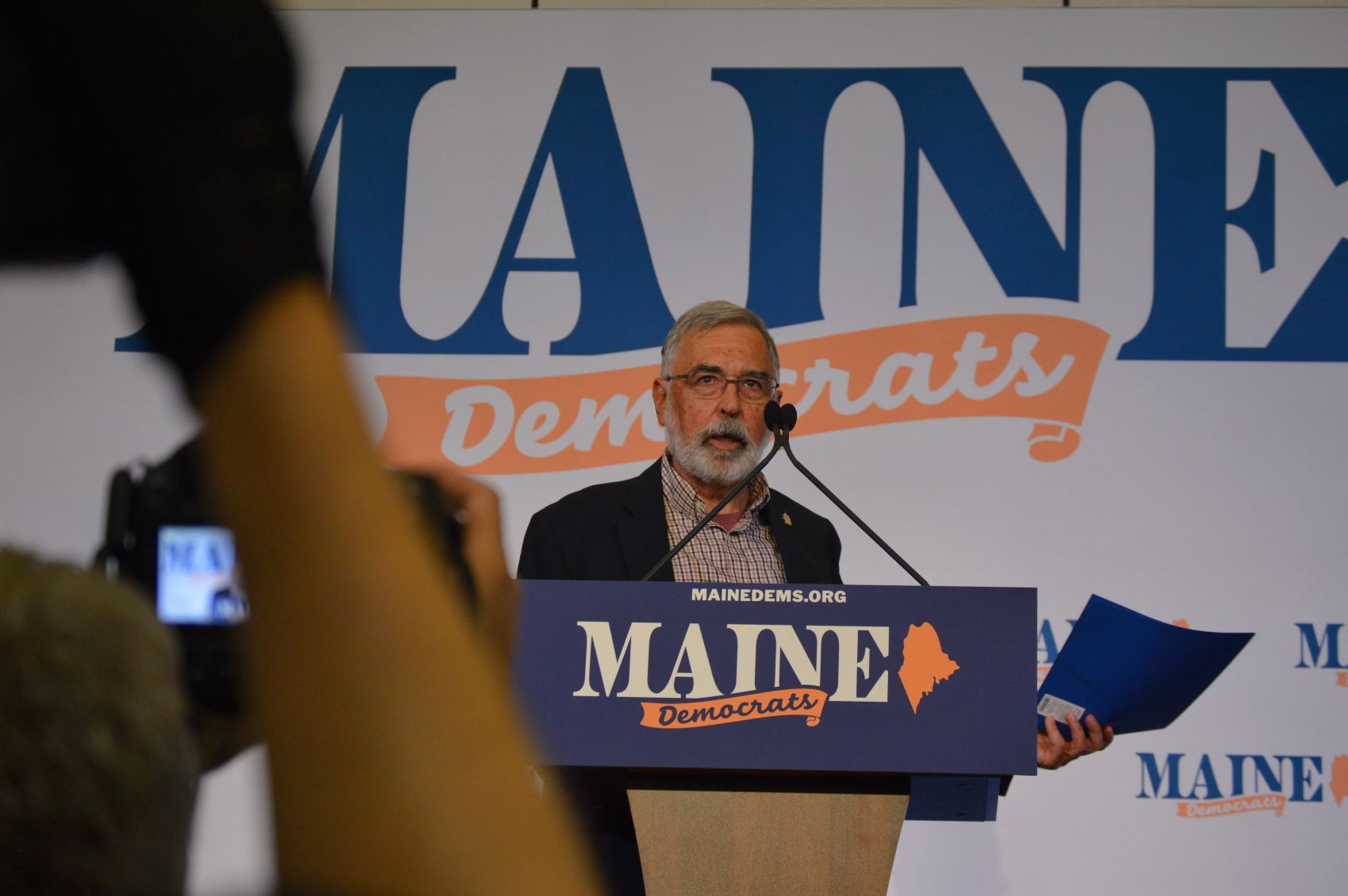
Maine Democratic Party chair Charlie Dingman told the crowd that he had been advised that what the party was trying to do was “somewhere between a highwire act and a moonlanding.”
After Platner dropped out of the race, several Maine Democrats threw their hat in the ring, including Dr. Nirav Shah and Shenna Bellows, who, like Jackson, had recently ended unsuccessful campaigns for the party’s gubernatorial nomination. But Jackson grew a large lead in supportive delegates ahead of the convention, prompting all candidates but Pelletier to withdraw. Jackson had the backing of Maine’s labor unions and was the gubernatorial candidate most politically aligned with Platner.


A fifth-generation logger from Allagash, Jackson got his start in politics helping to organize a three-week blockade of the U.S.-Canada border to protest the hiring of Canadian loggers by U.S. landowners. Jackson has more than two decades of experience in Maine politics, serving as the president of the Maine Senate from 2018 to 2024. Over the course of his career, he also developed a reputation for a fiery temper, which once resulted in him throwing a water bottle out of frustration during a meeting of lawmakers.
Former Maine state lawmaker Charlotte Warren delivered introductory remarks for Jackson on Saturday, describing how he became her “hero” after he delivered an impassioned speech advocating for working people in the state Legislature two decades ago.
“You never have to worry where Troy’s heart is because he wears it on his sleeve,” she said.
Jackson’s mother, Colleen McBreairty, an Aroostook County delegate, said she was overwhelmed by her son’s nomination. “Never in a million years did I expect this,” she said.

But McBreaity said Jackson had always stood up for others. In second grade, Jackson came home and informed his mother he was going to write to then-President Jimmy Carter to inform him that a disabled student in his class was not being treated properly.
“I wish I would have kept that letter,” she said.
Crowded field became a coronation
Just last week, there were still a dozen Democratic candidates in the race to replace Platner. But a commanding effort to organize a slate of supporting delegates at 16 county-level nominating meetings put Jackson in a strong position heading into this weekend. Though party rules stipulated that no delegates entered the convention bound to one particular candidate, Jackson’s performance in the county meetings made clear that he already had majority support before the votes were counted on Saturday.
Candidate after candidate dropped out of the race following those county meetings, with many putting their support behind Jackson on the way out, until only he and Pelletier remained. A group of quickly-scheduled debates and forums were canceled, and what had been shaping up to be an unpredictable convention became more like a Jackson coronation where the result was never much in doubt.
“I thought it was incredibly disappointing that all those candidates dropped out because some of them were really qualified,” Pelletier said Saturday before the convention got underway. “And everybody claimed it was for unity. It was for fear, period.”
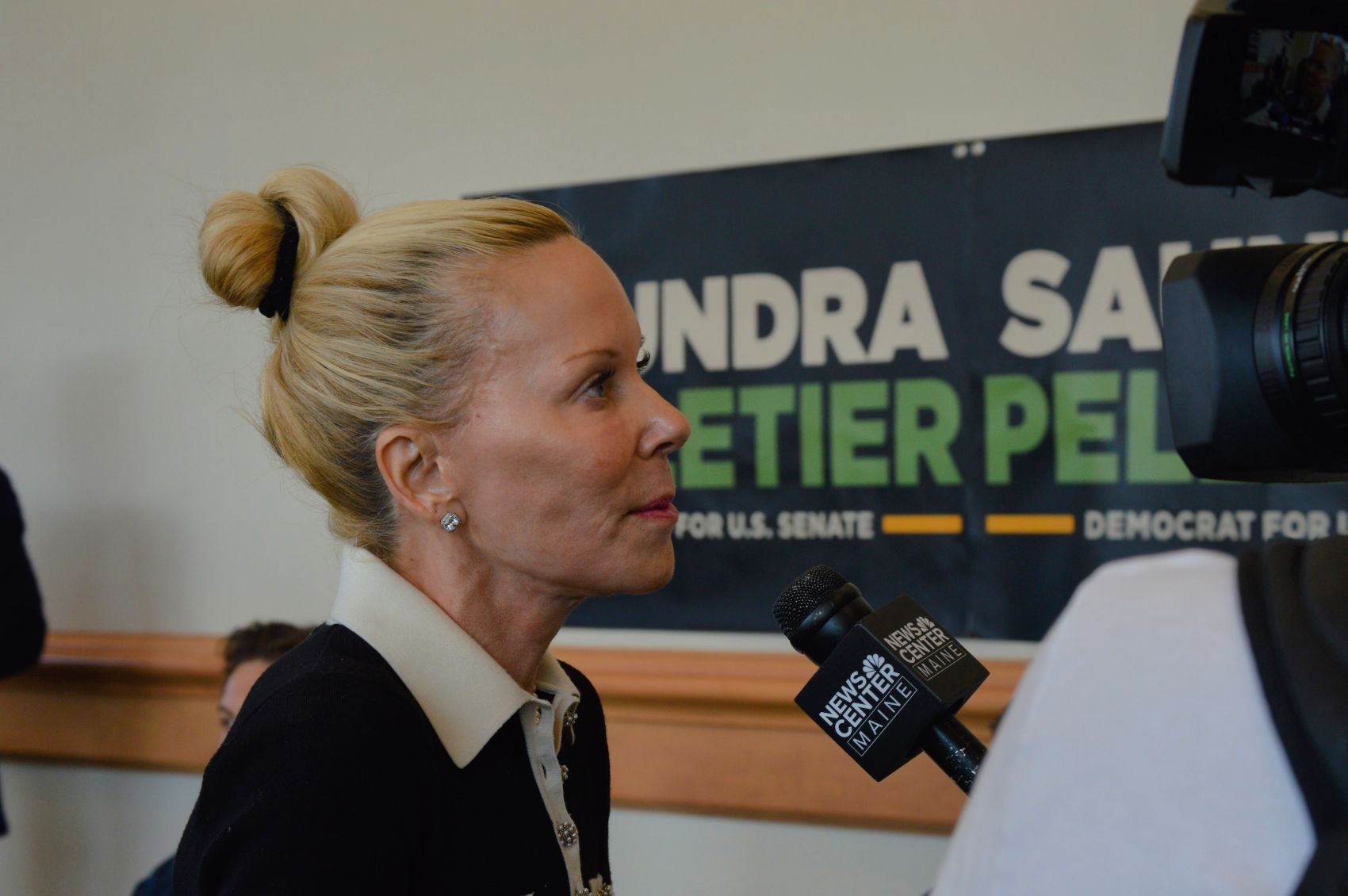
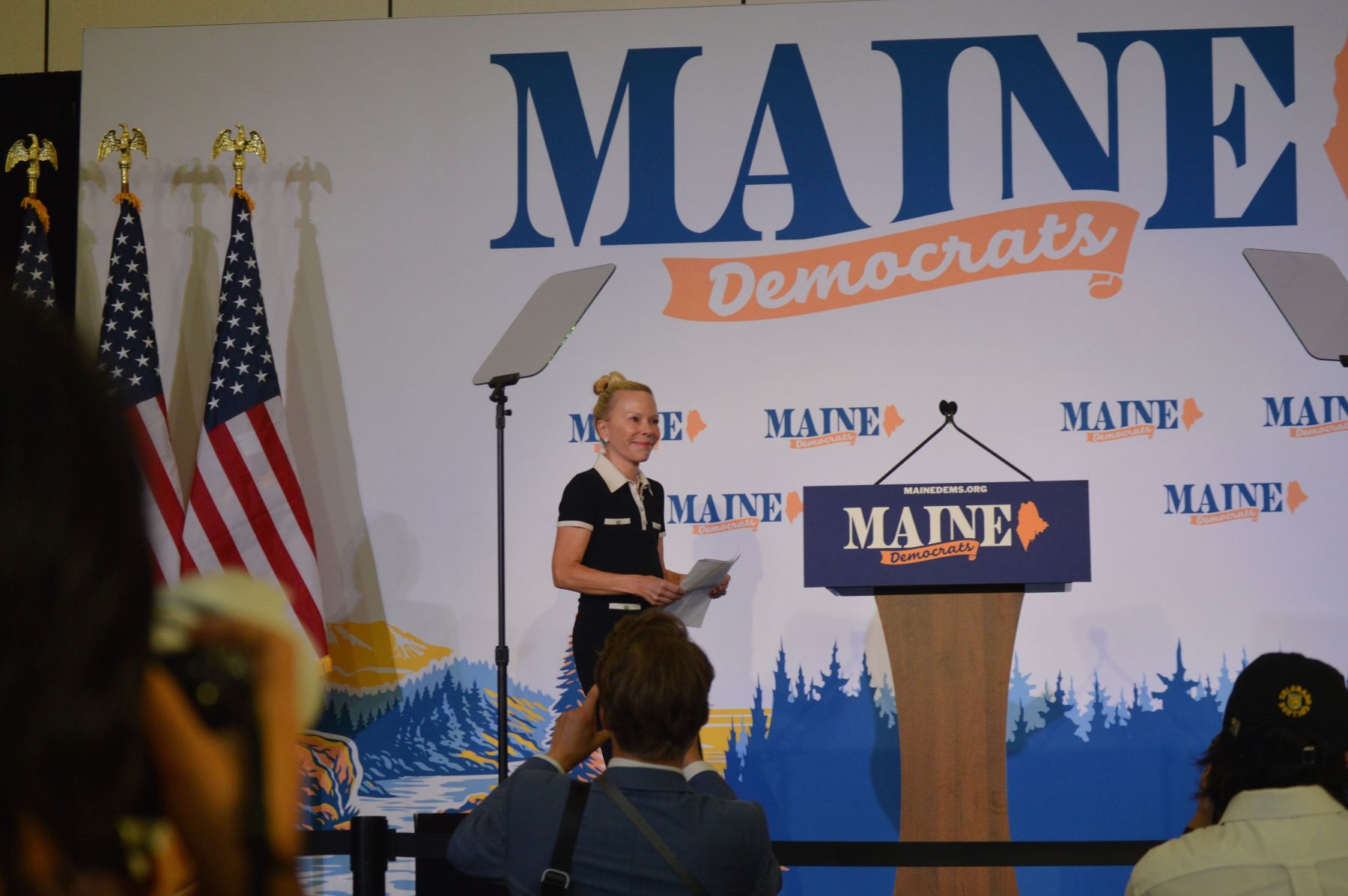
The political newcomer, who like Collins is from the Aroostook County city of Caribou, was realistic about her chances ahead of the convention. But she felt it was important to stay in the race and make it clear that the delegates were free to make a choice on Saturday rather than being automatically pledged to one candidate.
“We don’t want kings in this country,” Pelletier said. “Why would we anoint a king in the state of Maine? What message does that send to the country about the decisions that Mainers make and the Democratic Party makes?”
Pelletier said after the convention that she would support Jackson in his bid to unseat Collins.
Former Democratic congressional candidate Jordan Wood had initially sought the Senate nomination after Platner dropped out of the race, but he withdrew his candidacy and supported Jackson in the days leading up to the convention. Wood said the state party met its goal of instituting a process that “voters trust is their will, not a backroom deal.”
“I think there’s definitely things to learn for next time,” Wood said. “But I think people are really unified behind [Jackson] today, and I think that’s all you could hope for.”
An unprecedented process
Platner’s withdrawal from the race earlier this month, after already winning the June 9 primary with a record number of more than 156,000 votes, jump-started a process unlike anything seen before in modern Maine political history. While candidate replacement is a common occurrence at the state legislative and county levels, the Maine secretary of state’s office was unaware in early July of a previous instance where a statewide or federal candidate needed to be replaced after the primary election.
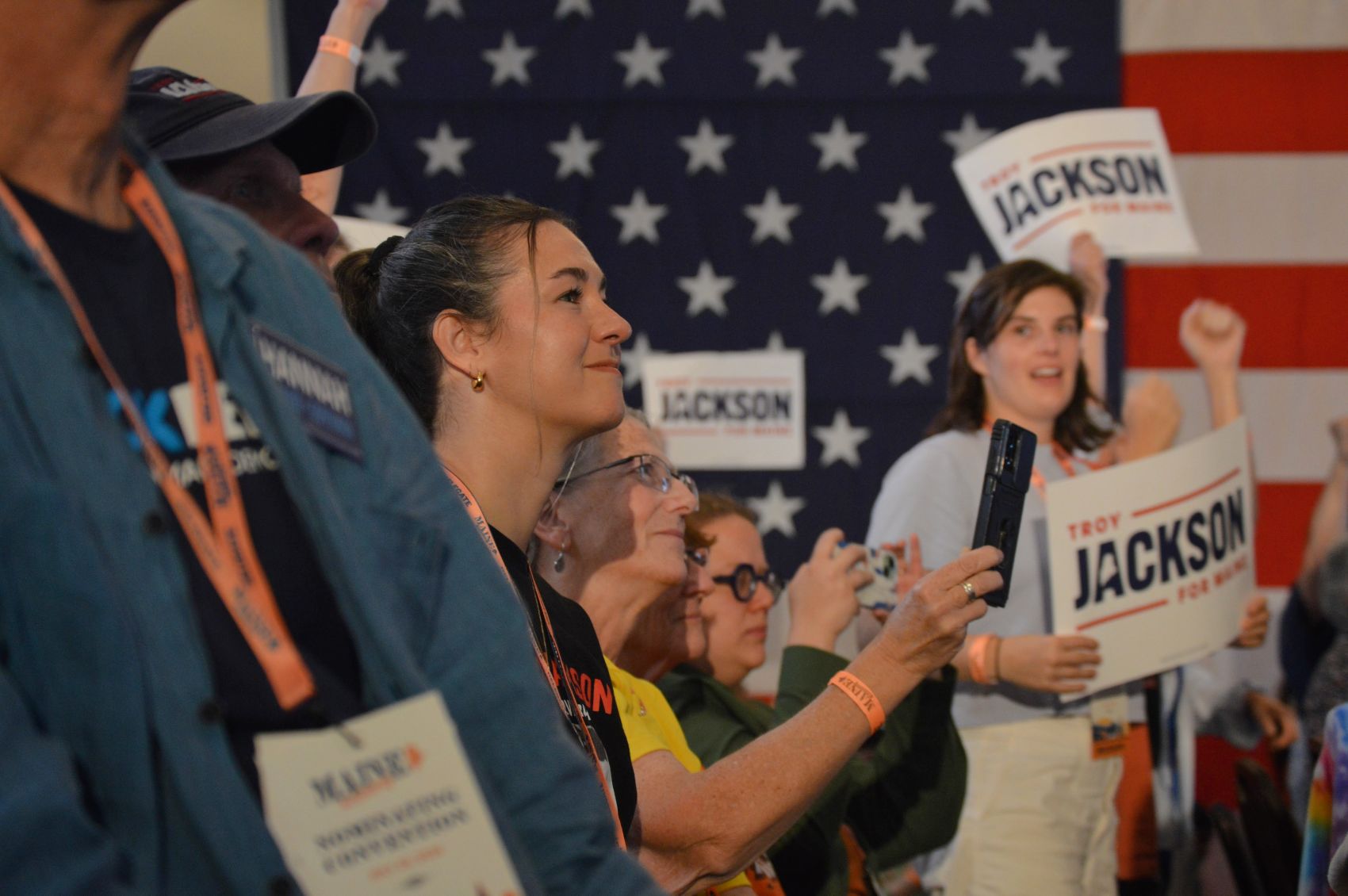
The Maine Democratic Party not only entered this process without precedent but also without much guidance from state law. The statute governing candidate withdrawals and replacements defines the timeline but not much else, leaving it to the political parties to decide how to choose a replacement. So Democrats had little more than two weeks to stand up a new process and make sure it concluded before the Monday deadline to provide replacement nominee information to the secretary of state’s office.
While there were a host of options available to the state party, Maine Democrats settled on a hybrid approach that had caucus-like meetings at the county level select delegates for the statewide convention. Some Democrats raised concerns about inclusiveness and transparency in the process, including after the emergence of candidate slates and Jackson’s dominance at the county level. Voters and at least one former candidate also criticized the exclusion of unenrolled voters, who had been allowed to participate in the record-setting primary, along with the party’s decision not to use ranked-choice voting.
But those concerns from some Democrats were typically couched with an understanding that party leaders were working to create a new framework on an incredibly condensed timeline.
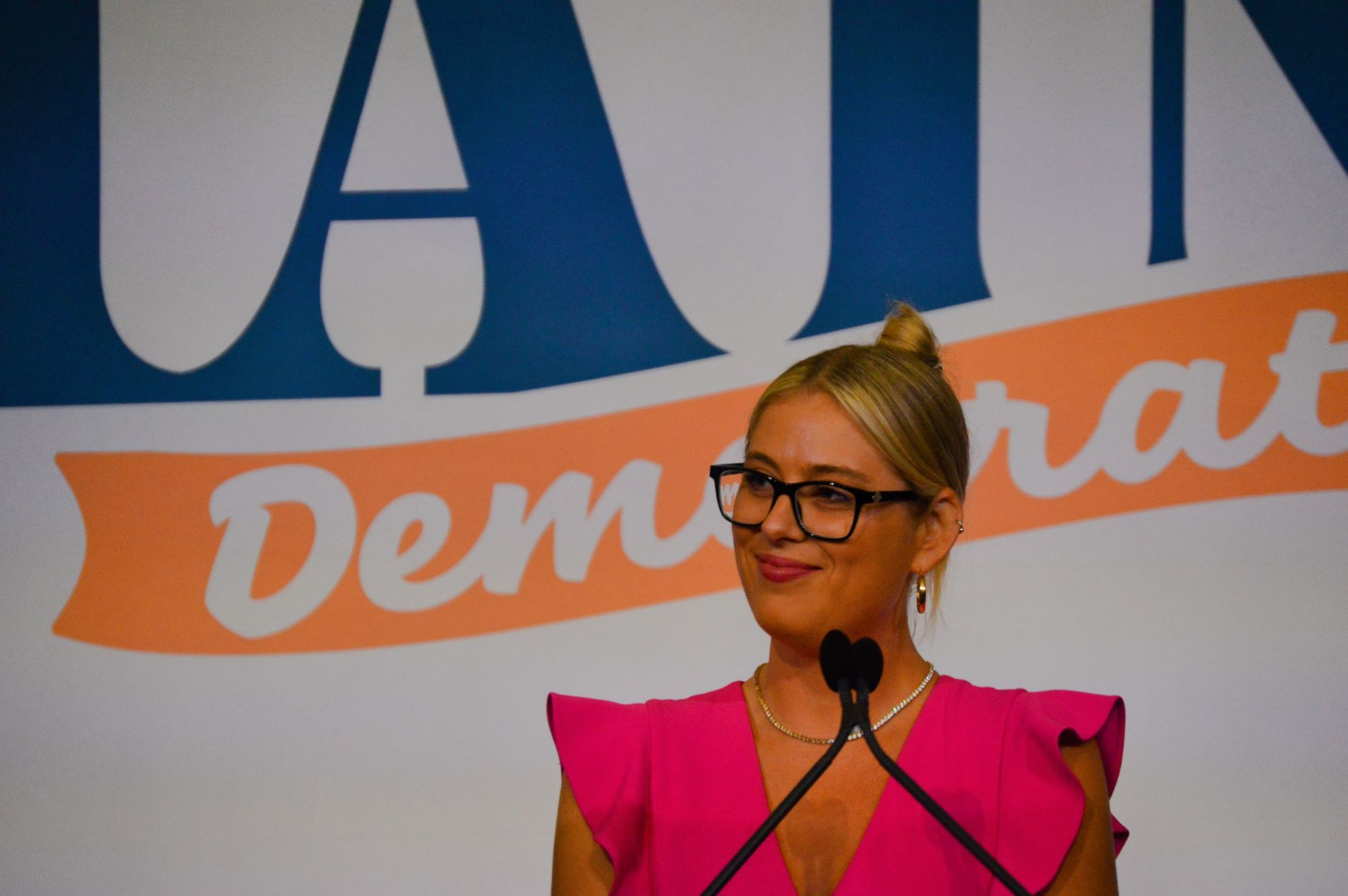
Androscoggin County delegate Kiernan Majerus-Collins, who was on Jackson’s slate and is currently running for a seat in the State House, wished that ranked-choice voting could have been incorporated into the replacement nomination process, and acknowledged that the way the slate process played out at the county level likely overrepresented the delegate support for Jackson compared with his overall support among the primary electorate.
But Majerus-Collins stressed that he felt the party got the process “85, 90 percent right” in a very tight window of time.
“I would say that the party could have used a proportional representation system to ensure that the delegate allocations more accurately reflected what the voters want,” Majerus-Collins said. “That being said, I don’t think the outcome would have been any different. And I don’t want to be overly critical for people who pulled off, frankly, a miracle with no time.”
An all-Aroostook general election
Saturday’s convention result sets up a general election battle between two candidates who both hail from Maine’s northernmost county.
“Susan Collins and I both come from Aroostook county,” Jackson told the crowd. “But that is where the similarities end.”
The former Maine Senate president now faces the challenge of unseating a five-term incumbent with a significant fundraising advantage. The network of committees supporting Collins had $22 million in the bank at the end of June, according to Federal Elections Commission data. Jackson was unable to roll over $156,000 remaining from his unsuccessful bid for governor and essentially had to start from scratch, although his campaign said last week that he raised $1 million before securing the nomination.

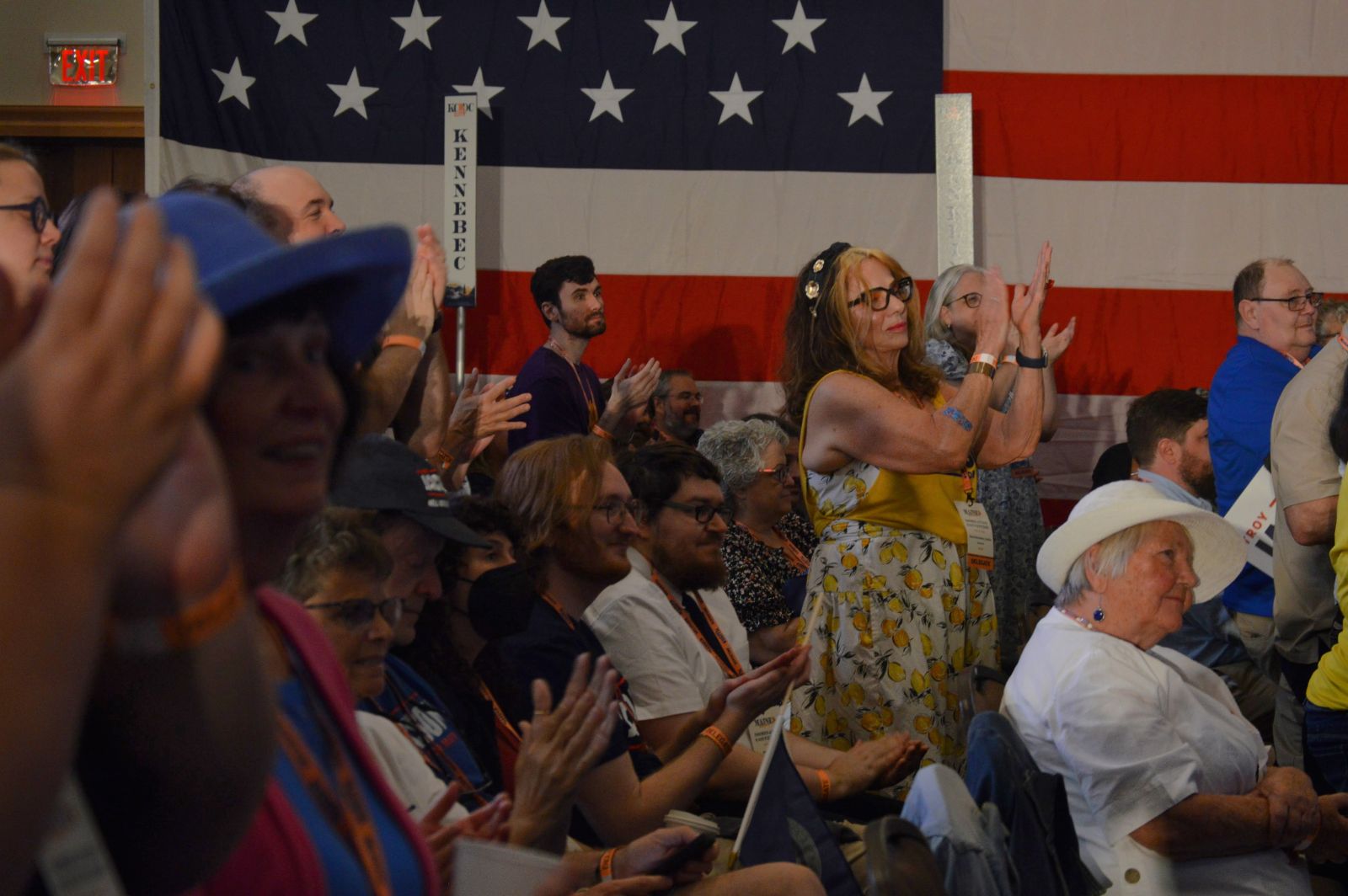
Unlike Collins, Jackson has never won a statewide race and has failed in his previous attempts to secure his party’s nomination for higher office. In 2014, he was trounced by Emily Cain in the Democratic primary for Maine’s second congressional seat by 40 points. Earlier this year, he came in third in his party’s gubernatorial primary behind winner Hannah Pingree and Nirav Shah. He also lost a 2023 selectboard election in his hometown while still serving in the Maine Senate.
But Collins is also facing what is likely the most challenging political environment since she was first elected to the U.S. Senate in 1996. A recent University of New Hampshire poll put her 3 points behind Jackson. But polls also had her lagging behind Democratic nominee Sara Gideon in 2020 before she pulled off a convincing victory. Last week, Collins described Jackson as a “Bernie-bro” to CNN.
“She’s hard to beat, but I do think there is change in the air,” said state Sen. Craig Hickman, D-Winthrop. “I think that our nominee can continue to mobilize not just the party but working class people of all backgrounds.”
Democrats were clear-eyed about Collins’ financial advantage but argued that beating her would require on-the-ground organizing, a skill that Jackson’s campaign demonstrated on a smaller scale in securing the nomination.

“A campaign that is going to run successfully against Susan Collins needs to be able to build an army that’s organized and disciplined and understands what to do very quickly,” said Portland city councilor and Cumberland County delegate Wes Pelletier. “Troy is very clearly able to do that.”
Loren Andrews, a Knox County delegate from Cushing who was on Jackson’s slate, was impressed with Jackson’s performance at the county level.
“As a Jackson supporter for years, the organization it took to win that thing is mind-boggling,” Andrews said before the delegate vote on Saturday. “It should make Republicans very nervous about what we’ll be able to organize in the fall.”