


KINGFIELD — A private bridge serving about 60 households has been restricted to vehicles weighing no more than 5 tons after an engineer determined it is in severe disrepair and must be replaced within a year, raising concerns over emergency access, funding and long-term repair responsibilities.
The Iron Bridge has been the center of debate over a Bowdoin College proposal to establish a seven-site overnight camping area near Ira Mountain. The site would accommodate up to 28 tents and 84 students and faculty, all of whom would have to drive over the bridge to reach the property the college purchased last year.
In May, after neighbors raised concerns over increased vehicle traffic and noise, the Brunswick college withdrew its application to give the town time to review its land use and overnight development ordinances. Voters later adopted a 180-day moratorium on such developments and have since sought legal counsel on how potential ordinance changes might affect Bowdoin’s proposal.
College representatives have said they intend to refile the campsite application later this year.
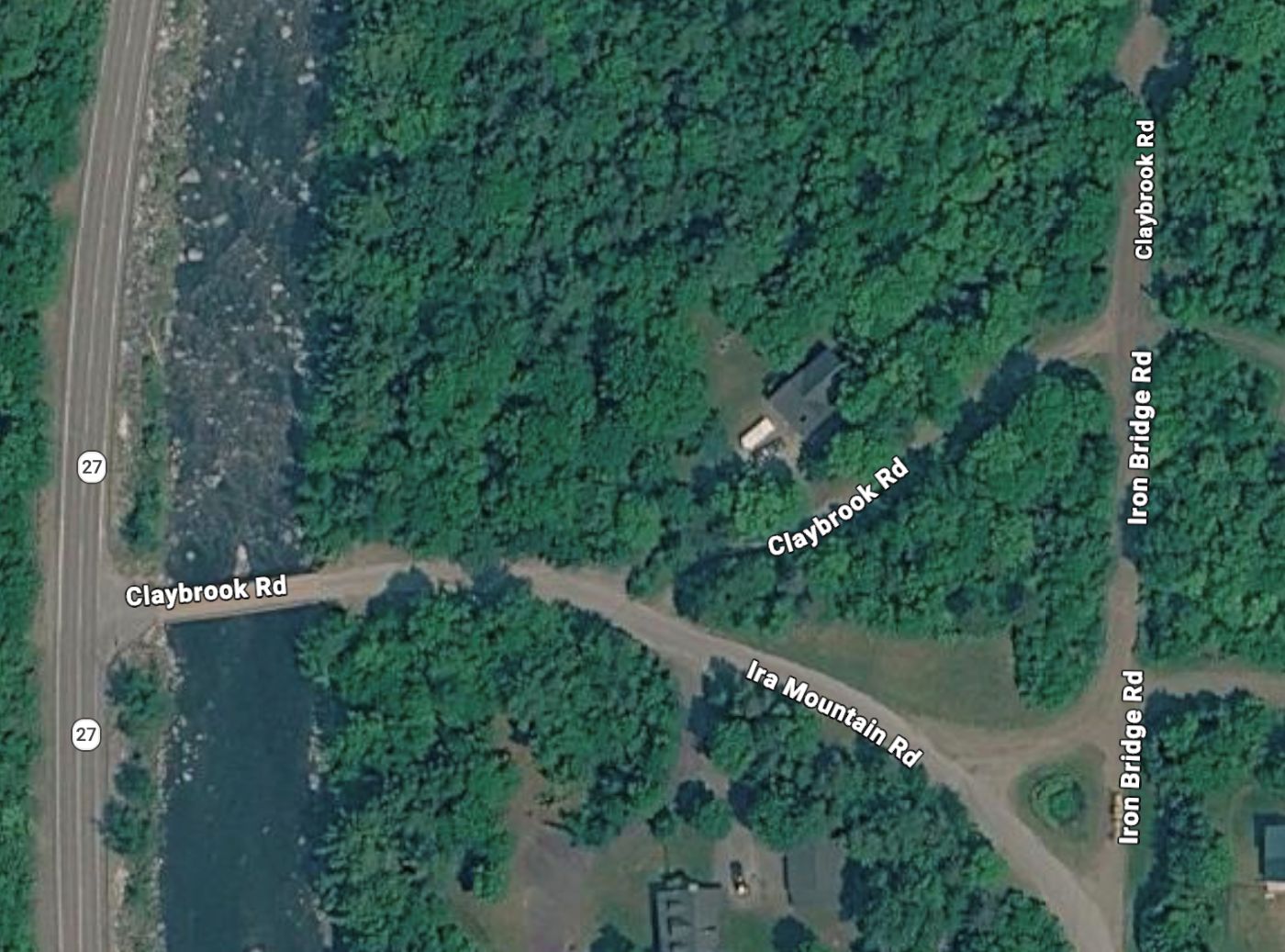
Four road associations — Iron Bridge Road Association, Claybrook Road Association, Ira Mountain Road Association and Poplar Hill Road Association — represent residents in the area. Members have repeatedly voiced safety concerns about heavy construction trucks turning onto and crossing the Iron Bridge from Route 27, a stretch of highway known for fast-moving traffic and heavy logging trucks.
The turn onto the Iron Bridge from both directions of Route 27 is considered hazardous even in ideal weather. Residents worry that large vans carrying Bowdoin Outing Club students — moving slowly across the bridge and unable to reverse quickly in an emergency — present an added safety hazard.
On May 26, the same day Bowdoin withdrew its campsite application, road association members learned that several bridge planks were sagging significantly and one-third of the structural beams were deformed.
After an unidentified person marked the damaged planks with orange spray paint, the road associations issued a travel advisory instructing drivers to “go around or straddle” the affected spots.
The road associations hired Brunswick-based Calderwood Engineering to conduct a formal inspection of the structure. The report, prepared by engineer Eric Calderwood, confirmed structural damage requiring immediate attention, noting that two of the six main beams are deformed and the bridge must be replaced within 12 months.
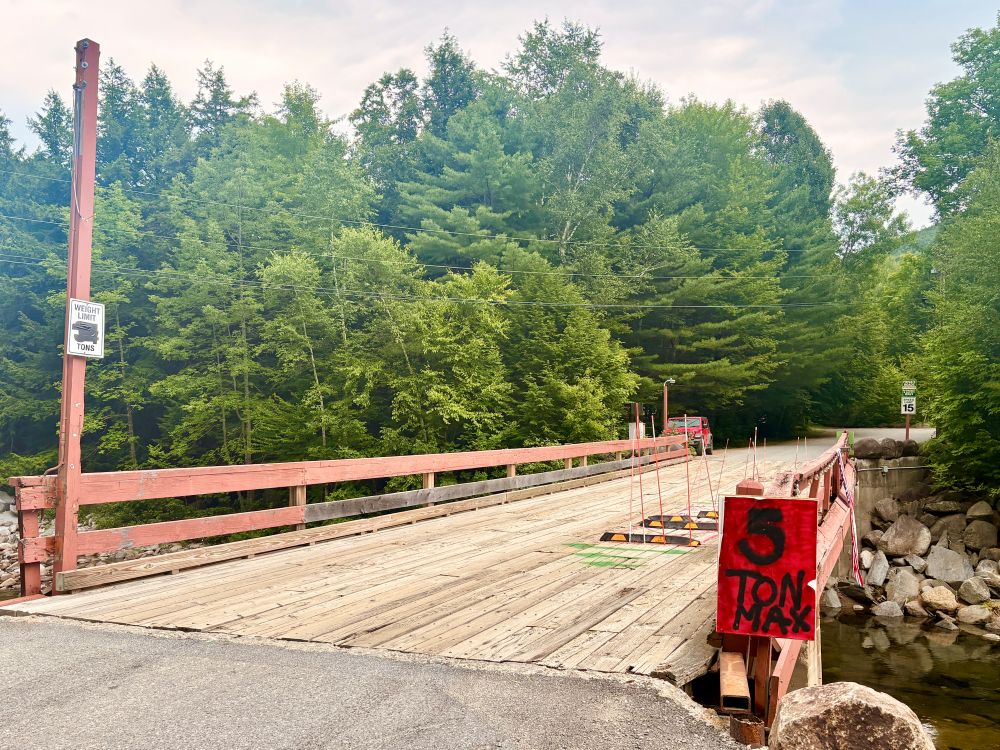
On Calderwood’s recommendation, the associations slashed the posted weight limit from 32 tons to 5 tons. Workers covered the old 32-ton sign and installed a red sign reflecting the new limit.
The damaged planks — sagging 4 to 6 inches below the road surface — are now marked with red spray paint and sectioned off using orange marker poles and rubber stopping blocks.
The 5-ton restriction bars many heavy vehicles, including fire engines, fuel trucks, garbage trucks and large ambulances.
Fully loaded passenger vans, such as those operated by Bowdoin College, may also exceed the weight limit depending on their size and payload.
The structural issues have also brought the bridge’s ownership to light. While long believed to be owned by Pleasant River Partners LLC, deed records and Kingfield Town Manager Leanna Targett confirm that the Ira Mountain Road Association has owned the single-lane bridge since Sept. 17, 2025.
A representative for the four road associations declined to comment on the bridge’s condition, ownership or repair plans when reached by Monitor Local.
For vehicles exceeding the 5-ton limit, two lots near Maple Street offer bypass access to the area via an unofficial dirt road known as the “back way.”
According to the road associations’ travel advisory, one lot owner granted permission for fuel deliveries “at their own risk.” Another owner requires a written, notarized release of liability approved by “(their) legal representative” before vehicles may use the route — and then strictly for emergency fuel deliveries. Any other requests to pass will be evaluated individually and “only if there is a release from liability on file.”
Road association representatives are exploring several options to address the bridge’s deteriorating condition. One proposal calls for members and affected property owners to deposit funds into an escrow account to back a town-supported loan. The structure would allow residents to finance the repairs over time rather than covering a massive upfront bill.
For residents who rely on the bridge daily, securing a long-term fix is urgent.
Under Maine’s private road association law, property owners who benefit from a private way or bridge can form a statutory road association to manage maintenance and repairs.
However, funding a major project under this framework comes with legal limits. State statute caps mandatory repair assessments at 1 percent of an owner’s municipal property valuation per calendar year — a restriction that applies even if individual owners are willing to pay more upfront.
Because state law limits annual member assessments, supporters of the loan approach say it could fund necessary repairs immediately while allowing property owners to repay the debt over time within those legal caps.
Another interim measure under discussion is securing temporary replacement beams from Franklin County while stakeholders work toward a permanent fix.
A third possibility is for the associations to bring the bridge and the loop formed by Claybrook, Iron Bridge and Ira Mountain roads up to collector street standards, then request that the town accept the loop and bridge as public roads.
The feasibility of these options remains under discussion, and preliminary cost estimates have yet to be determined.