



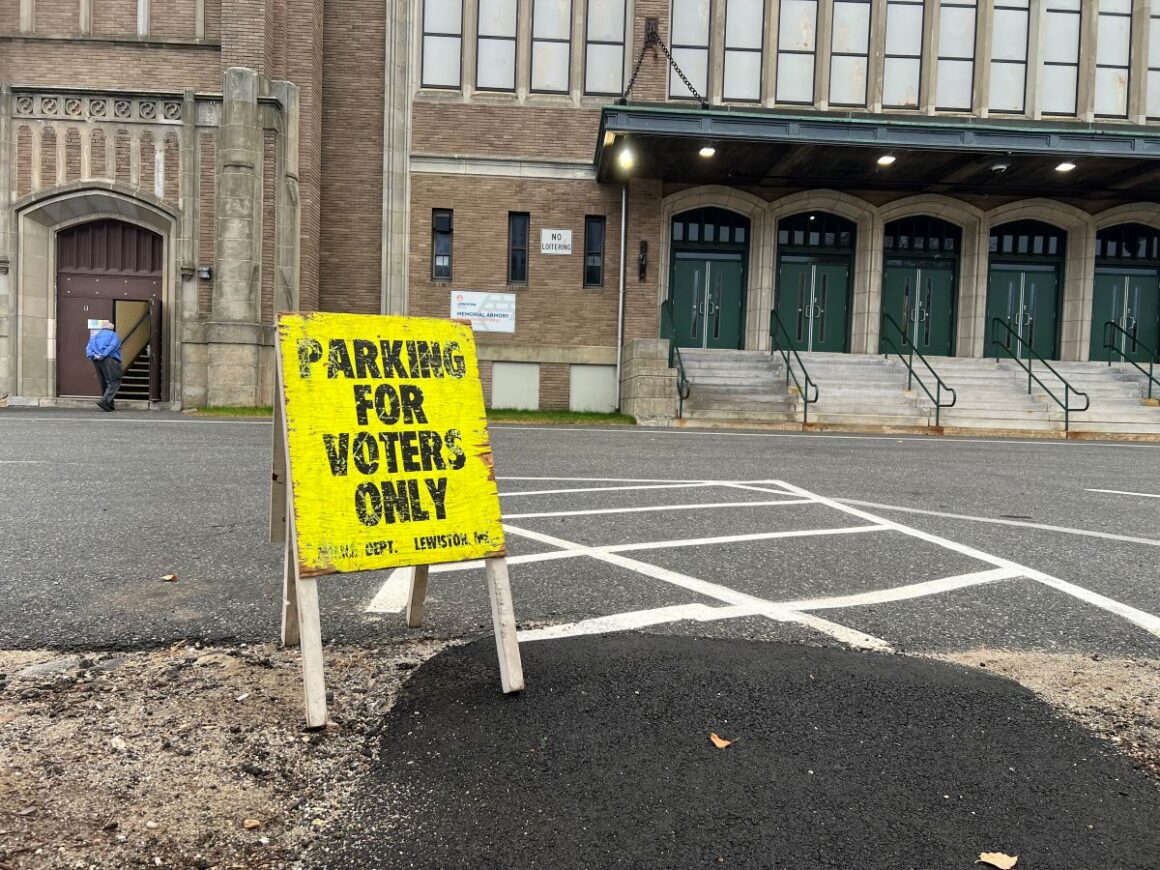
Lewiston voters this week said yes to a slate of restrictions on how needle exchange programs can operate in Maine’s second-largest city.
Nearly 60 percent of voters approved the citizen-initiated ballot question to amend the city ordinance governing syringe service programs. The changes mean the programs will be limited to handing out one new syringe for every used one that is turned in, with a maximum of 20 per person per day. The amendment also bans mobile exchange units, which can be helpful in reaching people who are unhoused or who lack transportation, and instead requires that programs operate from a single, fixed location.
Syringe service programs offer sterile needles and other supplies to people who inject drugs and connect them to services such as substance use treatment and housing assistance. Public health officials say their work is essential to reducing overdose deaths and preventing disease outbreaks.
In only two of Lewiston’s seven wards did residents narrowly reject the changes. In the third ward, home to Kennedy Park and part of the Tree Streets neighborhood, one of the most densely populated and lowest-income areas of the city, there were 25 more votes against the changes than those in favor. But elsewhere in the city, voters favored the new limits.
Proponents of the restrictions said that needle litter on Lewiston streets has gotten out of hand and syringe service programs are enabling people who use drugs rather than helping them.
“I believe our community got this one correct,” Eryn “Ryn” Soule, who led the effort to get the question on the ballot, said in a text message Thursday.
“The passage of Question 1 strikes a fair balance for public health while addressing vital community safety concerns,” said the former city councilor.
In late September, a coalition of doctors, social service providers and other advocates launched a campaign urging voters to reject the question. Members of the coalition, Safe and Healthy Maine, said they, too, shared the goal of reducing needle litter and making Lewiston’s streets safer.
Restricting syringe service programs, however, is not the way to do that, they argued.
“My concern is simple: when we restrict access to a proven public health tool without evidence that these restrictions will solve the problem you’re trying to address, those problems don’t disappear,” said Dr. Edward Walworth, representing the Maine Medical Association, on Sept. 30.
“Instead, we risk creating new and preventable costs and burdens for our health care system and our community.”
Cara Courchesne, the spokesperson for Safe and Healthy Maine’s No on 1 campaign, said Thursday that the coalition is “very concerned that these restrictions will make helping people and keeping our community safe and cleaner more difficult.”
Lewiston voters approved the restrictions the same week the Maine Center for Disease Control and Prevention confirmed that Penobscot County hit 50 HIV cases, the largest outbreak in state history.
In a Facebook post Wednesday, Safe and Healthy Maine said it was “heartbroken for our community, people struggling with substance use disorder, and their families.”
Fewer people will have access to life-saving services and connections to treatment, the coalition said, and “there will be more syringes in our public spaces.”
Studies have shown that communities see a reduction in the amount of improperly disposed needles in public spaces after a syringe service program is established in the area, in part because the programs provide people injecting drugs with a place to safely dispose of used needles.
Soule previously said she understands the need for harm reduction programs but believes there is a better way to provide services than through needle exchanges.
“It is important to emphasize that essential services and programs remain available just as before,” she said Thursday. “While this ordinance establishes new guardrails for accountability and cleaner public spaces, support programs continue to be accessible to those who need them.”
There is only one Maine CDC-certified syringe service program operating in Lewiston currently. Spurwink offers harm reduction services at its 1155 Lisbon St. location weekdays from 9 a.m. to 5 p.m.