


MACHIAS — In a move to protect small-scale lobstermen from tangled gear and bigger boats, the Lobster Zone A Council voted unanimously last week to advance a proposal expanding a restricted fishing area in Englishman Bay.
The plan aims to make fishing safer and more productive for fishermen out of Jonesport, Beals and Jonesboro.
Regulations now limit a section of the bay to lobstermen using buoyed lines with up to four traps per line — a rule lobstermen established in a 2011 agreement.
The new proposal pushes that restricted zone out 3 miles to federal waters on the western end, maintains the existing eastern border and allows fishermen inside the zone to set up to five traps per line.
The proposal also aligns with legislative changes to right whale protections set to expire in December 2028, though the U.S. House Natural Resources Committee voted last week to extend the start of those rules to 2035. Full congressional approval is required to enact the delay.
Setting five traps per line instead of four reduces vertical lines in the water, lowering the risk of whale entanglements in fishing gear.
The proposal would prohibit fishermen with larger vessels and heavier rigging — typically running long trawls of 10 to 20 traps anchored with large balloons — from fishing the expanded western area.
“Traps and trawls don’t mix,” said Dana Beal, who brought the proposal to the Zone A Council.
The council is among seven regional groups that help oversee lobster management policy for the Maine Department of Marine Resources.
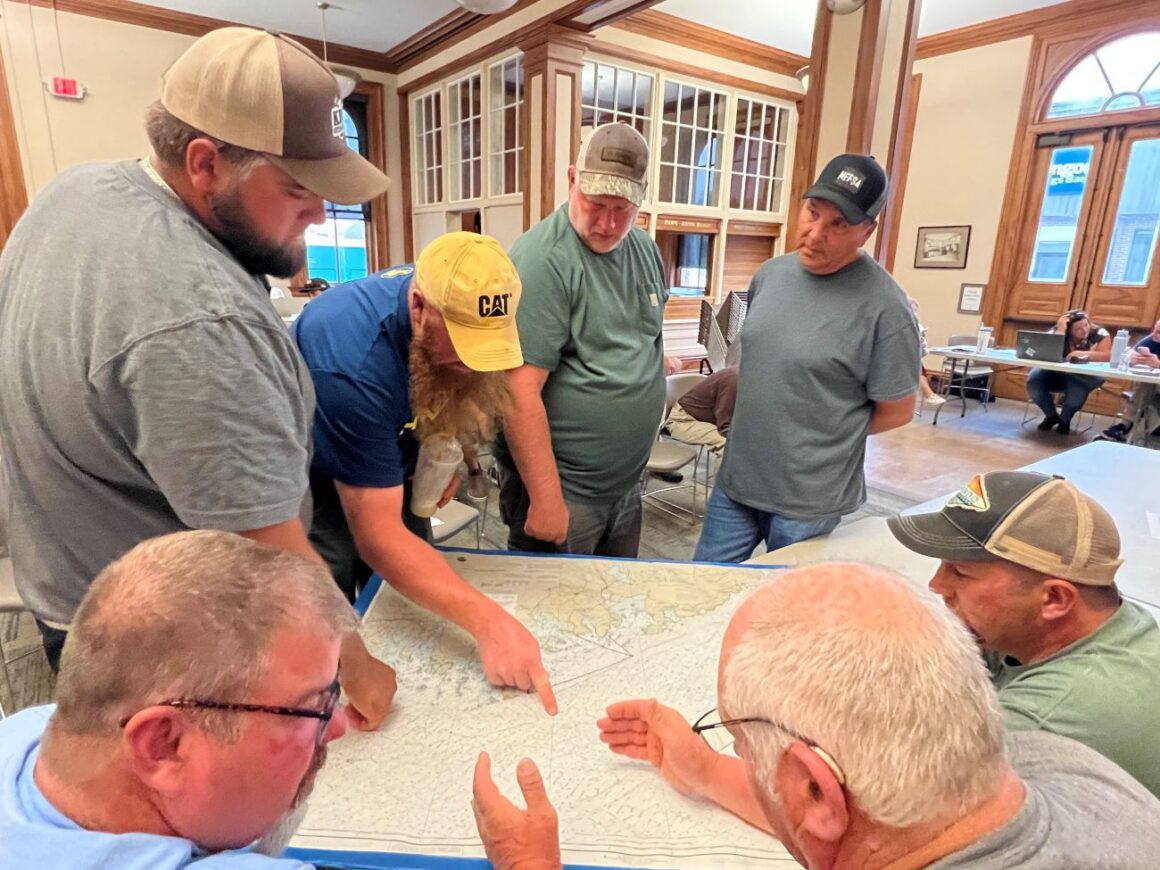
When a 20-trap trawl line is accidentally set over a shorter, buoyed line of two to four traps, it creates dangerous conditions for a small-boat lobsterman trying to retrieve gear, Beal argued.
Beal said he fishes buoyed traps from the lower end of Beals Island up to 3 miles offshore. Other lobstermen, including Logan Alley, adjust their gear setups depending on the season.
“It depends on the time of year,” Alley said. “I chase the lobsters. I don’t just sit and wait for them in the same spot.”
He added: “Right now, those guys that fish wood gear down inside the 3-mile line have guys from the westward that are coming in and setting trawls in through them and not really caring. They’re just dumping on them. You get some people without respect that just don’t care if somebody’s been there for 30 years, 40 years. They don’t care.”
Alley said he is trying to find common ground with the proposal.
“The older you get, typically the more downsized you are, and the further in you go and the more you’re apt to stay inside the 3-mile line,” Alley said. “And the younger you are, really you’ve got to make the most you can. You’ve got to chase them year-round and go into that deep water with trawls.”
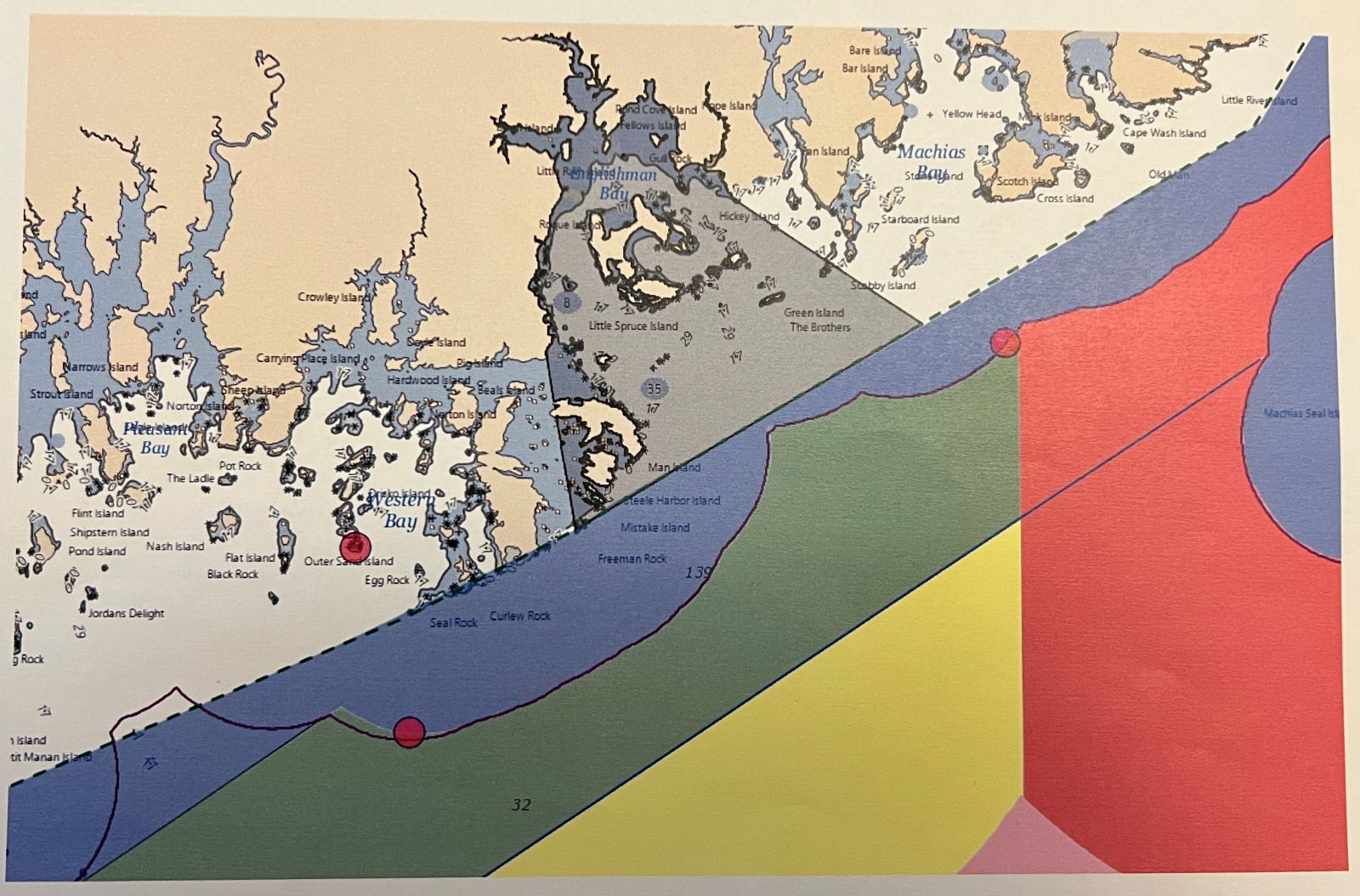
On the eastern edge of the limited zone, the intensity of the tide prohibits lighter gear.
“The Gulf of Maine is like a funnel,” Beal said. “You’ve got the coast of Maine and you’ve got Nova Scotia, and as the moon moves across, it pulls the water with it.”
When that happens, “you get a whole volume of water up on an area that’s squeezed, and when it’s released it’s like a river,” Beal said. “That’s what it does the further east you go.”
Shorter lines of traps with buoys cannot withstand that tide, making it an area that warrants anchored trawl lines.
“The idea behind it was not to bother the guys further to the east of the zone, because they really need to fish trawls — because they get a lot of tide,” Beal said.
The fishermen were also trying to get out ahead of the current regulatory pause on whale legislation before federal protections resume.
The fishermen were working within regulations set by the National Oceanic and Atmospheric Administration.
“The NOAA people, the National Marine Fisheries Service and everything, they’re not looking for us to shorten up the trawls,” John Drouin, chair of the Lobster Zone A Council, said.
In Cutler, where Drouin fishes, 20 traps on a trawl line is the minimum outside the federal 3-mile line to reduce lines in the water.
He commended the Jonesport and Beals fishermen for their compromises.
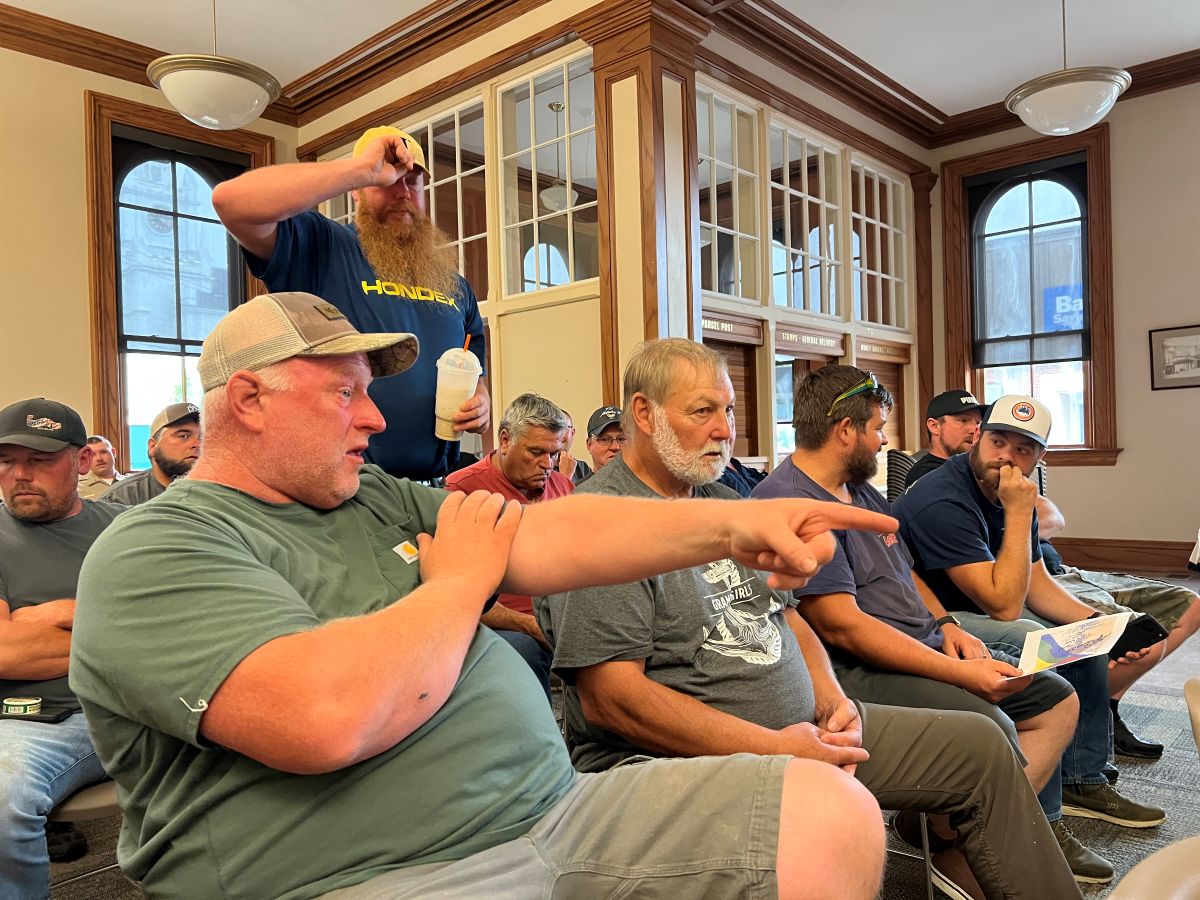
“I know it seemed kind of chaotic, but I thought it actually went well,” Drouin said of the often-heated discussion.
He and the council voted unanimously to accept the changes put forth by the fishermen.
That vote sets a referendum in motion that will go back to the council in its meeting in late August, according to Lorraine Morris, marine resource management coordinator for the Maine Department of Marine Resources, or DMR.
Morris was on hand during the meeting to answer questions.
“I write up the referendum,” Morris said. “It is presented back to the council. They’ll approve it. It also has to get approved by the commissioner.”
It then gets sent to the 1,000 or so active commercial license holders in Zone A. If two-thirds of the ballots returned are in favor of the changes, the proposal will be submitted to the commissioner.
Morris said that while DMR will typically go with what the fishermen want, the proposal still needs to go through the rulemaking process, which will include a public hearing and review by the DMR Advisory Committee.