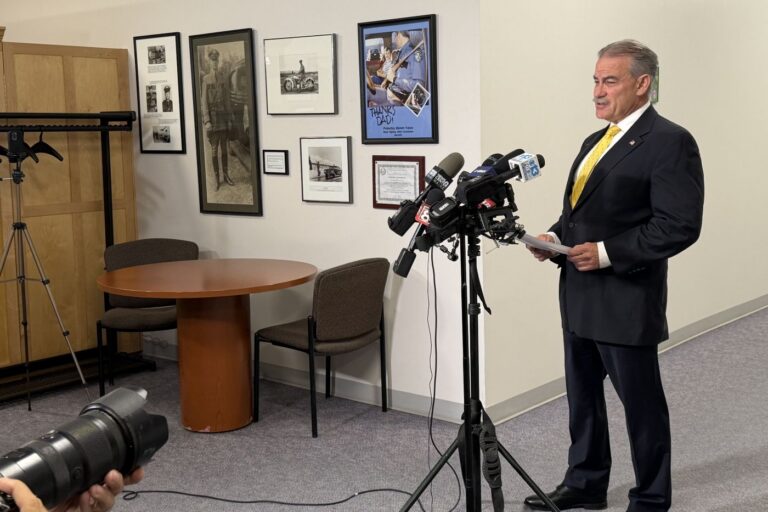




MACHIAS — Overtime costs at the Washington County Jail have already surpassed this year’s budget, and repairs and maintenance at the Sheriff’s Office are projected to exceed approved spending by the end of the month, county officials reported Wednesday.
During a lengthy workshop, the Washington County Commission, department heads and members of the county’s finance staff walked through budget requests for 2027.
The budget requests total $14.8 million for 2027, which is more than $1.8 million budgeted for the current year, and does not include an amount to be raised for reserve accounts. If all department requests are approved and reserve accounts are fully funded, the increase year over year could be as much as 44.56 percent.
Just before the meeting started, Provisional Treasurer Grace Falzarano told commissioners that the Sheriff’s Office has spent all of the $45,000 budgeted this year for repairs and maintenance, and that the department will be over budget by $1,500 by the end of the month. Any repairs or maintenance required at the jail for the remainder of the year are unbudgeted.
“It’s the same situation at the jail,” she said, noting that $26,861 in overtime costs has already exceeded the January-to-July budget.
If spending remains constant, Falzarano added, it “will almost double at the jail by the end of the year,” putting the facility close to $54,000 over budget.
“I don’t know if their entire budget will be over at that point, but if it is we have to make it up somewhere else,” she said. “And what happens there is, if everybody else meets their budget or they’re close, we could potentially not be able to pay off the TAN (tax anticipation note for 2026) if we continue spending outside the budget.”
The jail administrator, Capt. Rich Rolfe, jumped into the conversation and explained the jail’s overtime costs were nearly all tied to transporting inmates to medical appointments.
“If we send anyone to the methadone clinic, we have to send two shifts (employees). To office appointments, medical appointments, transfers, everything requires a certain amount of staff to do this safely,” he said, and “you can’t pull them off shift because we’ll run short inside the building.”
Typically, transfers take two people to escort, including travel to Massachusetts General Hospital for an inmate’s eye appointment. Rolfe said these transport costs cannot be anticipated and are not within the jail’s control when inmates need medical care.
In 2025, the jail budgeted $278,000 for overtime. This year, the budget line was trimmed to $178,000 during the budget process, which Rolfe said is simply not enough.
Falzarano said the Sheriff’s Office is “right behind” the jail in overtime expenses, noting that the department has about $13,500 remaining in that budget line for the rest of the year.
“We’re going to have two large budget items that are very much over” budgeted lines for the year, she said, with more unexpected costs coming, including higher-than-expected costs for audits and higher risk pool insurance costs.
Rolfe added that food spending at the jail is also going to be over budget for the year. He said he plans to meet with the jail’s cook to identify cost drivers, noting that some of the high costs include having a nutritionist review menus.
“So,” Chairman David Burns asked, “what do we do when the money is gone in those two particular departments?”
Falzarano said the county’s new policy of having the commission approve any unbudgeted expense of more than $500 would kick in, which would include overtime wages and other costs like food and repairs.
“Whose budget are we going to take it out of?” Burns asked. “We cannot not pay the TAN off. Suggestions? Ideas?”
Rolfe and Chief Deputy Michael Crabtree said they are doing everything within their control to keep costs down. Burns asked for an example, and Crabtree said he will continue to try to hire part-time employees to help reduce overtime shifts.
“But what are you going to do when the money runs out?” Burns asked Crabtree.
In response, Crabtree said, “We’ve never gone over our total budget” and have moved money between budget lines in the past to cover expenses.
Burns asked Falzarano if there was enough in the Sheriff’s Office’s total budget to cover costs, and she said there is “right now.” But she also noted that auditors have cautioned the county against moving costs between budget lines — a practice the county has used in many departments for years.
Last fall, after years of poor financial management and improper bookkeeping that depleted the county’s surplus accounts, the county asked voters to borrow up to $11 million to pay what was expected to be $8 million in TAN debt by Dec. 31.
Voters rejected the idea, and the county asked towns to prepay a portion of the debt to avoid excessive interest charges, which a majority of towns accepted. Even so, the county entered 2026 in debt and with less than three months of operating cash on hand.
Commissioner Courtney Hammond asked Falzarano if towns were still paying off the 2025 TAN. Falzarano said little revenue is coming in.
County tax bills have gone out to municipalities for fiscal 2027, according to Carla Manchester, the county’s administrative assistant. So far, towns have paid $945,000 of the $12.9 million tax levy, which includes small payments from Columbia, Columbia Falls, Machiasport and Talmadge. Initial payments are not due until Sept. 1, leaving the county strapped for cash.
“We can’t pull a rabbit out of a hat. We have to decide how to proceed,” Burns said, asking whether there was any value in commissioners and finance staff working with department heads to see if there are areas to cut.

Commissioner Billy Howard said he could not stop thinking about the audit and how “we’re still overspending.”
“This has been the ongoing problem,” Howard said. “The spending is just going up. There’s been no consistency.”
Burns suggested the county might consider hiring an efficiency expert to look at workflow and employee practices “to see if we are efficient, or are doing things that don’t necessarily need to be done or can be done differently.”
Rolfe said he was offended by the suggestion.
“We always look for the best price, as far as efficiency for the things we have control over, we do that,” Rolfe said. “We do that every single day.”
He said the state bears some responsibility for not fully funding jail costs in all counties.
Burns agreed, saying, “We all know that the state isn’t paying their fair share, but we’re stuck holding the bag right now.”
The state contributed $20.3 million to jail funding for Maine’s 15 county jails this year, about 15 percent of total costs. Many jails have been struggling to manage costs in recent years, particularly when it comes to medical care for inmates.
Last year, Maine’s 15 county jails spent a total of $20.9 million on medical care, an increase of 36 percent over 2023, according to a January report from the Maine County Corrections Professional Standards Council. Washington County spent $158,435.87 on medical care for inmates last year.
Crabtree told commissioners that part of the problem with overspending budget lines is that department heads submit a budget “telling you what we need, and the budget gets cut,” first during the commission’s review and then again by the county’s Budget Advisory Committee and yet again by commissioners.
“We continue not to budget the way it needs to be budgeted, and then wonder how we get in this mess at the end of the year,” Crabtree said.
Howard said the county must consider cuts because “we have to think of the taxpayer. How they’re going to keep food on the table.”
“I understand that,” Crabtree said. “I get it. But we can’t keep doing the same thing and wonder why we get the same result. It will continue to happen again this year if we do the same thing.”
Burns agreed, but said: “We can’t keep raising the budget 20 to 40 percent every year either. Not in this county.”
Burns added: “We need to get the Legislature off their back ends and appropriate the appropriate amount of money to support our county. We can’t. We can’t live in a void up here. As much as a lot of people in the rest of the state would like to have us. We’re not a vacationland.”
Before the commission moved on to the line-by-line budget review, Manchester mentioned that the county’s practice of offering comp time instead of overtime could be a problem. If someone wants to be paid wages for overtime, Department of Labor rules require payment.
The county has offered compensatory time in exchange for overtime hours for years. Now that the finance department is aware of the requirement to pay, this year’s budget takes into account actual payment for overtime, she said.
Wednesday’s review of the budget is the start of the budget process and intended to familiarize the commission with budget requests, so few spending decisions were made.
Commissioners did agree to fund the elected treasurer’s position at $1, to be revisited after the November vote on whether to change the treasurer to an appointed position.