


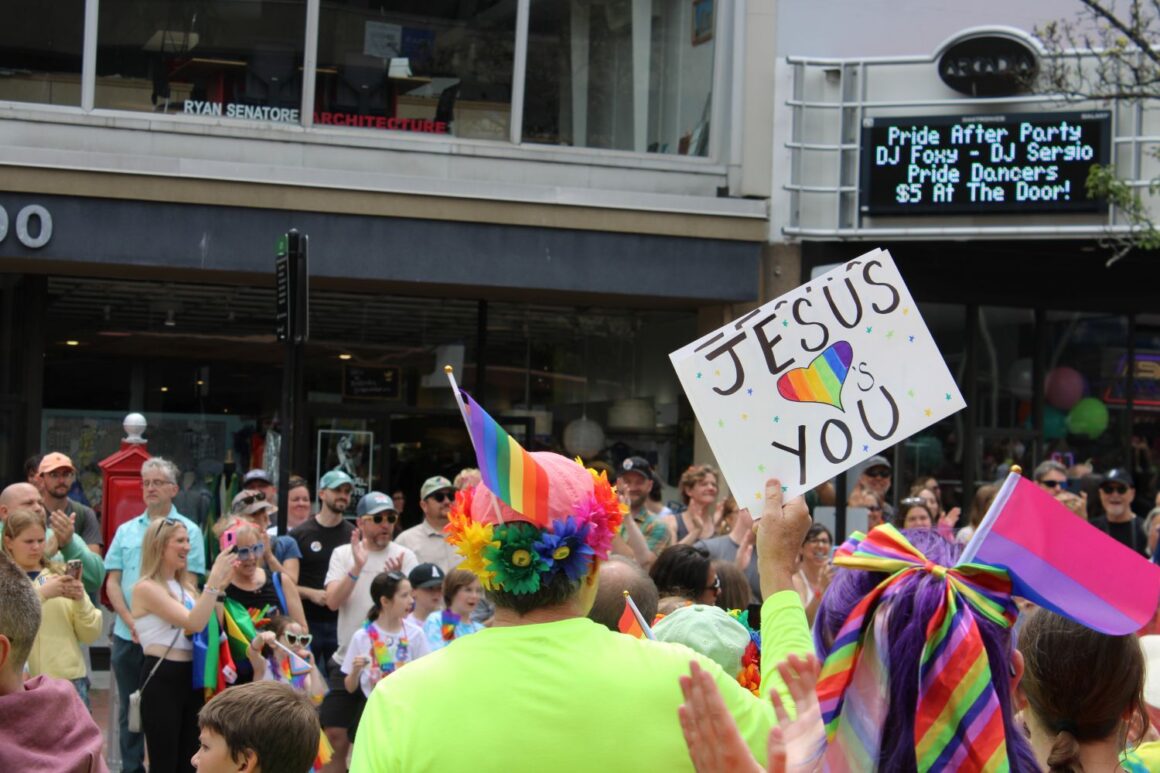
Roughly 50 people decked out in rainbow garb streamed out of First Parish Unitarian Universalist in downtown Portland last Saturday morning as music director Benjamin Holbrook led them in song. “I believe in the power of equality,” the attendees sang as they gathered on the church steps. “I believe in the power of love.”
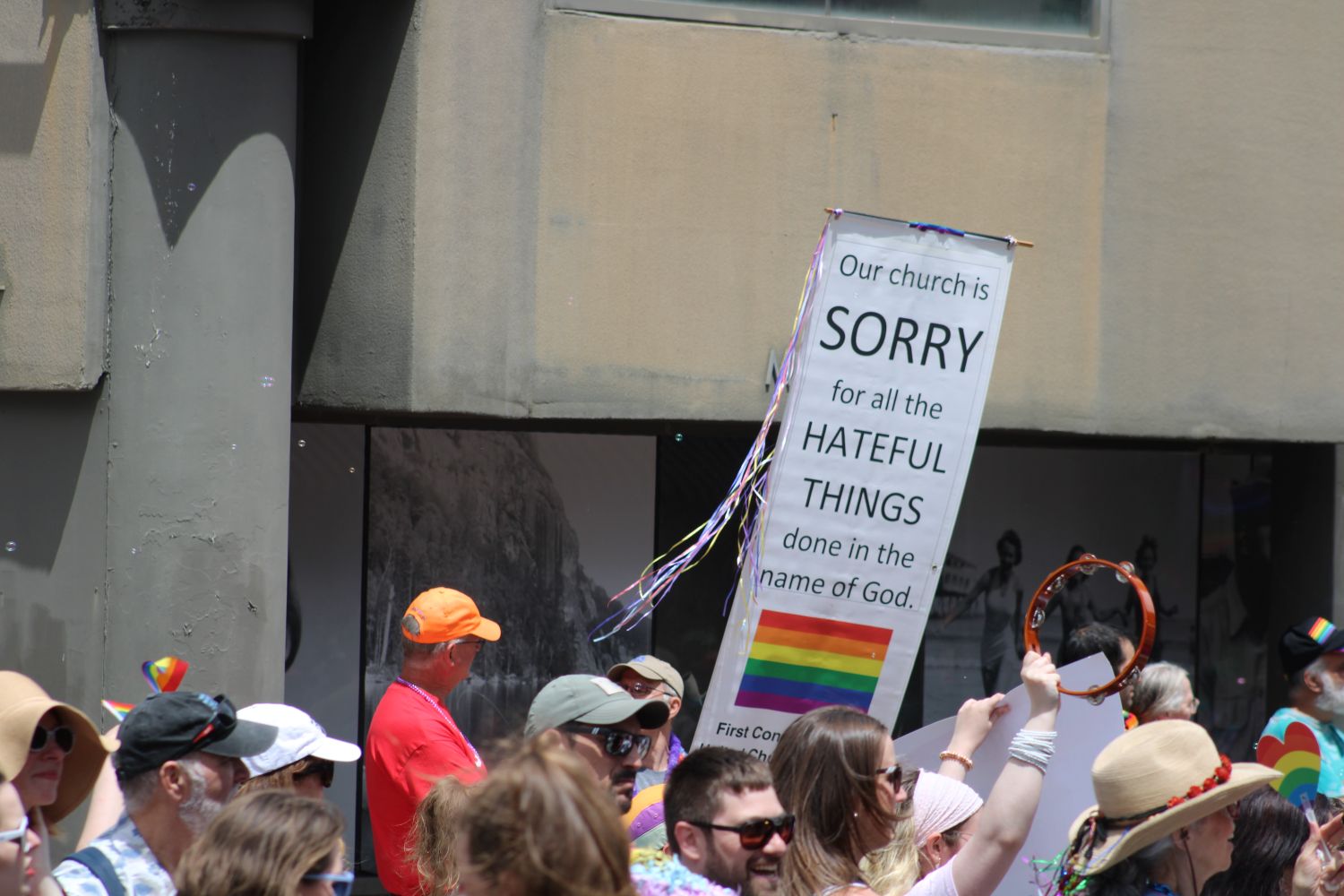
Nine faith leaders from across greater Portland had come together to lead a service that celebrated LGBTQ identities before attendees headed off to march in the city’s Pride parade on June 20, carrying signs that proclaimed “Unitarian Universalists have Pride” and “Our church is sorry for all the hateful things done in the name of God.”
The Rev. Norm Allen, the minister at First Parish, said he believes it is important for his church to show support for the LGBTQ community at a time when their rights are under attack.
Allen is part of the Greater Portland Multifaith Organizing Group, a collective of around 20 progressive-minded faith leaders who have gathered every other week since the start of President Donald Trump’s second term to discuss how their various congregations could help communities they saw as being harmed by federal policy changes.
They have largely focused on supporting immigrant communities in the area and leading their churches in conversations around transgender rights, two hot-button political topics in Maine this year. Their work has included weekly prayer vigils for immigration detainees outside the Cumberland County Jail, support for immigrants during January’s immigration enforcement surge, fundraising for Pink Haven Maine, a trans-led mutual aid network, and encouraging attendance at transgender educational events hosted by independent congregations.
Their outreach on transgender rights comes after President Trump issued executive orders aimed at barring transgender girls and women from competing in women’s sports and restricting gender-affirming medical treatments for minors, and as a group in Maine has pushed to put a question before voters that would limit transgender students to participating on sports teams corresponding to their sex at birth. Secretary of State Shenna Bellows ruled in May that the question could not appear on this November’s ballot due to invalid signatures. The Maine Supreme Court will hear oral arguments on July 1 on whether to allow the initiative to proceed.
Public attitudes toward transgender rights are polarized. Recent data from the Public Religion Research Institute shows that majorities in all religious groups believe transgender people deserve the same rights and protections as other Americans. But when asked whether transgender people should be restricted to using bathrooms that correspond with their sex at birth, majorities in all major Christian traditions said they supported such laws.
The coalition of faith leaders believe they have a duty to show that faith can be more inclusive of transgender people. In March, Allen’s church held a community forum focused on how faith communities could better understand the needs of transgender Mainers. During an annual meeting earlier this month, the congregation formally voted to set “upholding equity, safety and justice for transgender and nonbinary people” as its vision goal for the next year.
Christine Caulfield, a transgender woman and board member at the Equality Community Center in Portland, spoke during the March forum and later hosted a three-week workshop on transgender identity and advocacy for the church. She recently finished a similar workshop at First Congregational Church, a United Church of Christ, in South Portland.
Caulfield has spoken about transgender rights to a number of groups since fully coming out a decade ago but said it wasn’t until recently, when transgender rights became a political flashpoint, that she started getting more requests from faith groups.
According to the Trans Legislation Tracker, the number of anti-trans bills introduced in state legislatures swelled from fewer than 30 in 2019 to more than 1,000 last year. In Maine, dozens of faith leaders testified for and against a slew of bills that would have restricted bathroom use and participation in women’s sports for transgender people last spring.
“We have become politicized,” Caulfield said. “We’re not in politics; we have been thrust into politics as a lightning rod of what it means to support people who are very, very different from you.”
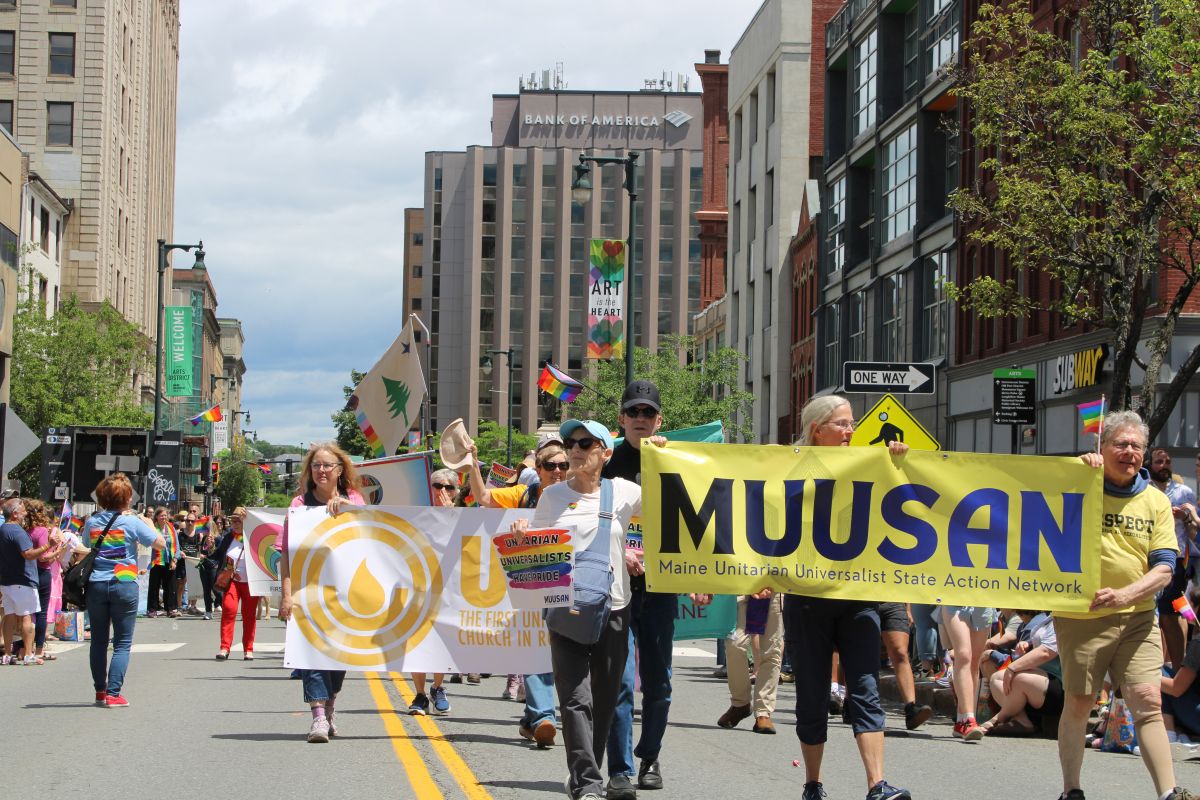
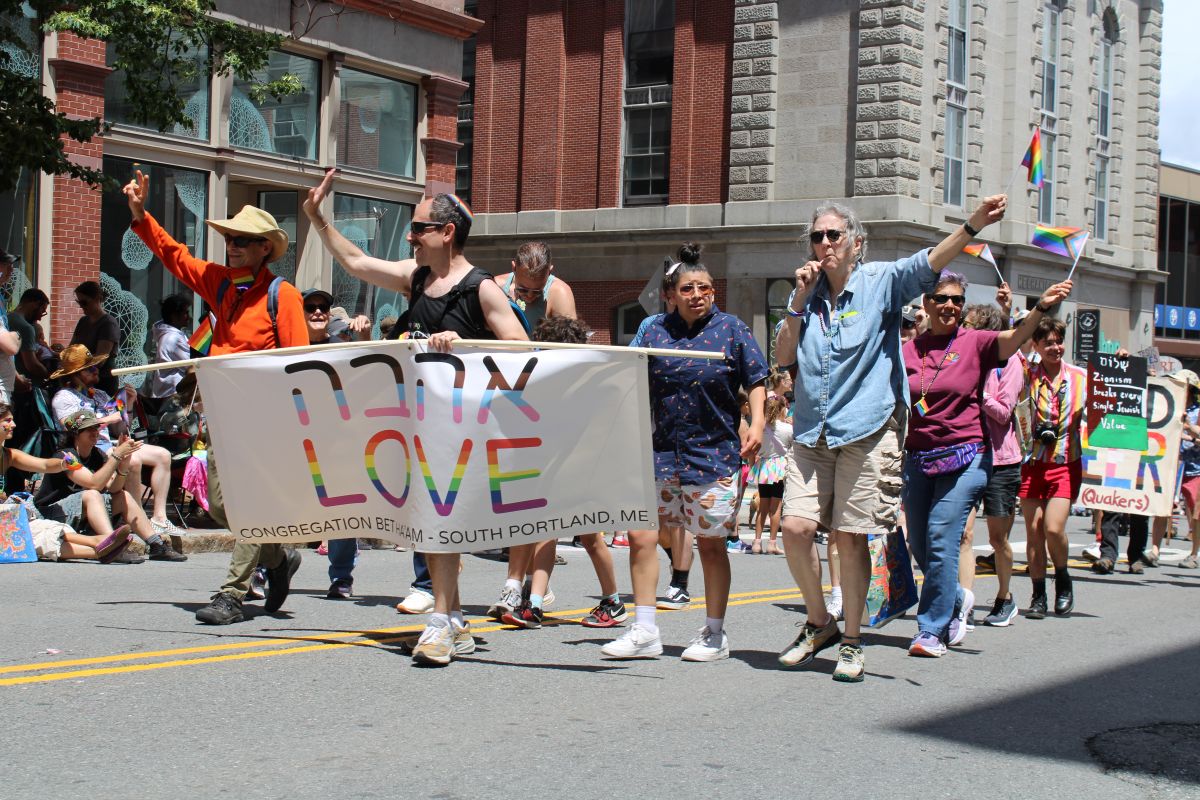
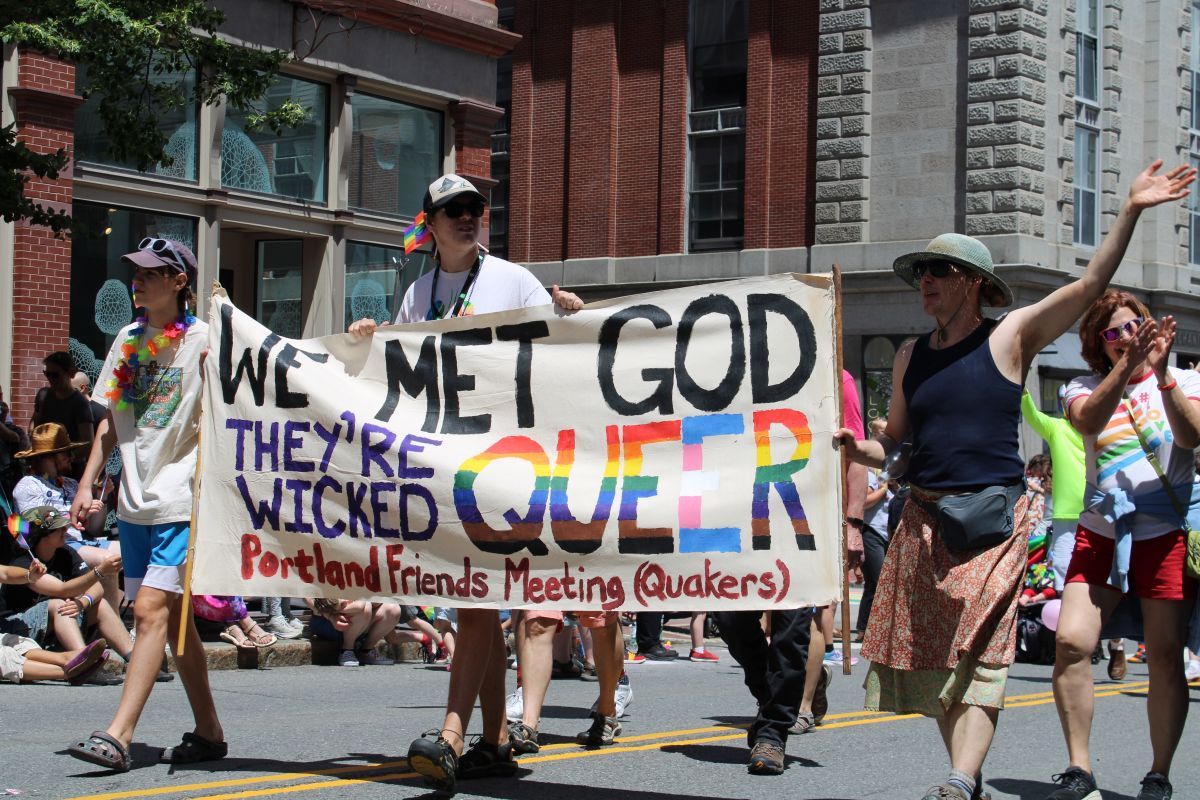
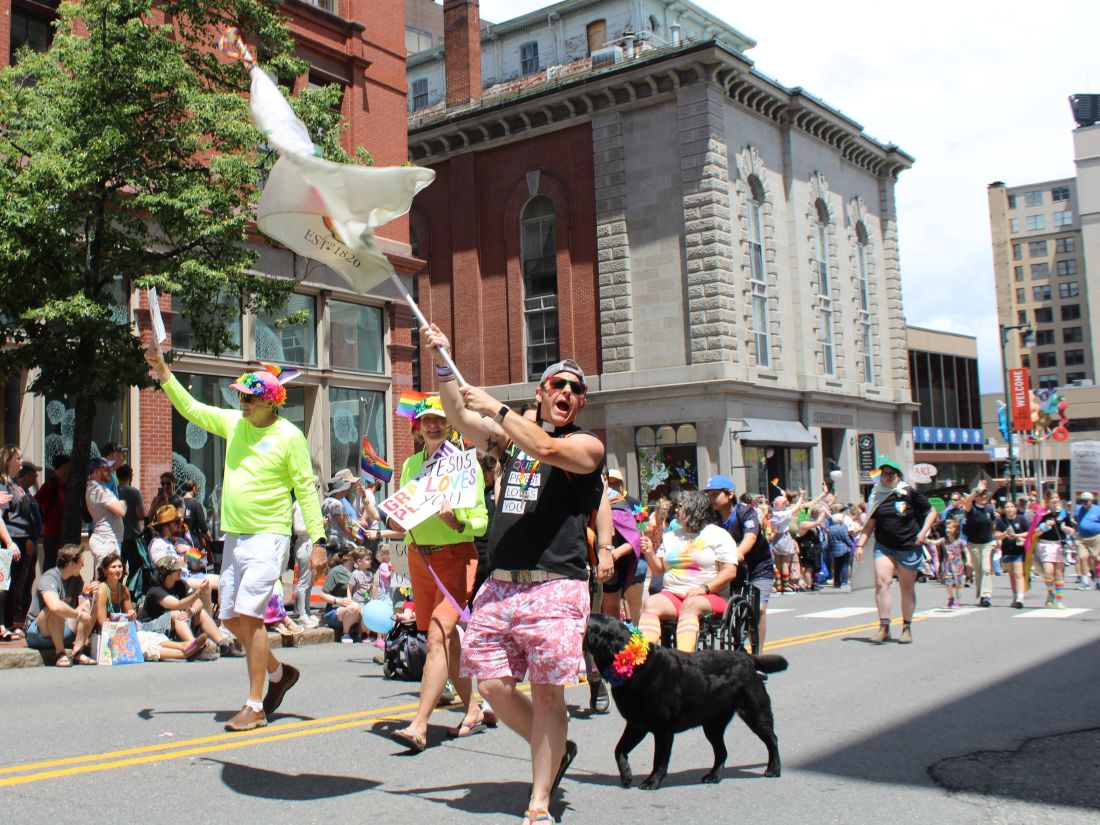
During the parade, each congregation carried its own banner but marched together. The faith contingent included several Unitarian Universalist, Episcopal and United Church of Christ congregations, the Jewish Congregation Bet Ha’am, the Quaker Portland Friends Meeting and HopeGateWay, an independent Methodist congregation in Portland.
Many of the faith leaders in attendance were members of the multifaith organizing group that formed at the start of President Trump’s second term. The Rev. Sara Ewing-Merrill, pastor of HopeGateWay, said she started the group as a way to make sure churches looking to serve marginalized communities were communicating and not duplicating each other’s work. She believes faith leaders have a responsibility to show their churches can be inclusive.
“The church has earned a reputation of judging others for all kinds of things, but particularly their sexuality, and the Bible has been misused to support those efforts,” Ewing-Merrill said. “I feel like it’s incumbent upon me and other Christian leaders in particular to dispute that use of the Bible and Jesus.”
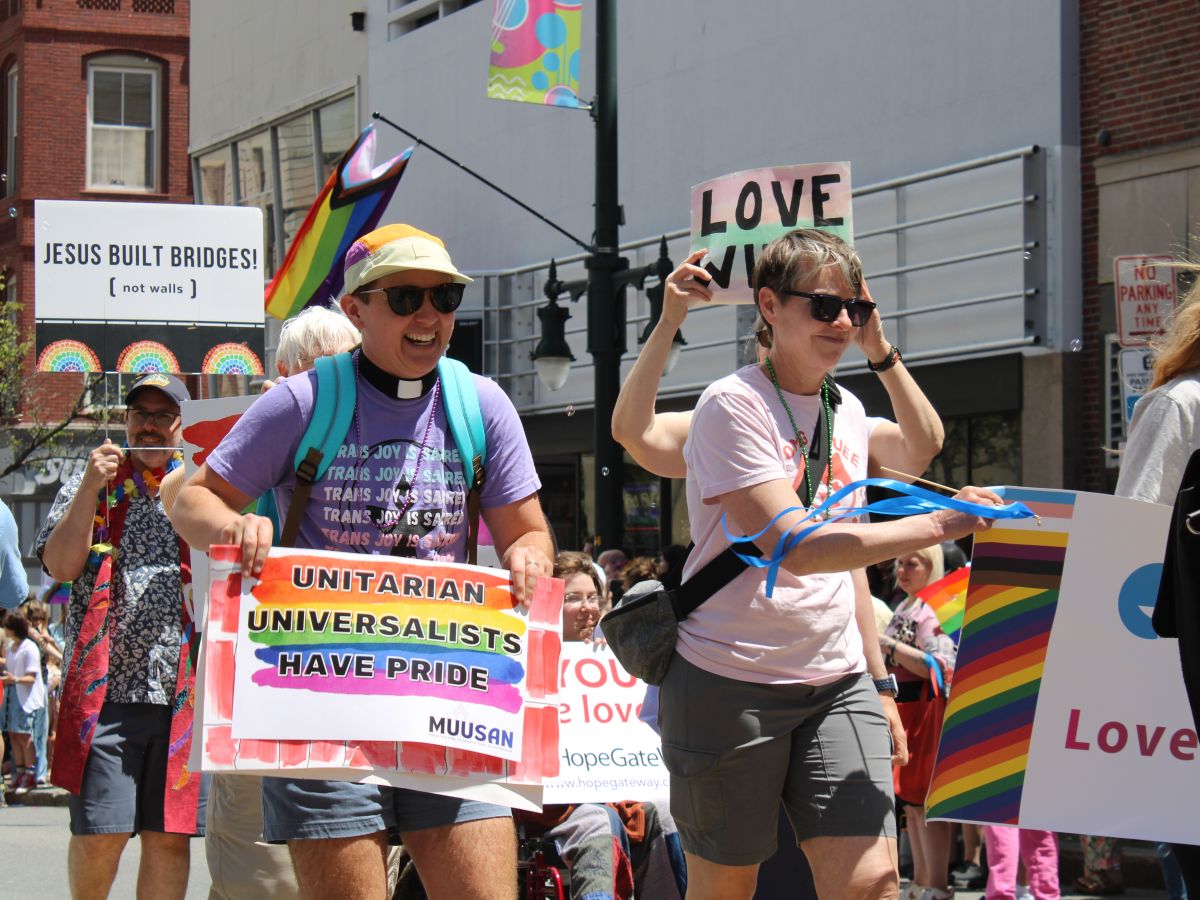
Lauren Kay, a Portland-based Episcopal priest who is transgender and nonbinary, said they have seen both the damage and the healing that religion can offer LGBTQ people. They grew up attending Catholic church and were initially pushed away by the faith, but their experience at a supportive Catholic school made them feel welcome. Ultimately, Kay said, they joined the Episcopal church, which is largely supportive of gay and transgender rights, and became a priest. They said they hope their participation in the Pride parade, and their work as a priest more broadly, shows young transgender people that there is space for them in the church.
The Rev. Tara Humphries, developmental minister at Allen Avenue Unitarian Universalist Church and a member of the multifaith group, came out as transgender and nonbinary while serving at the Portland church. Humphries said they view much of the opposition to transgender inclusion, particularly in sports, as a political strategy rather than a deeply held belief.
“They’ve just figured out that it’s an issue, it’s a marginalized community that is effective to target because it divides people,” Humphries said. “So as much as it is personal to me, and it’s personal to my friends who have trans children and youth, and my congregants who have trans children and youth, I do try to keep reminding myself, it’s actually not about us at all.”
Humphries grew up in a nonreligious family in southern Maine and attended their first Unitarian Universalist service while at Bates College. The church was the first place where they spent time around transgender people and nontraditional families.
“I all of a sudden saw myself in people really for the first time,” Humphries said, “and it was people in church. My experience of church has always been that it’s queer friendly, which I think is quite unusual, and I feel really lucky that that’s the case.”
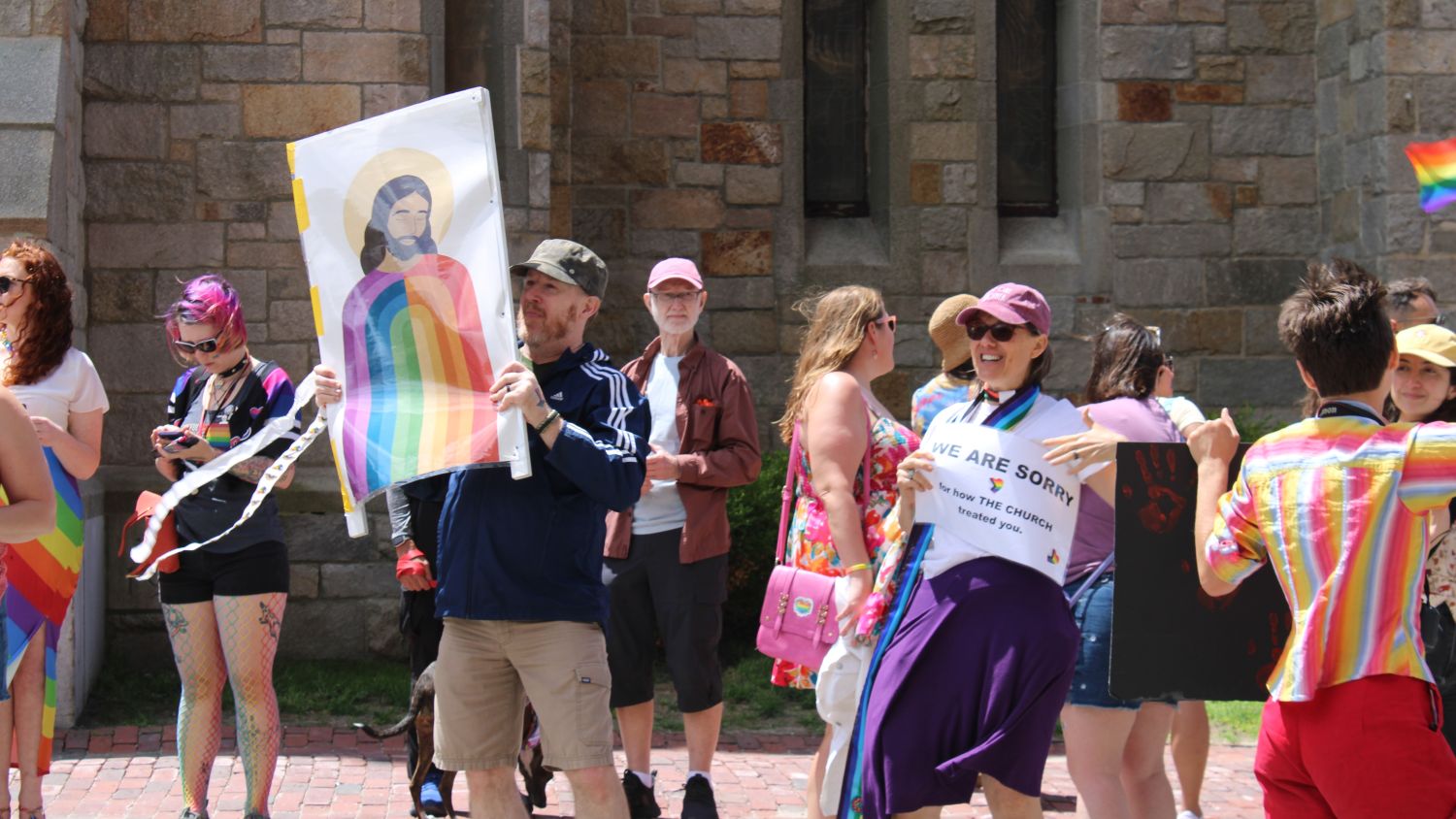
Humphries joined the Portland Pride parade along with several other Unitarian Universalist congregations. As the parade turned off Congress Street and onto High Street, they passed by Williston-Immanuel United Church, a joint United Church of Christ and American Baptist Churches USA congregation. The church’s pastor Rev. Reba Delzell stood outside holding a sign that read “We are sorry for how the church treated you.” Her husband stood next to her, holding up a painting of Jesus in a rainbow robe.
Delzell recalled a moment seven years ago when a gay man emailed her to ask if he would be safe at Williston-Immanuel. After that, the church revamped its website and hung the painting out front to show LGBTQ people that they were welcome in the congregation. Now, she tells other people she’s the pastor at the “rainbow Jesus church.”
“There are so many LGBTQ folk who have really been damaged by the church. They have been spiritually abused,” Delzell said. “My hope as a pastor is that people can begin coming to a church like ours where they say, ‘Oh my gosh, my sexuality, my gender, all of that is welcomed and affirmed, and I can focus on my spiritual growth.’”