


Schoppee Farm will not host a farmers market this year because a new federal hemp restriction takes effect in November.
Ben Edwards, founder and managing partner of the farm, said the rule change from Washington, D.C., makes growing hemp “practically illegal.”
The market, traditionally held on his property, will move to bank‑owned property this season while Edwards focuses on the legal fight ahead.
The change in federal law rewrites how the 2018 Farm Bill — the omnibus legislation focused on agriculture, farming and conservation — defines hemp. Under the 2018 Farm Bill, hemp is any product derived from a plant containing no more than 0.3 percent delta‑9 tetrahydrocannabinol. The shift had allowed producers to make natural hemp products with higher levels of other, lower‑potency cannabinoids, such as delta‑8 THC.
In 2020, the U.S. Drug Enforcement Administration issued an opinion classifying synthetic delta‑8 THC as a controlled substance while maintaining that naturally derived delta‑8 products remained regulated under the Farm Bill.
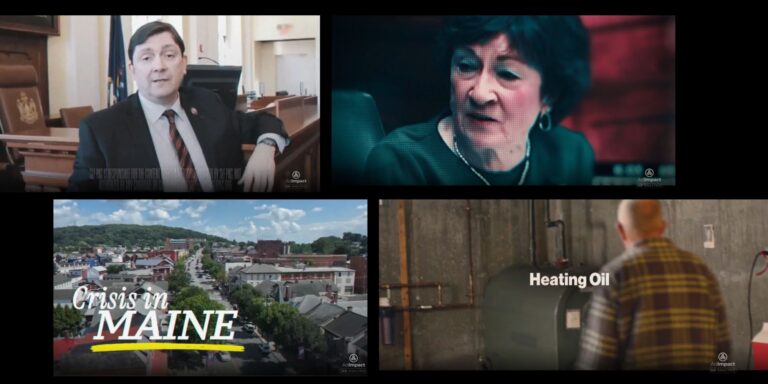
Last year, lawmakers — with support from Appropriations Committee Chair Sen. Susan Collins, R‑Maine, and championed by Sen. Mitch McConnell, R‑Ky. — changed the language that defines hemp and hemp products in the agriculture appropriations bill, despite dissent from Sen. Rand Paul, R-Ky., who said it would kill the hemp industry.
The bill, which included $26 billion to support farmers and promote food safety, helped reopen the government last November after a 43‑day shutdown.
Now, because of the change, products derived from plants with more than 0.3 percent THC by dry weight cannot be produced by most farmers starting in November 2026, making Edwards’ crops and his entire hemp product line illegal.
“Every single (hemp) product that we make, all our genetics, and every intermediary product that we sell to other people who use our extracts to make their products — everything — is illegal,” Edwards told Monitor Local, referring to when the new language goes into effect.
The legal challenge Edwards is facing also indefinitely pauses his soil research that uses regenerative farming to test how hemp crops can purify PFAS‑contaminated soil.
The hemp-derived cannabinoid market is a $3.5 billion industry, growing more than 1,200 percent since the 2018 change in the definition of hemp, according to the Brightfield Group, a data and analytics company reporting on the industry.
Edwards estimates that 65 percent of his wholesale buyers have dropped off ahead of the regulation.
The hemp restriction is the latest blow to farmers who already struggle with drought and rising costs driven by federal tariffs and wartime increases in petroleum prices.
In April, farmers gathered at the Maine State House in Augusta to support a bill that would provide new funding opportunities, but the proposal faltered when it could not secure a supermajority along party lines.
Edwards, a legacy farmer, usually hosts the farmers market that serves the Machias area at Schoppee Farm. The market, held Sundays from May through October, allows local farmers, foodies and artisans to offer goods to the public on the same property as his coffeehouse, The Milkhouse Cafe.
The cafe is expected to remain closed this season while Edwards works to address the hemp issue with lawmakers in Washington, D.C., including Rep. Andy Barr, R‑Ky., with whom Edwards has been in contact about the restriction.
Last November, Edwards said he was preparing to officially declare as a state Senate candidate for the seat currently held by Sen. Marianne Moore, R‑Calais. A week before his planned announcement, Edwards said the federal regulation put his farm in a tailspin.
When he moved back home to reopen the family farm after a decade away, Edwards’ ambition was not political. With a background in biochemistry, he set out to use the existing infrastructure, adding improvements that allow for Schoppee’s vertical integration.
Vertical Harvest, a Wyoming company that opened a state‑of‑the‑art hydroponic farming and processing facility in Westbrook last year, is one of the pioneers of vertical farming — a method that embodies the principles of vertical integration in one vertically stacked building.
The Westbrook facility received a $48 million U.S. Department of Agriculture‑backed loan with help from the brokerage firm Waterside Commercial Financial; Vertical Harvest is now being sued by Waterside for unpaid brokerage fees. The company also had a lien placed on it in May 2025 by the city of Westbrook for unpaid taxes. Vertical Harvest has 18 months from the date of the lien to pay or face foreclosure.
In March, The New York Times reported that financial setbacks are a major woe for vertical farmers, many of whom relied on investors for financing.
Schoppee Farm provides jobs across farming and production in Washington County, where customers rely on the company’s natural hemp products and its access to the local farmers market for their own health and wellness needs, Edwards said.
“We are completely vertically integrated. We farm, produce, extract, package and ship,” he said. “Hopefully, we resume activities next year. This isn’t meant to be a permanent change.”
Edwards, who also serves on the Machias Select Board, told Monitor Local that Machias Town Manager Sarah Craighead Dedmon and Kyle Pepperman, executive director of the Downeast Institute, are helping move the farmers market for now.
“We are excited to help expand the existing Machias (Valley) Farmers’ Market with the support of Machias Savings Bank,” Craighead Dedmon said, noting the market will resume operations on bank‑owned property this month.
The return of market season to Machias residents is a victory for the community, an area recognized for food insecurity.
According to Feeding America, 7.3 percent of Maine’s population in 2023 fell below the Supplemental Nutrition Assistance Program threshold, including more than 5,000 food‑insecure individuals, with an estimated budget shortfall of $3.9 million needed to cover Mainers’ food needs.
Barr of Kentucky proposed new federal hemp legislation May 28 to amend language in the 2027 agriculture appropriations bill. The Lawful Hemp Protection Act defines hemp as any cannabis plant with less than 1 percent delta‑9 THC by dry weight, with required testing to ensure products meet federal regulations.
Several other federal bills have been introduced seeking similar resolution. The hemp restriction goes into effect Nov. 12 for all growers, producers and manufacturers in the United States.
The first Machias Valley Farmers’ Market of the season is scheduled for 10 a.m. to noon Sunday, June 21, in front of the Machias Historic Railroad Station.
Correction: This story was updated June 5 to reflect Schoppee Farm is in Machias, not Machiasport.