



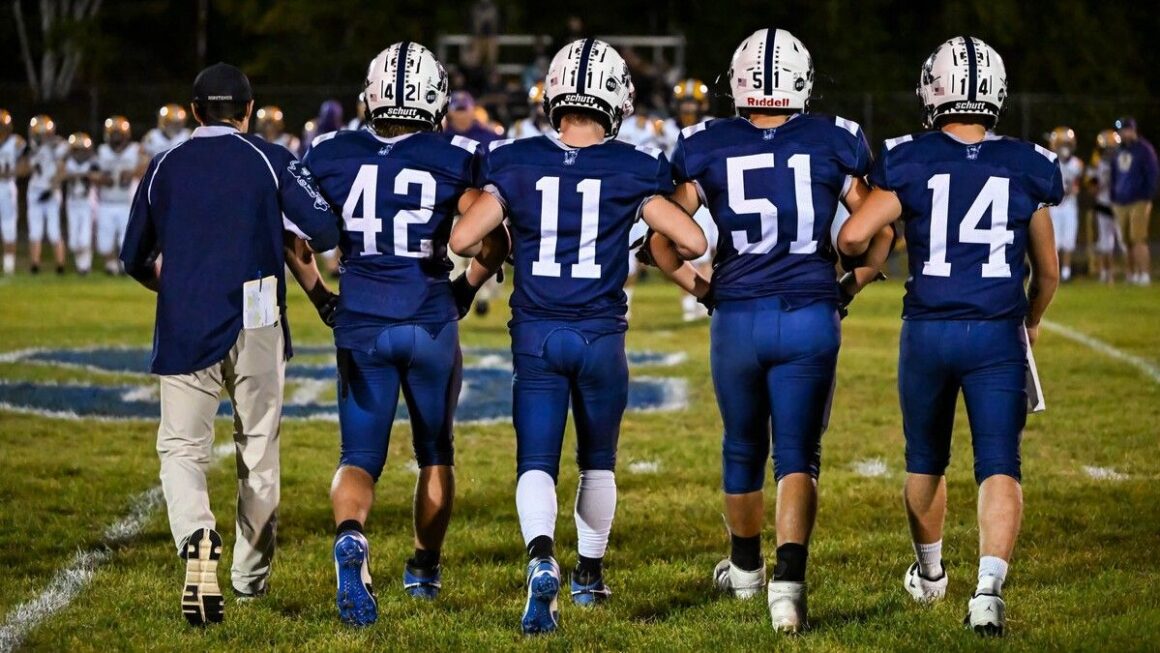
Norm Dubois just wanted to soak in one or two more football games at Katahdin Pride Park.
“A little nostalgic,” he mused on a Friday night last month as the sun set behind the wooden blue bleachers.
The long-retired teacher at Stearns High School in Millinocket is 79 and soon moving to Gorham, three hours south of where he has lived for 47 years. For most of that time, the Minutemen had a fierce rivalry with Schenck High School’s Wolverines, 10 minutes away in the mill town of East Millinocket.
As student enrollment declined, the football teams combined in 2017 and switched to an eight-man version of the game in 2022.
Sports may be just the beginning. Officials have reopened a long-fraught discussion about merging the school districts that serve Millinocket, East Millinocket and nearby Medway. The rivalry and financial stability from the twin mills that once dominated the region have derailed talks before. Residents may finally be ready to make the change.
The once-unthinkable blend of Stearns and Schenck reminded Dubois of the math team he had once coached. Back in the early 1990s, the team shared a bus with Schenck, though they did not fully merge the math teams as the schools’ football teams later did.
“I’m glad that they did that,” Dubois said of the teams coming together. “I wish they had done it even more.”

The Great Northern paper mills that built the two towns closed for good in 2008 and 2014 after decades of slow and painful decline. Though leafpeepers and outdoorspeople flock to the Katahdin region, the streets remain sluggish and well-paid job opportunities scant.
Each town is roughly half the size that it was in the 1970s, and their populations are aging quickly. The median age of East Millinocket residents is about 44. In Millinocket, it’s nearly 58.
Losing the mills meant the local tax base collapsed while the student populations cratered. When Dubois began teaching at Stearns in the 1970s, it had roughly 700 students. Now it has just 229, counting the addition of a junior high school. Millinocket’s old middle school is now a retirement home.
Combining Stearns and Schenck has long been a topic of conversation. In 2001, school board officials in Millinocket held a non-binding referendum on consolidation that passed 10 to 1. In 2003, the company planning to purchase the already bankrupt mills derailed a consolidation push by lobbying town officials to instead consider merging a broad range of town services rather than just the education system.
In the early 2010s, pressure to consolidate built up from a state-level consolidation push and local factors, including a leaky roof at Schenck. Fate intervened when an East Millinocket native won $370 million in a Powerball drawing and donated around $2 million to fix the roof, papering over the growing demographic trouble.
Voters in the smaller towns of East Millinocket and Medway have historically been far less willing to support consolidation with their larger neighbor to the west. A 2009 referendum on forming a single school district passed in Millinocket with 88 percent of voters in favor.
Driven partly by fears of losing local control, East Millinocket and Medway rejected the idea, with only 29 percent and 9 percent of voters respectively in favor of consolidation.
With the schools closer than ever and the student population dropping, officials opened up formal consolidation talks this summer. The three towns’ superintendents have begun meeting to discuss next steps, according to East Millinocket school board chair Marie Hernandez. There is no firm timeline for a future merger.
“It takes a while for consolidation to happen,” she said. “There’s a lot of people involved, a lot of moving parts.”
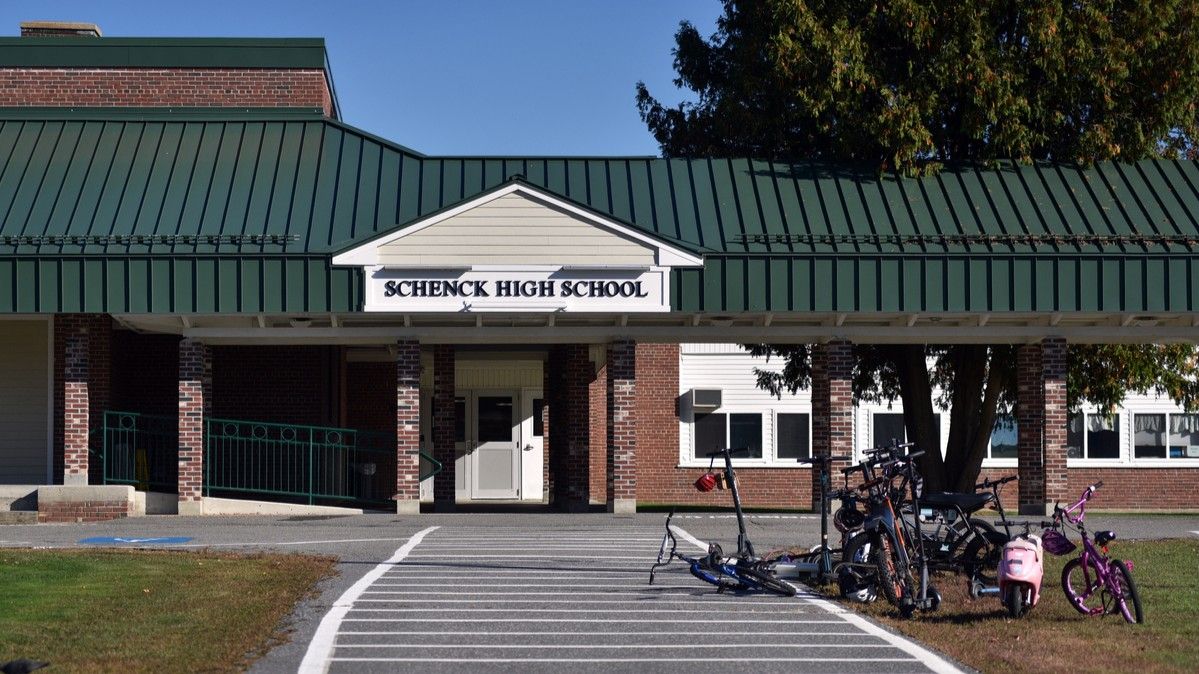
Though the path to merging schools has been fraught in the past, many area residents, burdened by high property taxes to cover two school districts, are ready to consolidate. Some brought it up to a reporter at the Stearns football game against Bucksport last month.
As the third quarter yielded to the fourth, an elated crowd began trickling out of the park. Crisp fall air had turned cold and the home team was clearly on track to win. The Katahdin region team trounced Bucksport, 44-14. It is considered one of the best 8-man programs in the state after losing the state championship game last year to Old Orchard Beach.
Lorna Ferguson of East Millinocket, whose great-nephew plays on the team, attends every home game. She is rooting for consolidation but worried that people in a region wracked by economic change will resist giving up local control. She sees an example in the team.
“It’s a great thing for the kids,” she said. “I wish it would bring the adults around a little bit more towards consolidating these school systems. It’s something that really needs to be done.”
Millinocket native Cody Herring once competed for Stearns and became coach during the first year with a consolidated team. He said he’s not privy to any broader consolidation discussions, but added that creating a blended team has been no trouble.
For now, the possibility of merging schools remains distant, and it’s not yet clear if any robust opposition to the proposal will arise.
“Everybody has their traditions,” Dubois, the retired teacher, said. “The Wolverines and the Minutemen and all that, it’s hard to give that up.”