



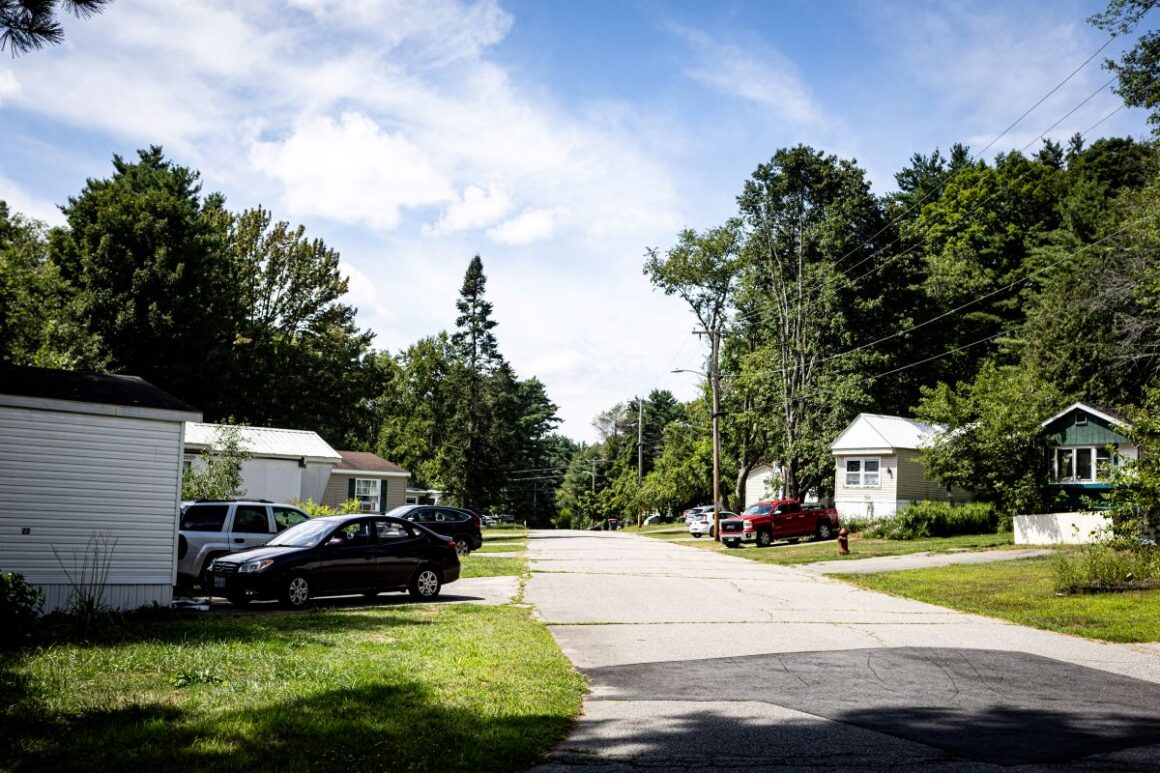
Voters in at least eight towns and cities across Maine will decide whether to add some level of rent control for mobile home parks on Nov. 3, offering the potential to almost double the number of places that have financial protections for park residents.
Eight municipalities have already passed similar measures this year, according to a Maine Monitor analysis. Two others had approved permanent protections before then. And other towns have passed temporary rent freezes.
Interest in such protections has grown as concerns about the price and availability of housing in Maine has reached a zenith in the wake of the COVID-19 pandemic. Mobile home parks, where residents typically own their units but pay rent for the land they sit on, are considered among the last affordable housing options in Maine — and have seen steep increases in rent in recent years.
Lawmakers in Augusta have been especially concerned about the mobile home stock as the private equity sector has bought up more and more parks, leading in some cases to increased rent and neglected infrastructure.
They passed a law, which went into effect in July, that limited the number of times lot rent could be increased to once per year and required 90 days’ notice of an increase. But they declined to restrict lot rent amounts because this was seen as “too blunt of an instrument,” said Greg Payne, Gov. Janet Mills’ housing policy advisor, during a recent mobile home policy listening event.
Since Augusta did not put a rent cap in place, “Local governments kind of said, ‘Well, we want to, locally,’ which is their right,” he continued.
Most ordinances being considered by voters are based on a template created by a state working group charged with investigating mobile home park problems and how to regulate them better. It suggests towns can tie restrictions on rent increases to the annual percentage change in the Consumer Price Index, a measure of inflation, but does not set a specific amount. Towns have chosen to set these restrictions anywhere from the annual change in the Consumer Price Index to 5 percent.
In most cases, park owners can petition for a higher increase but must justify the change to a designated body, such as the planning board, town manager or a new rent stabilization board.
Mobile home park residents typically own their homes but not the land underneath them, and moving the units can be difficult, leaving them vulnerable to changes in lot rents. Residents have argued rents have become increasingly unaffordable, and in some cases, have seen cost hikes as park owners have pulled back on amenities and maintenance requests.
That was the driving argument in Eliot, where Marshwood Estates residents saw a 37 percent lot rent increase from 2021 to 2026 as they struggled to get water quality issues and other problems fixed. They worked with the town to put together an ordinance that limits lot rent increases to the annual change in the Consumer Price Index or 3 percent, whichever is lower. The select board voted 3-2 to put the ordinance on the Nov. 3 ballot.
In some cases, residents have had support from progressive organizations in pushing for change or putting a citizen’s initiative on the ballot. Residents in some parks have formed cooperatives with hopes of eventually purchasing their communities, should they come up for sale. Many ordinances would exempt those parks from the lot rent cap increases.
In Jay, that means Hidden Circle Mobile Home Park residents would not be included under the town’s proposed ordinance, should it pass Nov. 3, because they purchased their park under a new law giving residents first right of refusal. The four other parks in the town would be subject to the ordinance.
Park owners have expressed concern about these ordinances and have argued that restricting their ability to raise rents could limit their capacity to keep their parks maintained and provide services. The Maine Manufactured Housing Association, a lobbying group that represents park owners as well as manufactured housing builders and dealers, has said it plans to sue towns that adopt such ordinances.
The Monitor found a handful of towns where ordinances had been discussed but had yet to move forward, or faced special town meeting votes before the election. In Lewiston, the city council will vote on final passage of a lot rent stabilization measure in mid-November.
In Bowdoin, the conversation is over for this year: Town residents split 50-50 on an ordinance that would have capped annual lot rent increases in September.
The cities and towns voting on mobile home park lot rent ordinances on Nov. 3 are: Augusta, Eliot, Farmington, Jay, Oakland, Standish, Wells and Wiscasset. You can find more information about those proposals, and the measures that have already passed, by clicking on each municipality in the map below.
Daniel O’Connor, John Forbes, Ben Hanstein, Melissa Razdrih and Stephanie McFeeters contributed reporting.