



WATERVILLE — A Maine law signed in January that clarifies how state and local law enforcement agencies may interact with federal immigration authorities is set to take effect in July.
Rockland and Lewiston have each passed ordinances to further define how their officials work with federal immigration agencies. Portland is currently considering its own ordinance.
This week, City Councilor Scott Beale, D‑Ward 6, proposed that Waterville draft a similar ordinance based on Portland’s proposal.
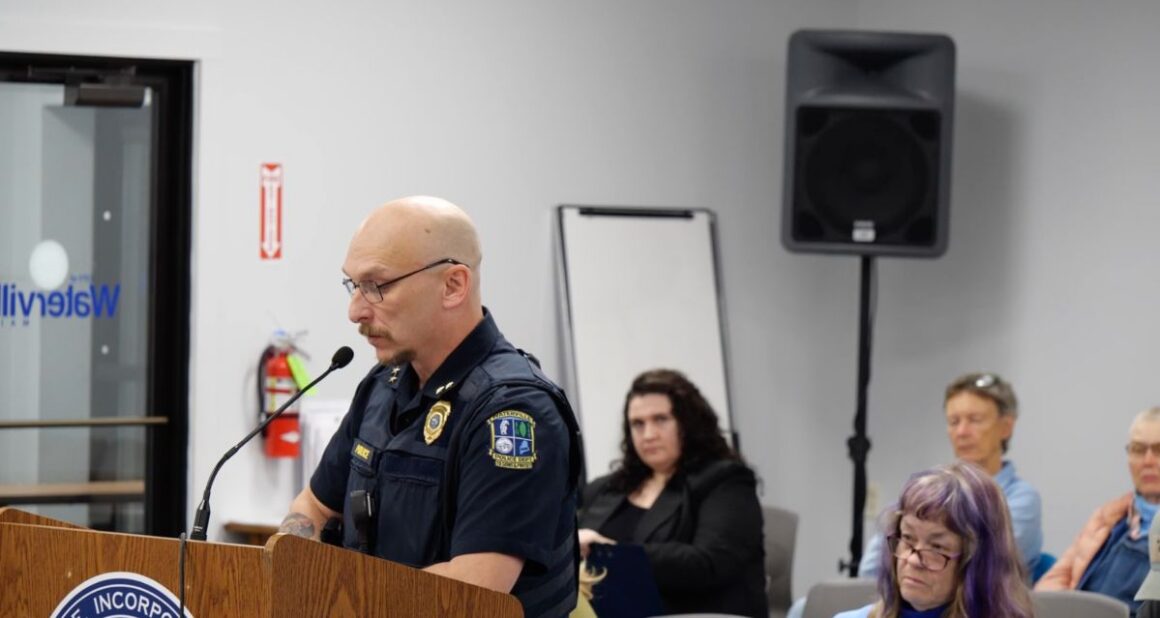
Police Chief William Bonney spoke at Tuesday’s City Council meeting in staunch opposition to adopting any ordinance.
“I think that adding this ordinance is an unnecessary step that would add confusion, be difficult to enforce and overall make Waterville less safe,” he said. “At this point, we already have federal and state law to contend with, and adding an ordinance — the Rockland ordinance certainly conflicts with itself in many spots — would be a disaster.
“It would be impossible to discipline an officer for not following the ordinance if they were in compliance with federal and state law because we don’t discipline people for following the law. And, finally, limiting where the police can go to protect people is an absolute danger to the public. We need to go where the unrest is, regardless of the cause.”
Bonney described the background work he and his force have done to try to prevent the need for any ordinance, such as working with Mid-Maine Regional Adult Community Education to provide workshops so people understand both their rights and how a typical interaction (such as being pulled over for a traffic violation) with law enforcement should go.
“This is the stuff that doesn’t go in the paper, doesn’t go in the news,” he said.
He said he believes that doing this has prevented hostile relationships with federal agents and allowed for successful collaborations.
Bonney said it also means that U.S. Immigration and Customs Enforcement, or ICE, informs police before coming to town.
Beale clarified that he meant no disrespect to Bonney and commended his work, but he said he will continue to push for an ordinance. Beale said he will work with City Solicitor Bill Lee and take guidance from the ACLU of Maine.
Councilor Spencer Krigbaum, D‑Ward 5, Councilor Flavia DeBrito, D‑Ward 2, and Councilor Cathy Herard, D‑Ward 7, all expressed support for formally proposing an ordinance.
“My priorities are implementing a law that is going to happen … and ensuring that people are not at risk from officials that are behaving in ways that we haven’t seen before and that are harmful,” Councilor Rebecca Green, D‑Ward 4, said.
A representative from the Immigration Legal Advocacy Project was present and spoke of the inhumane conditions in which detainees have been kept.
She also pointed to the erosion of trust that ICE has caused between people and their governments, as U.S. citizens become increasingly unwilling and scared to talk to their municipal officials.
“These ordinances are also extremely important because they address the loss of public trust and all the compounding impacts of people withdrawing out of public fear,” Green said. “It’s about protecting the rights and safety of individuals and public trust.”
She cited the 10th Amendment to the U.S. Constitution as a general precedent for the new state law and resulting ordinances. The 10th Amendment says that any powers not given to the federal government are reserved for the states or the people.
Mayor Michael Morris responded that he trusts the Police Department.
Bonney noted that both Lewiston and Rockland passed similar ordinances over the objections of their police chiefs.
Council Chair Brandon Gilley, D‑Ward 1, spoke staunchly against adopting any ordinance.
The discussion was preliminary, so the council drafted no official documents.
The council is expected to consider a proposed ordinance at its next meeting, set for Tuesday, May 5.