


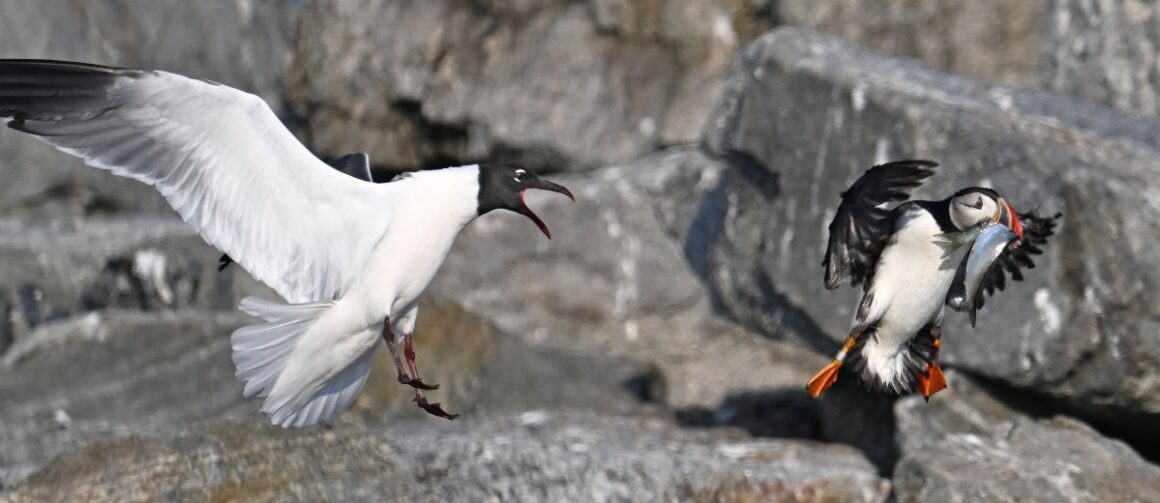
The research assistants of Eastern Egg Rock had a unique quest this past season. The crew woke up at 6 every morning to roam the island to make as much noise as it could, to deter the nesting of laughing gulls. Those birds had become a significant nuisance to the local puffins and terns.
Crew members yelled, clapped, whistled and sang. They shot bangers, screamers and air horns. They slapped wood boards, beat bongos and threw rocks. One crew member, digging deep into her diaphragm, let out a loud bark: “Wrrruuufff! Wrrruuufff!”
“It was insane,” said Ash Wilkes, 24, who was working with the Audubon Seabird Institute to protect puffins this spring and summer.
“When I barked, the gulls would all flush up and run down the paths, turn back, look at me and then run toward the rocks to the ocean. Some of them were struggling and tumbling through the raspberries to get away from me.”


Photos by Derrick Z. Jackson.
At first, her crew mates thought it was a joke. They all tried to imitate her. None could. Fifty-two years after Project Puffin began the effort to restore seabirds to islands off the coast of Maine, here was someone freshly minted with a biology degree from Trent University in Ontario adding yet another novel method to the annals of bird conservation.
“The gulls were so smart, that after a while, I didn’t even have to bark at some of them,” Wilkes said. “There were a few that were around my tent. As soon as they saw me, they flew away.”
This fight against the laughing gulls was the latest conservation challenge faced by Project Puffin, now officially the Audubon Seabird Institute. The sober restricting of some species of birds to benefit others goes back to the project’s origins.

Returning several species of terns and Atlantic puffins to Eastern Egg Rock in the early 1980s would have been impossible without the poisoning and shooting of predatory herring gulls and great black-backed gulls.
Still, the mission to cull laughing gulls was ironic, as they were another beautiful bird restored by the project. With its black head and red bill, the laughing gull pierces the air with a hilarious “ha-ha-ha-haah-haah-haah.” It was a victim of the millinery trade and could not compete for recovery with herring and great black-backed gulls.
The project’s 1983 island report happily marked the discovery of three laughing gull nests after a 69-year absence, saying they “usually nest compatibly with terns and seldom elicit aggression.”
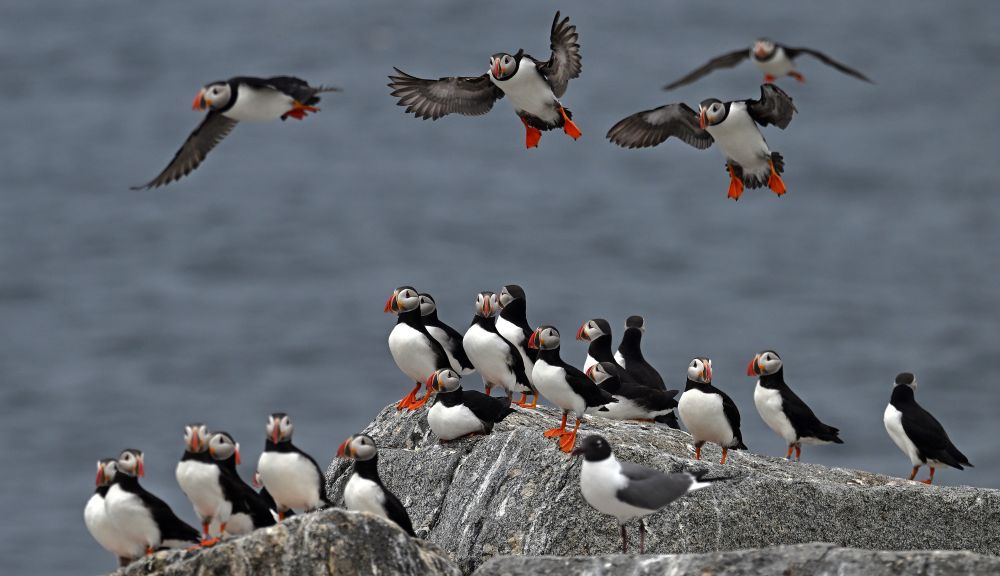
Four decades later, aggression is a problem. The laughing gull population last year surged to a record 2,457 breeding pairs. The gulls are known for stealing food from other birds, eyeing puffins with beak-loads of juicy hake, sand lance or haddock for chicks, and watching terns hover with glistening herring dangling down from their bills.
The gulls explode from their perches as if shot out of a cannon to startle those other birds into dropping their food.
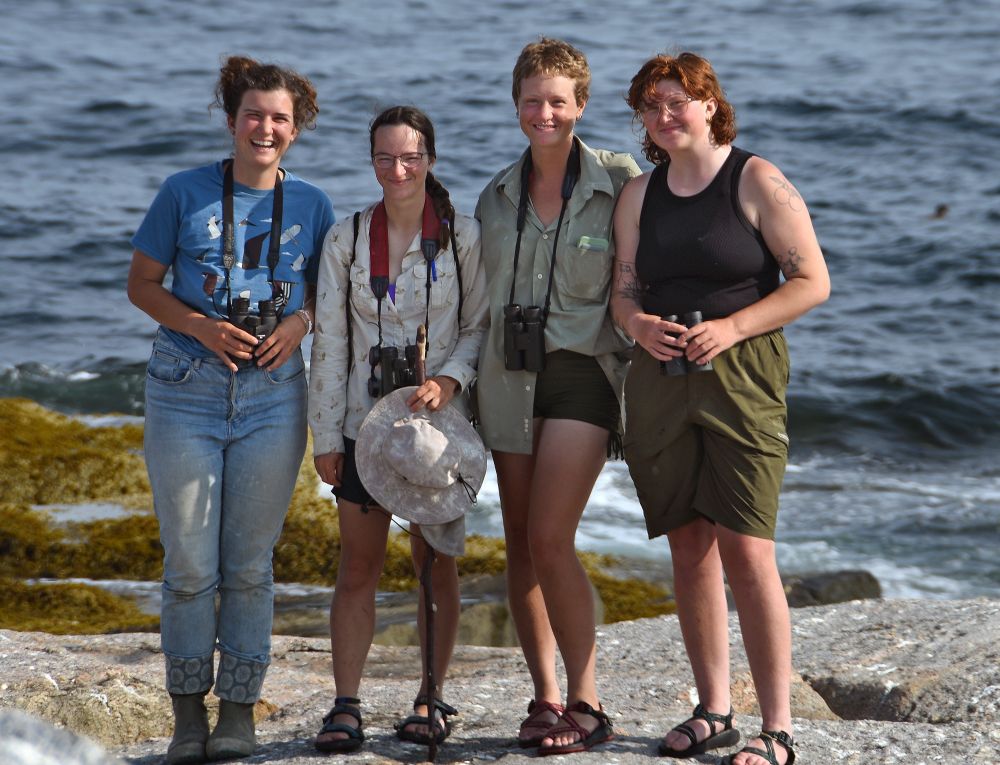
That is why Wilkes, crew supervisor Ali Ballard, 32, Hannah Leabhart, 25, and Anna Treadway, 22, bolted out from under their sleeping bags at dawn. Besides making noise, they crushed 1,300 eggs. Ballard and other Seabird Institute staff shot 25 gulls and hung them as effigies to scare off other gulls.

For the crews who have supervised the management of puffins and terns throughout the years, there is no harder task than having to shoot elegant gulls, herons and mammals, such as mink and otter, that can swim onto seabird islands to predate chicks. The researchers remind themselves that they are doing the best they can to restore a 19th century ecosystem that was destroyed by human predation.
“I’ve dedicated my life to saving animals and preserving species,” Ballard said. “I would never casually take the life of an animal… I stop every time I see an animal to help it cross the road.”
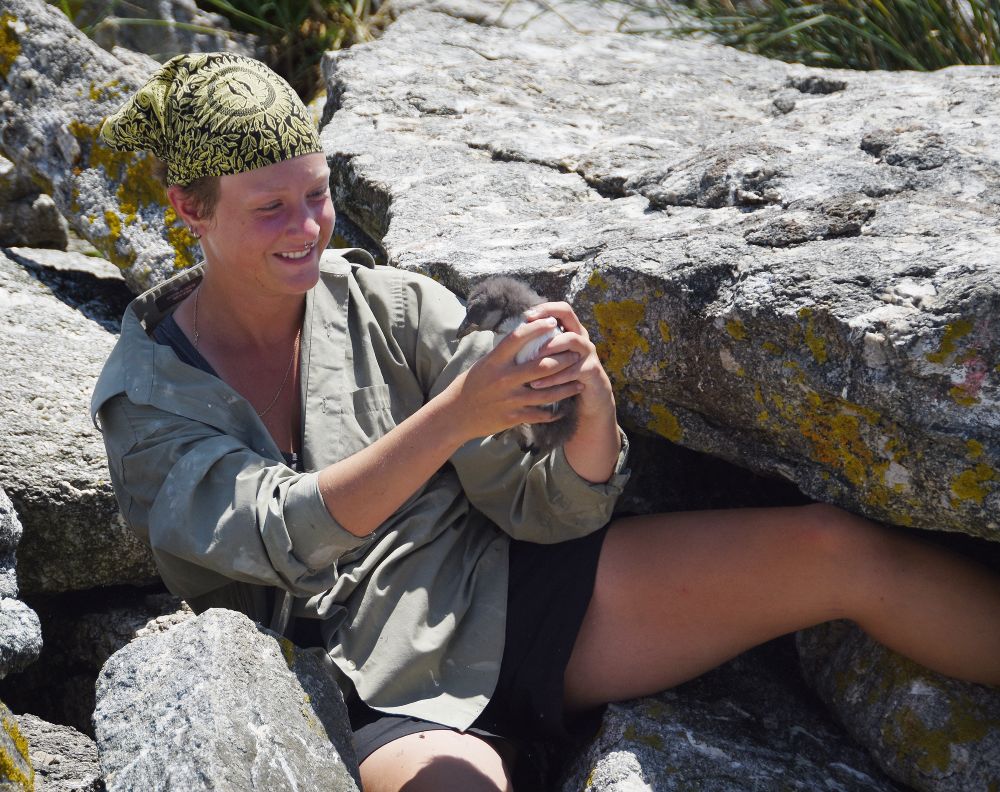
All that work paid off. Ballard’s crew slashed the number of laughing gull pairs that laid nests to 730. With hundreds fewer chicks to feed, the laughing gulls had less of a reason to harass other birds for food.
That was particularly good for the puffins on Eastern Egg Rock, because many of them were coming back from the ocean with unusually large herring for their chicks. They were adult river herring, according to Michelle Staudinger, an associate professor at the University of Maine’s School of Marine Sciences. Their availability might be the fruit of ongoing dam removals and fish passage projects to restore seasonal herring runs.
“The herring were so big, I have no idea how the chicks could eat them,” Ballard said.

Throughout the Gulf of Maine, puffins may have benefitted from waters that were cooler than in recent years, according to Andrew Allyn, a senior research manager at the Gulf of Maine Research Institute. On Seal Island, which last year estimated a record 672 breeding pairs of puffins, researchers saw even more new burrows. On my visit, puffin parents brought chicks plentiful hauls of haddock and sand lance.
Petit Manan Island, administered by the United States Fish and Wildlife Service, reported 82 active puffin burrows, the most in several years after winter storms destroyed prior burrows. On Machias Seal Island, Canadian researchers estimated more than 8,600 breeding pairs of puffins, inching up from the last census in 2019.
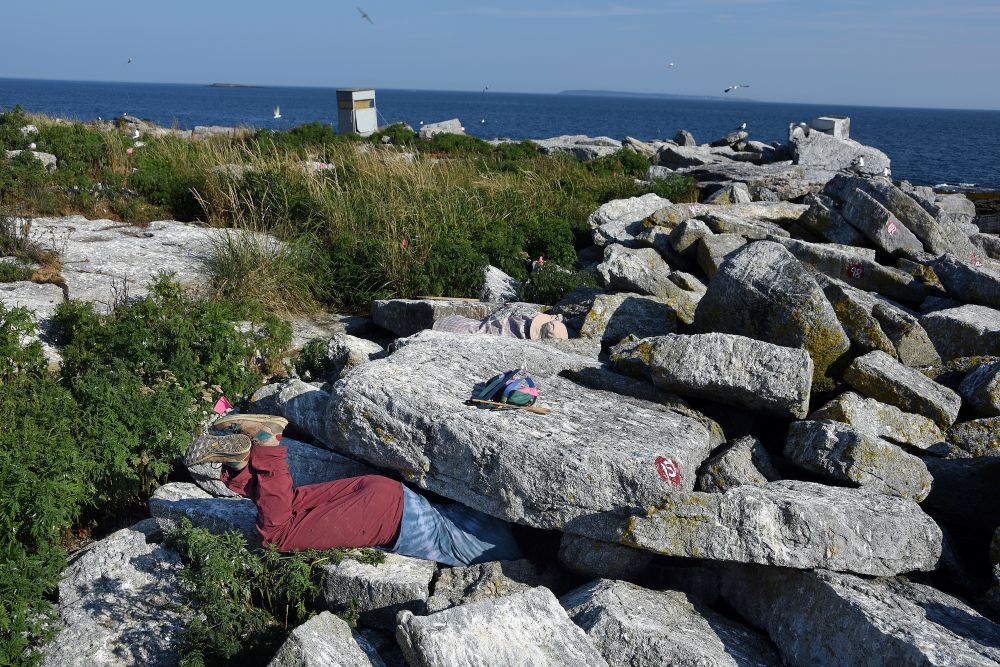
On Eastern Egg Rock, the crew discovered 20 new puffin burrows and were able to reach under the boulders to band a record 37 chicks. One evening crew members talked about how proud they were of their work at a moment when conservation science is being cut and wildlife protections are being gutted.
“I have a lot of friends who say they feel very powerless,” said Treadway. “Out here, I feel like I’m making a tangible difference. I still have a lot of hope.”
Wilkes agreed: “Every day I see a chick fledge, it’s a reminder that life goes on and that you can’t lose hope. As long as I have a voice, I’m going to scream off the damn rooftops for the birds.”
Or bark.