


Helping vulnerable people in Maine can take many different forms: stocking food in a giant freezer for distribution to rural food pantries, providing shelter and one-on-one counseling, or simply offering to listen to someone living on the street.
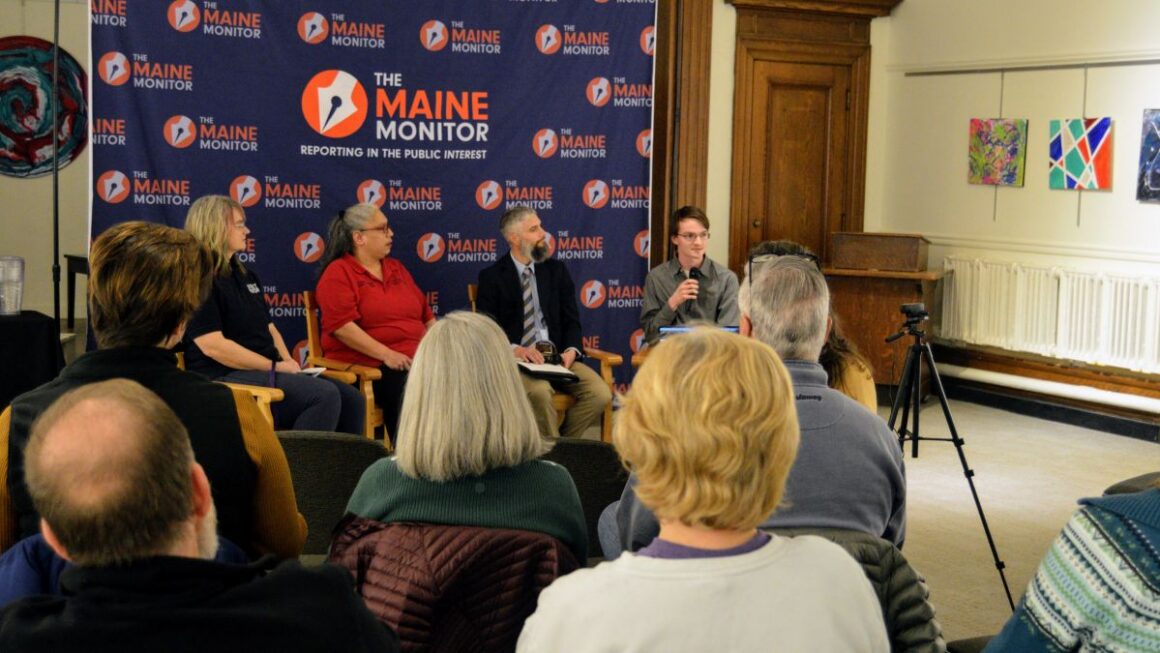
Leaders at faith-based organizations across the state joined The Maine Monitor for a conversation about these efforts on Wednesday, Feb. 4, at the Bangor Public Library.
The panel was moderated by Sean Scott, who covers religion, politics and society for The Maine Monitor as a Report for America corps member.
Panelists included Anna Phillips, coordinator for Greater Bangor Area Street Pastors, a group that sends volunteers out every Friday night to speak with people who are unhoused; Joselyn Griggs, the shelter manager for Hope Haven Gospel Mission, which provides food, shelter and clothing for underserved people in the Lewiston-Auburn area; and Michael Smith, the chief program officer at Catholic Charities Maine, where he oversees a number of programs including prison ministry and hunger relief services, particularly in Aroostook County.
The discussion touched on how the panelists’ faiths influence their work, the uncertain funding landscape nonprofit organizations have faced in the past year and what they’re paying attention to in 2026.
It follows reporting by Scott on the challenges Maine’s food pantries saw during the government shutdown last fall. About a third of the food pantries in the state are run out of churches or by other faith-based groups, and they reported a surge in demand during the uncertain period that followed the Trump administration’s decision to pause SNAP payments, which more than a 10th of people in the state rely on to buy groceries.
During Wednesday’s event, panelists talked about the logistics of keeping these pantries stocked, how hard it can be to distribute perishable food quickly and ensuring people know where to go when they need different services.
“I know how hard it is to go to a food pantry and say, ‘I need help for my family,’” said Griggs, encouraging those in need not to feel shame. “I’ve learned it’s OK to ask for help.”
The panelists also stressed that while they are each driven to do this work because of their faiths, their organizations serve people of any or no faith. Maine is one of the least religious states in the nation, which is part of why it is important for people from different faith backgrounds to collaborate, Phillips said.
The event was put on with support from Report for America.