




Researchers walking through the forest during a major spruce budworm outbreak in the 1990s discovered some healthy fir trees unaffected by the deadly pests, and wondered what gave them apparent immunity.
They took needles from the healthy trees to study at their University of New Brunswick lab, and found they contained a fungus with a beneficial relationship with the trees. They succeeded in growing the fungus in a petri dish.
The discovery attracted the attention of Irving Woodlands, a division of the Canadian forestry conglomerate J.D. Irving and the largest owner of forested land in Maine. The partnership, which started in 1999, resulted in a novel way to combat future outbreaks: breeding budworm-resistant trees.
Its strategy to use natural fungi — known as endophytes — inside trees to protect them is at the forefront of science to find more natural solutions, similar to the rationale behind drought-resistant crops. It is a rare example of using this approach to save trees. Several universities in the United States are researching how endophytes act in other types of trees to guard against elm bark beetle, elongate hemlock scale and other insects. Most turfgrass also contains a natural protective fungus.
Irving Woodlands is ramping up production of the trees in a newly opened greenhouse in New Brunswick. The 30 million insect-resistant trees it has planted in Maine since 2017 already are a major tool in the multi-prong strategy to keep the current budworm infestation in check.
Starting in 2007, all of the seedlings the company grows in New Brunswick have been inoculated with the fungus, said Anthony Hourihan, director of land development for Irving Woodlands. The company planted its 100 millionth tree in Maine this year. The insect-resistant seedlings will slowly replace the ones lacking the fungus over time. Irving Woodlands plans to plant 8 million insect-resistant trees in Maine this year.
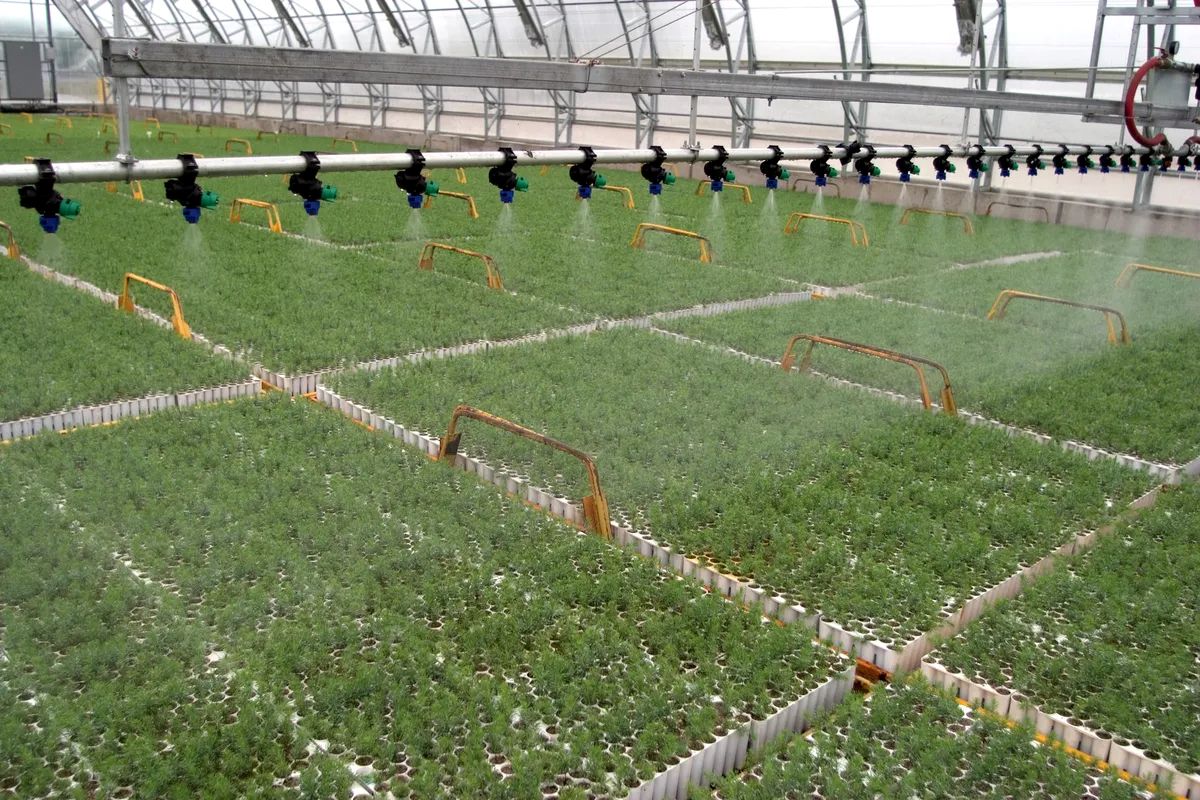
Developing the resistant trees took a lot of detailed steps, Irving Woodlands scientists said. First, the researchers had to grow the fungus and make sure it was toxic to the insects. They then had to inoculate it into the seedlings. Finally, they tested the trees after a few years to see if the fungus was still there and active against the spruce budworm before they were planted.
The company is currently using the trees primarily on its own extensive forestlands in Canada and Maine. It did not comment on the investment to develop the seedlings.
The trees with the fungus reduce budworm survival by 30% and reduce defoliation by the same percentage. The beneficial relationship also can help with overall tree health, making the trees with the fungus more drought tolerant.
The company doesn’t see the trees as a silver bullet to getting rid of spruce budworms. The Canadian outbreak that started in 2006 defoliated or killed an estimated 25 million fir trees in Canada before it emerged in Maine about five years ago.

Damage so far has been limited by a new program that strategically sprays pesticides on areas with high concentrations of the insects early in their lifecycle in an effort to keep them from spreading. In its first year the Maine program experienced 95% fewer pests where pesticides were applied.
The inoculated trees and the Maine early spraying program are parallel approaches to keeping the insects in check, Andrew McCartney, science director at Irving Woodlands, said. The inoculated trees have a natural biological product, not a chemical, so they aren’t as successful in holding back the insects. The company also sprays pesticides.
“The fungus provides an extra layer of tolerance and resilience to the stresses the tree has,” McCartney said. “These trees are going to be a little bit better protected.”
Most trees contain a fungus that has a beneficial relationship with them, but not all of those fungi produce anti-insect chemicals, he said. Only 5% do.
Insect experts are watching the Irving Woodlands program as keenly as they are watching how well the budworms are being kept in check by various strategies.
“I think tree improvement programs are an important part of an integrated approach to pest management,” said state entomologist Allison Kanoti, who also directs forest health and monitoring at the Maine Forest Service.