


Robert Peck of South Portland filed on Thursday a federal lawsuit against immigration enforcement agents saying they violated his First and Fourth amendment rights following an incident in January when agents threatened to arrest him for observing them in public.
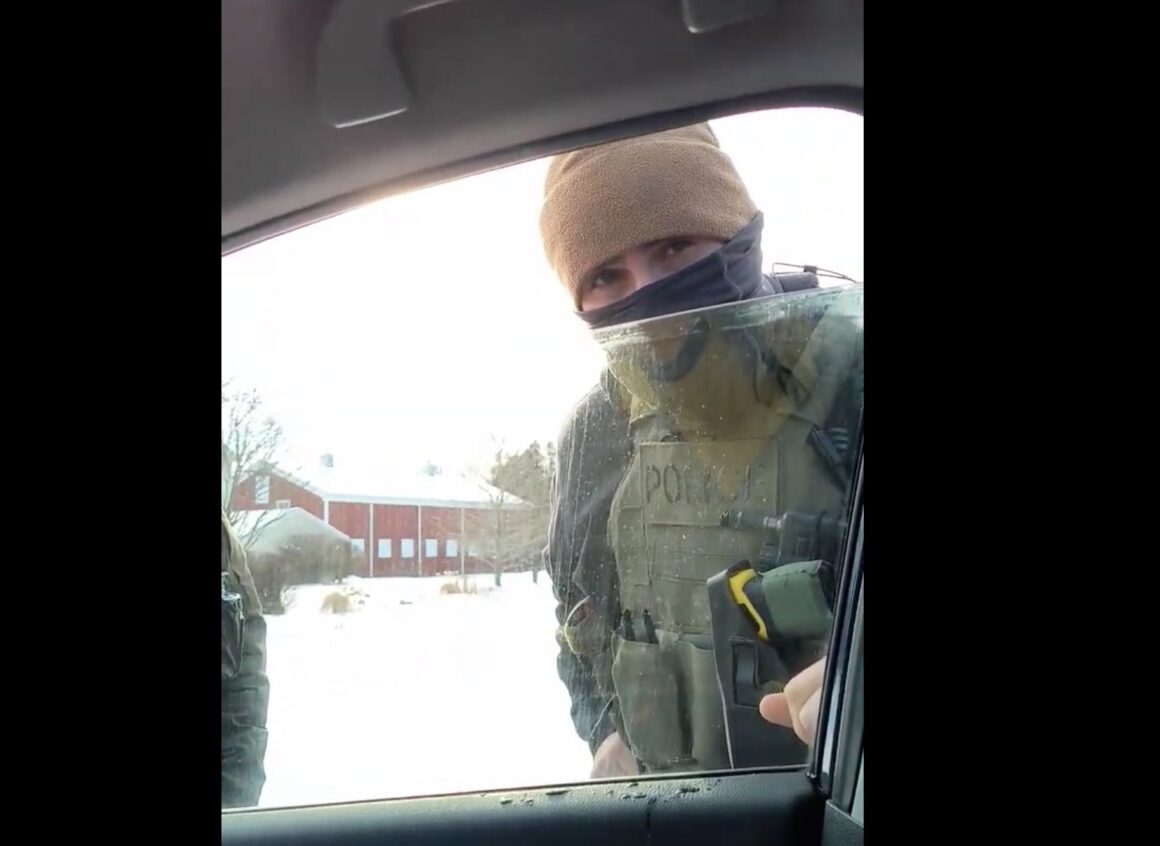
Amid an immigration enforcement surge in Maine, Peck was watching U.S. Department of Homeland Security agents on the road in Scarborough at what Peck and his attorney described as a safe distance. Peck eventually stopped his car on Milliken Road, where he saw an immigration enforcement vehicle pull over, and two masked agents came to the window of his car, accusing him of violating a federal law that prevents civilians from forcibly impeding law enforcement.
Peck’s lawsuit described the agents, who were captured on video, as attempting to “chill and punish protected free speech by falsely claiming that this statute makes it a crime for Americans merely to observe the public activities of federal agents.”
The lawsuit did not name the two agents, who are currently listed as John Doe 1 and 2. Peck’s attorney, David Webbert, said his firm has filed an information act request and a direct request to get the names of the agents, with no response. The hope, Webbert said, is to now get the names of the agents through the discovery process.
Peck also filed a notice of claim against the federal agency in January as a response to the same incident. The claim, which is the first step before filing a lawsuit under the Federal Tort Claims Act, seeks $7.5 million in damages. Webbert said there has been no response to the claim yet and that Peck can file a lawsuit against the federal government under this act as soon as July 30.
The most recent lawsuit was filed in United States District Court under the Maine Civil Rights Act, citing a right for Americans to peacefully observe public government actions. The complaint, which Webbert provided to The Maine Monitor, stated that, in response to the sweeping immigration action unfolding in Maine and across the county, Americans observed, documented and protested the U.S. Department of Homeland Security’s “terror campaign targeting immigrant communities of color.”
”And those who have exercised their fundamental First Amendment rights to peacefully observe and protest have been met with violent retaliation from DHS, including at least two public observers shot to death by DHS agents,” the filing stated, referencing the deaths of Alex Pretti and Renee Good.
The filing argues that immigration enforcement agents “systematically retaliated” against observers in an effort to “silence dissent and shield themselves from accountability.”
Webbert said that federal agents had been citing a federal law, 18 U.S.C. § 111, to restrict observers, including Peck in January. This case is important, he said, because the agents were caught on video citing the statute to Peck as a reason to arrest him.
The law states that someone has to forcibly impede law enforcement to be punished, but, in the video, agents defined the crime as observing, Webbert said, which is “clearly unconstitutional.”
The complaint argues that agents unlawfully seized Peck without probable cause or reasonable suspicion, violating his Fourth Amendment rights, and that agents falsely accused him of committing a crime and threatened to use physical force to arrest him if they perceived him to be following agents working in public, violating Peck’s First Amendment rights.
“This is a basic part of our Constitution,” Webbert said. “There has to be accountability or else it’s just a piece of paper, and it doesn’t mean anything.”