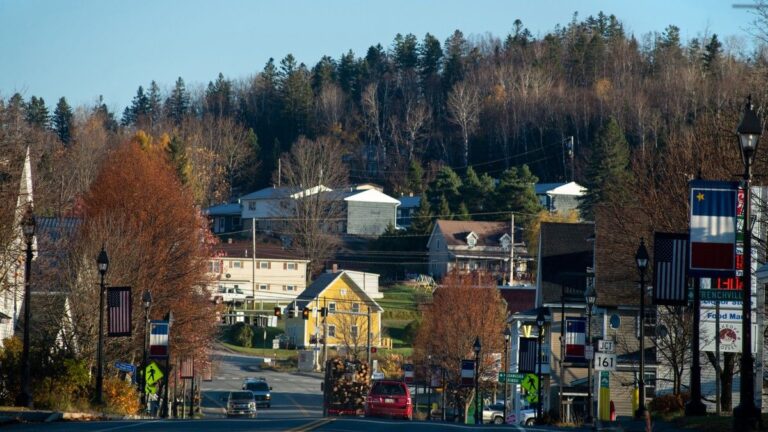




SALEM — With nearly $500,000 removed from its proposed budget just days earlier, the Maine School Administrative District 58 board of directors met May 21 to review the impact and continue discussions on potential school consolidation.
It was the first board meeting since the May 18 district budget meeting, where voters cut $472,000 from the board’s proposed $13.2 million budget. The reduction lowered the plan to $12.7 million, an increase of $195,000, or 1.56 percent, over the current fiscal year.
Some who attended Thursday’s meeting criticized the scale of the cuts to what they described as an already bare‑bones budget, particularly in the regular instruction and special education cost centers. A number of attendees said they plan to vote “no” at the June 9 validation referendum to send the budget back to the board.
Jeff Ziehler of Kingfield said the board’s original budget had been “remarkably restrained and very effective.” He called the $472,000 reduction “penny‑wise and pound‑foolish.”
“The students will suffer,” Ziehler said. “I think this is a foolish thing to cut at this level.”
He added that he plans to vote “no” June 9.
Other attendees questioned whether the district could meet its obligations to students receiving special education services after an $80,000 cut to that cost center.
Superintendent Laura Columbia said that while she did not want to “fearmonger,” she needed to be realistic. If the cuts stand, she said, they will likely affect positions because the reductions exceed what the district can absorb through supply lines and contingency funds.
Columbia also said she wished those who wanted to trim the budget had been more involved earlier in the process. She noted the board’s $30,000 contingency line would be less necessary if all four proposed reserve accounts had been funded. Instead, voters funded two of them at $100,000 each.
“The problem is a lot of the people that came to the one (budget meeting) didn’t come to any of the other ones,” MSAD 58 Director Brad Orbeton of Kingfield said.
If the budget is approved June 9, the administrative team would return to the board with options for operating the district at the reduced amount.
“Our next step is to see what happens on June 9,” Columbia said.
Columbia and the board also discussed creating a way to gather feedback on why residents vote the way they do at the validation referendum.
Last year’s budget was rejected on its first trip to the polls, but in that case, Columbia said feedback consistently showed the community wanted reductions.
This year, after the cuts made at the district meeting, the board may not know whether a “no” vote signals a desire to raise or lower spending.
The board also spent considerable time discussing what guidance to give the architects developing a school consolidation plan for the district. MSAD 58 issued a request for qualifications and has heard from at least a couple of firms, but interviews have not yet begun.
Directors were largely debating whether architects should focus on a specific option, such as moving sixth through eighth grades to Mt. Abram High School, or be given more open‑ended instructions.
Going around the table, all directors present said they supported consolidating the district’s four campuses. Several said MSAD 58 should pursue a two‑campus model, at least initially, and about half specifically backed moving sixth through eighth grades to Mt. Abram High School if it proves feasible.
In response to a question about planning for more space for art and music programs, Columbia said the administrative team has discussed wanting funding to support opportunities for students.
“I don’t see a major change in our budget if we don’t do something different with our buildings,” she said.
In response to another question, Columbia said the architects will be aware of the ongoing withdrawal processes in three towns.
The committees representing Strong and Kingfield are scheduled to meet with the district’s negotiating team in late May. Phillips’ committee is working on developing a budget, an earlier step in the process.
One or more towns leaving MSAD 58 would change the district’s demographic and financial outlook. The Regional School Unit 9 board of directors has already approved allowing high school students from MSAD 58 to attend Mt. Blue High School in Farmington.
The architects will be reviewed by a committee that includes MSAD 58 Directors David Vincent of Phillips and Ashley Hopwood Farrar of Kingfield. Any proposal related to the consolidation project would then go before the full board.
The board approved an expansion of the ongoing roof project at Mt. Abram, using $18,000 from the current budget to complete an additional section. Workers are now repairing the leaky roof as part of a previously approved project funded by up to $380,000 from the district’s capital reserve.
The board also approved hiring Fine Line Paving & Grading to reclaim pavement and repave around Mt. Abram High School. The Madison‑based company submitted the lowest of three bids, at $150,000. The cost of the work will be paid from the capital reserve.
The district also received some good news about its effort to replace its 50‑year‑old bleachers at Mt. Abram High School: A college in New Hampshire has offered a set of transportable bleachers at no cost.
Columbia noted that the bleachers could be moved to another school if that ultimately made more sense. Administrators are waiting to learn what shipping and assembly would cost.
Mt. Blue Community Access TV filmed the meeting, which can be seen here.
Correction: This story was updated June 16 to correct the last name of Jeff Ziehler. It is not Ziegler.