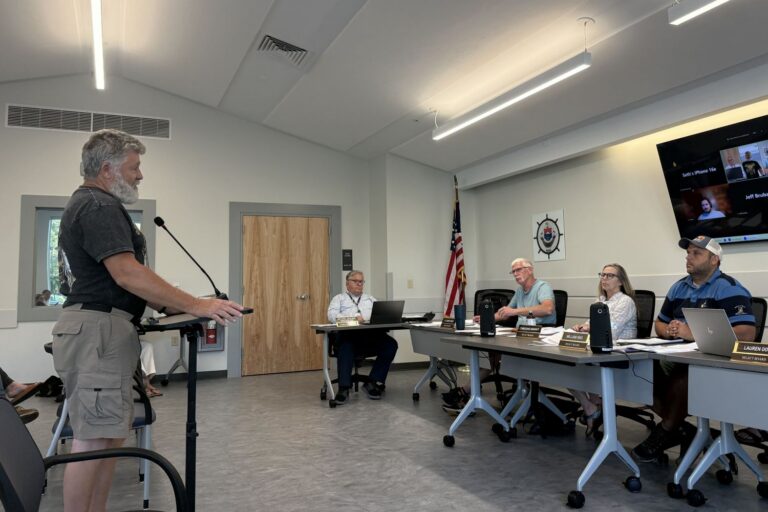




FARMINGTON — Voters in Regional School Unit 9 are scheduled to consider next year’s school budget at a meeting Tuesday evening.
The session is set for 7 p.m. May 26 in the Bjorn Auditorium at the Mt. Blue Campus in Farmington.
Residents of the district’s 10 towns are expected to vote on 20 articles that make up the budget.
A referendum to validate the bottom‑line amount is scheduled for the June 9 primary.
The RSU 9 board of directors is recommending a $46,229,943 budget, a $681,547, or 1.5 percent, increase over the current fiscal year.
District officials cite inflation, salary increases, an 11.5 percent rise in health insurance premiums and repair costs tied to years of deferred maintenance as major drivers of the increase. Fuel and heating lines also climbed because of global price volatility.
Administrators and the Budget Committee cut about $1.6 million before presenting the proposal to the board. All 15 directors present at the April 14 meeting voted to support the budget.
The cuts include six positions: a math teacher and half of a science position at Mt. Blue High School; three classroom teachers at Academy Hill, G.D. Cushing and W.G. Mallett schools; and a districtwide custodial job. The teaching positions were held by staff members who are retiring or otherwise leaving at the end of the year.
The budget adds one position by making permanent a Cascade Brook School teaching job created last year on a one‑year basis. It also expands a gifted and talented position from three‑fifths to full time.
A survey of 14 western Maine districts and their proposed budgets as of mid‑March found that RSU 9’s 1.5 percent increase ranked near the bottom.
The district plans to use $1.2 million from its unassigned fund balance to reduce the budget’s impact on the tax rate.
Adult education spending is not included in the $46.2 million budget. That program’s recommended budget is $723,868, an increase of 22.6 percent after a small reduction last year. The local share is $212,875, and the program plans to use its fund balance so the increase does not affect the local assessment.
If voters approve the school budget as recommended, the assessments for the towns would rise by 1.29 percent.
The recommended budget leaves four towns with lower assessments to support RSU 9: Weld at $602,000, a decrease of $58,061, or 8.8 percent; Temple at $468,000, down $24,259, or 4.93 percent; New Sharon at $1.1 million, down $25,885, or 2.29 percent; and Industry at $1.11 million, down $5,018, or 0.45 percent.
Six towns show increases in their assessments: Starks at $638,000, up $28,999, or 4.76 percent; Vienna at $847,000, up $31,730, or 3.89 percent; Farmington at $5.71 million, up $209,161, or 3.8 percent; Chesterville at $1.23 million, up $19,613, or 1.62 percent; New Vineyard at $923,000, up $14,346, or 1.58 percent; and Wilton at $3 million, up $8,206, or 0.27 percent.
In addition to state‑mandated cost centers, and to allow the board to use grant funding and transfer funds, the warrant asks voters to approve moving $100,000 into the district’s Technology Reserve Fund. The money would come from available fund balances, including proceeds from the sale of district‑owned electronic devices, and would be used to acquire and upgrade equipment.
The budget set by voters May 26 is scheduled to go to a validation referendum June 9. Voting is set for 8 a.m. to 8 p.m. in all 10 towns, coinciding with the statewide primary.
A “yes” vote approves the action taken at the May 26 meeting and sets the budget. A “no” vote rejects it and returns it to the board.