



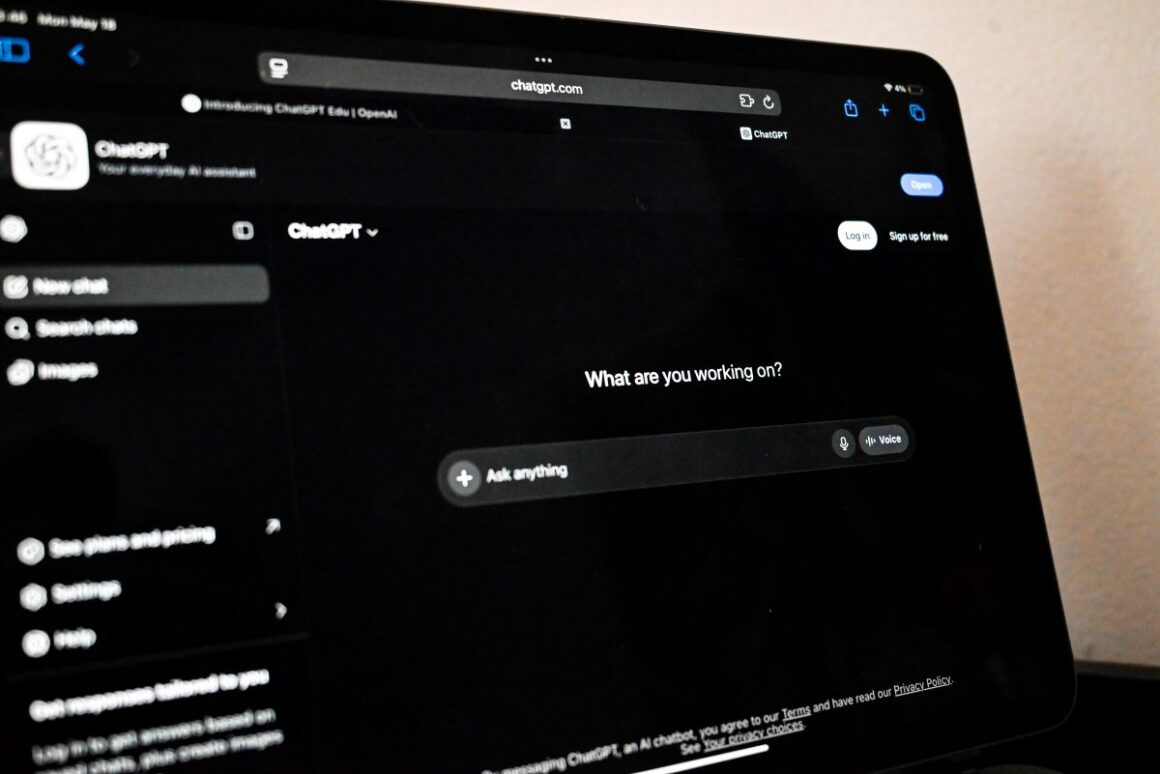
The state’s public university system plans to award its first contract for an artificial intelligence platform to ChatGPT Edu, an OpenAI chatbot tool for higher education, the system told employees and students in an email on Friday.
The two-year contract will cost about $1.39 million and serve the system’s estimated 25,200 students and 5,600 employees, likely starting in July, according to Ryan Low, the system’s vice chancellor for finance and strategic AI integration.
OpenAI’s winning bid, which was submitted by a vendor, Carasoft, is not yet set in stone as the competitive bidding process is now in a five-day appeals period when other bidders for products such as Google’s Gemini can clarify the facts of their original proposals for the system. Bidders cannot, however, propose new offers, and the OpenAI bid was about $600,000 lower than its competitors.
“It’s not coming with a mandate,” Low said in an interview on Monday. “It’s really just recognizing that there’s heavy usage out there. So, if we’re going to have that kind of usage, let’s do it in a safe space.”
Nearly 60 percent of U.S. college students use AI in their coursework on a weekly basis, and one in five use AI daily, according to a 2026 study by the Lumina Foundation and Gallup. A growing number of Americans — about one in five — use AI tools in the workplace, according to Pew Research Center.
The education version of ChatGPT will allow students and staff to use generative artificial intelligence on a platform that OpenAI describes as an “affordable offering for universities to responsibly bring AI to campus.” Users can analyze data, summarize documents, build custom versions of ChatGPT for internal use and work with higher messaging limits than the free version of ChatGPT, according to OpenAI’s website.
The education AI platform also describes itself as having “robust” security and privacy controls. For instance, the platform will not use prompts entered into the system to train OpenAI’s technology. While there are free versions of AI tools, Low said, students and staff sacrifice their data to use them.
“You can imagine a scenario where we’ve got thousands of students across the system using free versions of ChatGPT, constantly uploading course material and lectures, and now all of that material is going out to the free world,” Low said. “We don’t want that. We think there is a lot of value in these tools, and we want to encourage employees to explore them, but we want to do it in a safe manner as well.”
The University of Maine System plans to start its two-year agreement for ChatGPT on July 1, making the tool available through each person’s system account. The system noted in its email that the contract would be backed by investment income, and no additional fees would be incurred by students.
The move to adopt an AI system across the universities arose out of a need to provide students with a knowledge of tools becoming increasingly common in the workplace, Low said. Departments and universities in the system currently have access to a variety of AI tools, but they have primarily adopted them on a case-by-case basis and as each department’s budgets allowed. With systemwide adoption, Low said the tool would be available to departments and offices that would otherwise not have the budget to purchase an AI software.
The system set up a working group in 2024 to explore how to integrate AI across its campuses. Last fall, it published a report that recommended the system adopt a flexible AI policy framework, make training and resources widely available, and ensure human oversight.
The working group organized hands-on demonstrations of AI tools such as Gemini. The group ultimately recommended Gemini to be the system’s primary provider “given its favorable data security agreements and straightforward integration with existing UMS information technology systems,” the report stated.
Instead of just picking Gemini, however, the university system went through a competitive bidding process and ultimately selected a different, cheaper platform.
The working group report also noted that the system was piloting AI for a number of activities. For instance, it was experimenting with AI to process transcript data, and interpret academic details such as coursework requirements, grade point averages and credit transfers, for the admissions review process, according to the report.
The Board of Trustees for the system plans to revisit funding for the second year of the new contract as part of the next fiscal year budget process. At that point, any student fees or other costs to campuses would “be subject to a transparent, public review process,” the email stated.
The system plans to implement professional development training opportunities for employees and students in the coming school year. The training will be optional, Low said, and decisions about how the AI tool is used in classrooms or elsewhere on campuses will be made by the “people doing that work,” though he noted that systemwide information policies, such as those that protect student privacy, will still apply.
“We want adoption to move forward in a timely, thoughtful, and widespread manner while we learn together what the platform actually delivers in a UMS environment,” according to the system’s email.