



WATERVILLE — The City Council approved an ordinance Tuesday that bans municipal employees, including police officers, from cooperating with U.S. Immigration and Customs Enforcement.
The decision to limit local ties with ICE followed a lengthy public debate that drew sharp support and opposition.
The council gave final approval to the “Immigration Enforcement Restrictions” ordinance on its second reading during its July 21 meeting.
Councilors first reviewed the measure in April before passing it 6-1 on its first reading in May.
The council scheduled a second reading for June 2, but after continued discussion about whether to include police in the ordinance and a 3-3 vote to postpone consideration, Mayor Michael Morris broke the tie and the ordinance was tabled until July 21, giving City Solicitor Bill Lee time to recommend revisions.
Lee later proposed an amendment to exclude police officers from the ordinance, applying the restrictions only to other city workers. The amendment failed 5-2.
Council Chair Brandon Gilley, D-Ward 1, and Councilor Samantha Burdick, D-Ward 3, voted for the change. Councilors Flavia DeBrito, D-Ward 2; Rebecca Green, D-Ward 4; Spencer Krigbaum, D-Ward 5; Scott Beale, D-Ward 6; and Cathy Herard, D-Ward 7, voted against it.
The council then approved the original ordinance, which includes law enforcement, in a 6-1 vote, with Gilley casting the lone dissenting vote.
The second reading drew significant public comment as residents voiced starkly contrasting views, with several speakers supporting Waterville’s immigrant community and others urging stricter immigration enforcement and cooperation with ICE.
Lisa Parisio, policy director for the Immigrant Legal Advocacy Project, Maine’s only statewide immigration legal services organization, spoke in favor of the ordinance. ILAP provides legal services to immigrants and often responds to immigration enforcement actions and arrests across the state.
Supporters argued Waterville’s ordinance provides additional protections for immigrants and reinforces the city’s commitment to its community.
“There is absolutely no link to being an immigrant and criminality,” Parisio said, adding that excluding law enforcement would “send a clear message” that the city was not doing enough to “protect people from ICE violence.”
A Ward 4 resident also urged councilors to keep law enforcement included in the ordinance.
“More than anything else, it is a statement when a statement needs to be made,” the resident said.
Another resident echoed that sentiment, saying, “It’s a statement that we care about our immigrant community.”
One speaker criticized ICE directly, saying, “I don’t trust ICE,” and adding that the speaker did not believe the agency had properly vetted its officers.
A Ward 2 resident questioned how city employees would distinguish federal immigration agents from others.
“We need clarity,” the resident said. “We have to obey people that don’t identify themselves?”
Resident Ryan Tibbetts opposed the measure.
“This is our home,” Tibbetts said. “The people who are not supposed to be in our home … they need to go.”
Before the vote, Gilley questioned whether the ordinance was necessary in light of a state law enacted in January that clarifies and limits how local police interact with federal immigration authorities.
“Now that L.D. 1971 has passed, what specific problem does this ordinance solve that the state law doesn’t already address?” Gilley asked.
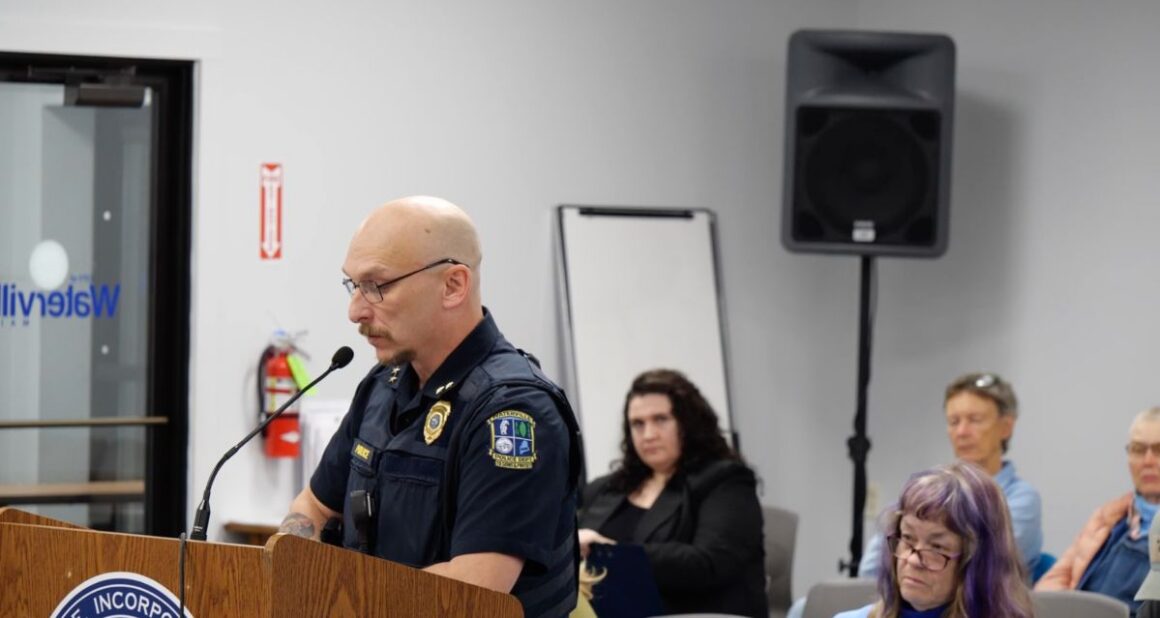
In previous discussions, Chief William Bonney of the Waterville Police Department opposed adopting the ordinance, calling it an unnecessary step that would create confusion and make the city less safe.
Bonney highlighted department outreach, such as partnering with Mid-Maine Regional Adult Community Education to host workshops on legal rights and standard traffic stops, which he said fosters trust and helps maintain productive working relationships with federal authorities.
He also warned that adopting the ordinance could endanger federal equipment funding, including a $1.9 million federal grant for new radios.