



Local, state and federal authorities are all involved in investigating the fatal shooting of a Colombian man by a federal immigration agent in Biddeford earlier this week. But details about their process and timeline, as well as how well federal investigators are sharing information with Maine authorities, remain sparse.
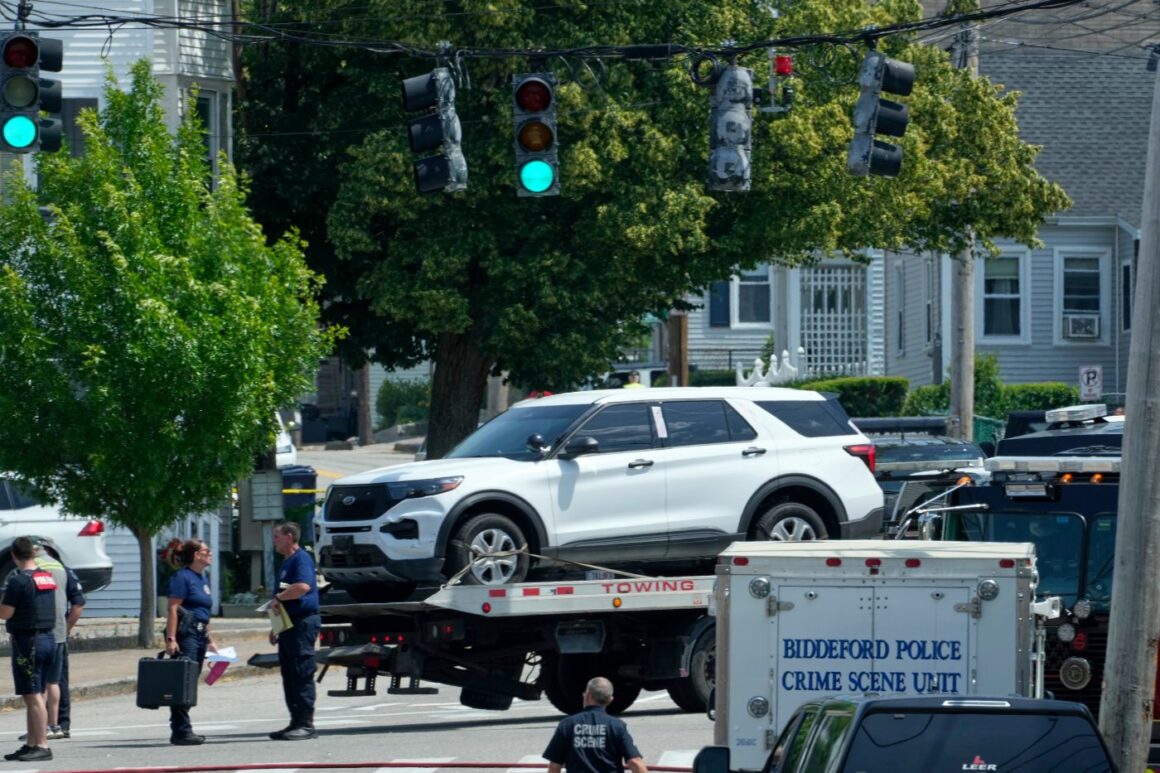
The man, who has been identified by immigration advocates and family as 25-year-old Johan Sebastián Durán Guerrero, was shot in his car around 7:17 a.m. on Monday. Authorities have released little information about the incident except to say the man was attempting to flee from U.S. Immigration and Customs Enforcement agents conducting a final removal order and was shot because an officer “feared for public safety.” Agents were not wearing body cameras.
Maine U.S. Sen. Angus King said that the U.S. Department of Homeland Security told him Durán Guerrero was not the target of its enforcement action. The agent who shot him was placed on administrative leave. He has not been officially identified.
Durán Guerrero’s death marked the second fatal shooting by immigration agents nationally in less than a week. It sparked protests around the state and calls from local and state leaders for an investigation. Maine’s federal delegation asked that the review be “comprehensive, transparent, and expedited” in a joint statement released Tuesday.
State and federal officials have said they will be investigating but have so far shared few details. Gov. Janet Mills said during a Wednesday press conference there is a “level of cooperation” between state and federal investigators, but she declined to provide further details about those efforts, the Portland Press Herald reported.
It is unknown how long any investigation will take or the extent to which federal authorities will cooperate with local investigators. Officials in Minnesota obtained information about the deaths of Renée Good and Alex Pretti — fatally shot by federal agents in January — from federal authorities in mid-July, months after requesting it and only after the state filed a lawsuit.
The Trump administration has suggested in the past that local officials do not have jurisdiction to investigate the behavior of federal law enforcement, but that is “demonstrably untrue,” said Rachel Moran, a professor and founder of the Criminal and Juvenile Defense Clinic at the University of St. Thomas School of Law, citing U.S. Supreme Court precedent.
It is unusual, but not uncommon, for a state to pursue its own concurrent investigation of a federal law enforcement officer’s actions. Local authorities typically defer to federal agencies in such cases, Moran said.
However, states are beginning to take more interest in conducting their own investigations, she said, because “the federal government has shown it has no interest in investigating these cases and often has a knee-jerk defense of law enforcement’s actions.”
In a press conference on Monday, King stressed the importance of state involvement: “I believe that given what’s happened over the past year, we can’t just stand back and say, ‘Oh, it’s a federal investigation. Everything’s on the up and up.’”
He said he intends to stay involved to ensure that the federal investigation is transparent and that “our state and local officials aren’t frozen out.”
Here are the agencies that are involved in investigating the killing of Durán Guerrero and what we know about what the state and federal investigations will look like:
The Maine Attorney General’s Office
The Office of the Maine Attorney General said on July 13 — the day of the shooting — that it was on scene and “actively investigating the incident.” It said police departments in Biddeford and Saco, the Maine State Police, and federal authorities were assisting with the investigation.
A spokesperson for the attorney general’s office did not respond to an emailed list of questions about what this investigation would entail. In a Wednesday press release, the office said it is “focused on a thorough, truth-seeking investigation in cooperation with the federal agencies involved.”
Maine state law gives the attorney general the “exclusive responsibility” to conduct a criminal investigation of law enforcement officers who use deadly force while performing their duties in the state.
The attorney general must complete its investigation, which may review interviews, forensic reports, photographs, emergency communication and any other available material, within 180 days of being notified of the incident. The attorney general can request an extension from the Maine Deadly Force Review Panel, which reviews the state’s findings, but the investigation cannot exceed 270 days in total.
Once the investigation is complete, the attorney general’s office decides whether to pursue criminal charges or whether the facts of the case show the officer was acting in self-defense or in defense of others.
Its work would normally occur alongside a federal investigation and could involve sharing resources and information, according to Jim Tierney, a former Maine attorney general who prosecuted law enforcement use-of-force cases in the 1990s and now teaches at Harvard Law School.
In his experience, federal authorities have “previously been fabulous and cooperative,” Tierney said, noting that he wasn’t sure that would be the case now.
Tierney said the state should pursue its own investigation because any federal investigation could be dropped by the Trump administration, or a conviction pardoned. Presidents are unable to void state convictions under the U.S. Constitution.
If the state pursues a criminal case against the shooter, the defendant would be able to request that the case be moved to federal court, Tierney said. Federal law enforcement officers often request a venue change based on the supremacy clause of the U.S. Constitution, a legal doctrine that protects officers from state prosecution when acting within the scope of their duties. It would force the state to argue an officer used force beyond what would be acceptable for the situation.
In recent years the Maine attorney general’s office has investigated two incidents that involved federal agents using deadly force. In 2010, an agent with the U.S. Bureau of Alcohol, Tobacco, Firearms and Explosives killed a member of the Outlaws Motorcycle Gang during an exchange of gunfire in Old Orchard Beach. The other case, in 2012, centered on whether a U.S. Marshal’s Service deputy was justified in shooting a man who attempted to shoot officers while escaping arrest in Portland. The office found the use of force justified in both cases. The attorney general has never found an officer’s use of force unjustified.
Biddeford Police Department
Biddeford police officers responded to the scene after shots were fired. They provided additional security and a perimeter, according to Biddeford Mayor Liam LaFountain’s Monday evening interview with CNN.
LaFountain said he expected cooperation to continue between local, state and federal law enforcement agencies in a press release on Monday, adding that “the city will continue to seek verified information and share factual updates as they become available.”
Biddeford Police Chief JoAnne Fisk did not respond to a request for comment. Danica Lamontagne, the communications manager for Biddeford, said the city and the police force were not involved in any ongoing investigations, adding that Biddeford police officers on the scene were asked to share information at the time but that all ongoing work is being directed to the attorney general’s office.
Maine State Police
Shannon Moss, a spokesperson for the Maine Department of Public Safety, confirmed that detectives in the Maine State Police Major Crimes Unit-South were on the scene Monday, assisting the attorney general’s office. She declined to provide further details.
The Maine State Police typically conducts investigations into law enforcement conduct by gathering information related to the incident but then passes its findings to the attorney general’s office, which decides whether to pursue a case, according to Tierney.
Department of Homeland Security
The inspector general’s office within the Department of Homeland Security may be investigating this incident, as it typically does when agents shoot their weapons. “DHS OIG has been notified and like all discharge of firearms this will be investigated,” the department wrote in a statement on X Monday evening.
The Office of the Inspector General is an independent agency within the department charged with keeping the DHS accountable through audits and investigations. (Earlier this year, the office announced it was auditing ICE to determine whether it was conducting internal investigations to hold agents accountable for excessive force.)
While the federal government did not confirm or deny an inspector general investigation, Maine U.S. Sen. Susan Collins wrote on X that Secretary Markwayne Mullin told her that the inspector general’s Boston satellite office was indeed investigating alongside the FBI.
Federal Bureau of Investigations
Tim Callery, a spokesperson for the Boston FBI field office, confirmed on Tuesday that the FBI had been present at the scene in Biddeford to assist in the investigation, but he otherwise declined to answer questions about the bureau’s involvement. He referred further questions to the Department of Homeland Security.
King said the FBI will lead a federal investigation of the shooting. The Department of Homeland Security did not elaborate on the FBI’s involvement.
On Tuesday, King and Collins publicly called on the U.S. Department of Justice, which includes the FBI, to cooperate with state and local law enforcement “to give the public confidence that the inquiries have been conducted in a thorough, fair, and impartial manner.”
Maine Monitor reporter Sean Scott contributed reporting.
The story was updated July 21 to correct the age of Johan; he was 25.