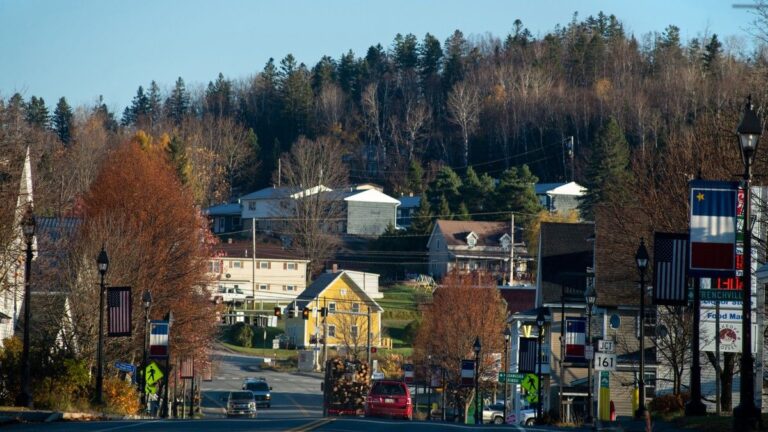



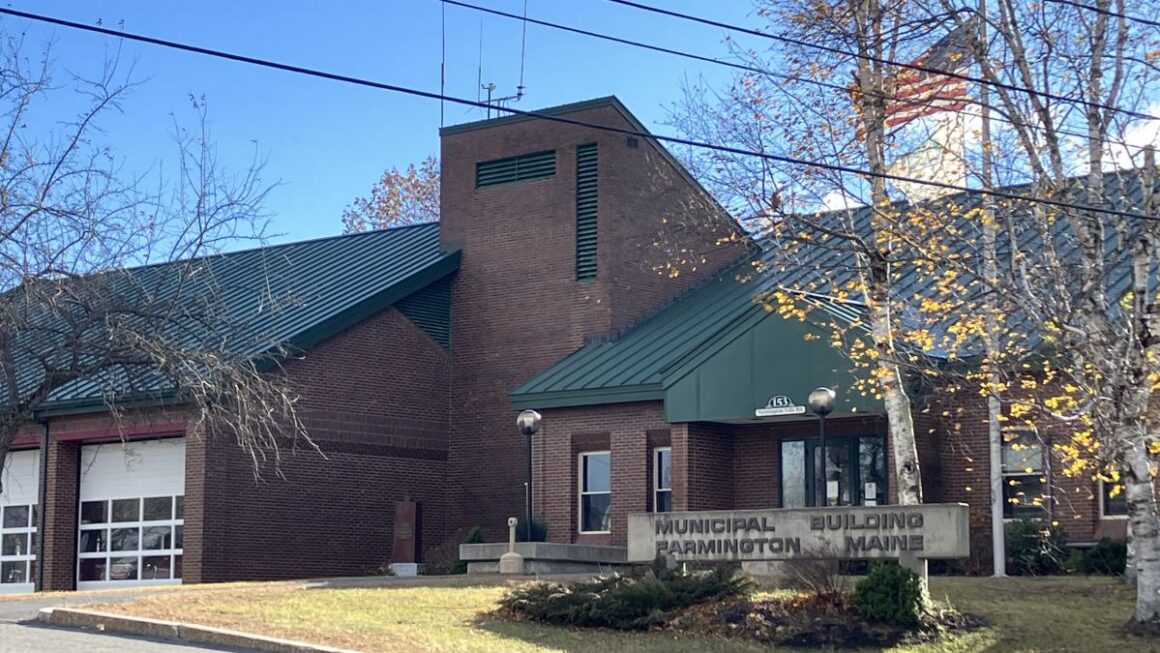
FARMINGTON — A proposed ordinance to cap mobile home lot rents sparked debate between proponents and skeptics at Tuesday’s Select Board meeting.
While the board took no action on the draft, Lorri Nandrea of the Maine Labor Climate Council presented the proposal on behalf of local mobile home owners seeking to protect the equity in their properties.
“They’re in a unique situation of owning their home and having their savings, their equity invested in that home, but facing large, unpredictable increases in the lot rent,” Nandrea said, noting that moving these homes is often too expensive or impossible. “It’s created a real crunch for people.”
Under the draft ordinance, landlords could increase rent once a year. The increase would be capped at 3 percent for occupied lots and 5 percent for vacant ones. Larger increases would require park owners to petition a new Rent Stabilization Board and prove the hike is “extraordinary, necessary, reasonable and not due to deferred maintenance.”
To justify a higher increase, lot owners would have to present three years of rental income and operating expense data, alongside a list of capital improvements made over the past five years. Violators would face a daily penalty of $100.
Residents speaking in favor of the ordinance voiced fears over rising rents and the possibility of big companies buying their lots.
“We don’t want to be priced out of our homes or unable to pay the land rent or unable to move our homes,” resident Lynn Perrinne said. “They’re not mobile.”
Apartment and lot owners urged the board to reject the ordinance, arguing that inflation and rising operational costs frequently outpaced rental growth. They pointed to existing state-level protections for mobile home owners and warned that the proposed requirements for reporting data would prove overly burdensome and discourage local investment.
“It’s a big-city treatment, I think, for a smaller-town situation,” lot owner Paul Mills said.
Select Board members Randy Gauvin and Dennis O’Neil questioned the logistics of creating a Rent Stabilization Board. Both expressed concern over the workload for volunteers and the administrative burden placed on property owners.
Board members said they trust the town’s established process for evaluating ordinances and advised residents to maintain open communication with officials.
Select Board Chair Matthew Smith and Town Manager Erica LaCroix explained that the Zoning Board must first review any proposed ordinances. That board can then advance the proposal to the Select Board for consideration at a town meeting, where residents must vote to enact it.
“Ultimately, that’s where our ordinances change, is through the town meeting process,” Smith said. “It’s not a quick process. It’s not meant to be.”
The board also accepted $240,000 from the federal Bureau of Justice Assistance’s Byrne Discretionary Community Project funding. The town will use $180,000 to strategically install cameras throughout Farmington to monitor road conditions and assist emergency responders and police investigations. The remaining $60,000 will fund access controls at the police station.
The project began three years ago when staff members from U.S. Sen. Susan Collins’ office invited the town to apply for the grant. At the time, Chief Kenneth Charles of the Farmington Police Department reminded the board, Farmington was handling several major investigations, including a double homicide, a home invasion, and multiple traffic crashes.
The department found that officers spent considerable time tracking down high-quality video footage during those cases.
Following federal budget delays, the town secured the money, and Charles said he is preparing to implement the system. He plans to establish civilian oversight, clear procedures and strict audit controls.
“I don’t need most of that (footage),” Charles said. “I just want it when we have an incident or a situation and we want access to some quality footage and not terrible, grainy stuff.”
Charles said he will submit the final application this week.
“Getting the money here is really almost the easy part,” Charles said. “Implementing (the project) in a way that exercises some transparency, has good policy, good procedures, good documentation – that’s really important to me.”
The board also approved a $47,389 bid from Island Tech Services, or ITS, to outfit the Police Department’s two new cruisers. Charles noted that of the two other companies approached, one did not respond and the other had been acquired by ITS.
The board approved spending up to $3,250 from the town’s capital improvement fund for Cousineau to extend the swing set pad and relocate a nearby bench at the Hippach Field playground. The Sumner P. Mills Jr. Hippach Trust, which funds maintenance and upgrades for the field, will purchase the new swings.
The board also approved purchasing a water reel — essentially a hose mounted on a cart — to maintain the Little League field. A 2023 flood damaged the field’s previous irrigation system, and repairing it was deemed too expensive.
The town will contribute $2,000 to $3,000 from its capital improvement fund toward the $5,700 purchase, and the Mills Trust will cover the remaining balance.
The board also accepted a $5,000 change order credit from Sheridan Construction Corp. for the Farmington Community Center project. Because town crews handled the excavation for the liquefied petroleum gas line, those funds returned to the town.