


KINGFIELD — The future of Kingfield’s Iron Bridge drew renewed scrutiny at Tuesday night’s Planning Board meeting, where members debated whether the town should urge residents to consider replacing the deteriorating one‑lane structure with a two‑lane bridge.
The discussion unfolded even as questions about who owns the bridge and who is responsible for its repairs remain unresolved.
Planning Board members also questioned whether the town has the authority to require a two‑lane upgrade or simply recommend one.
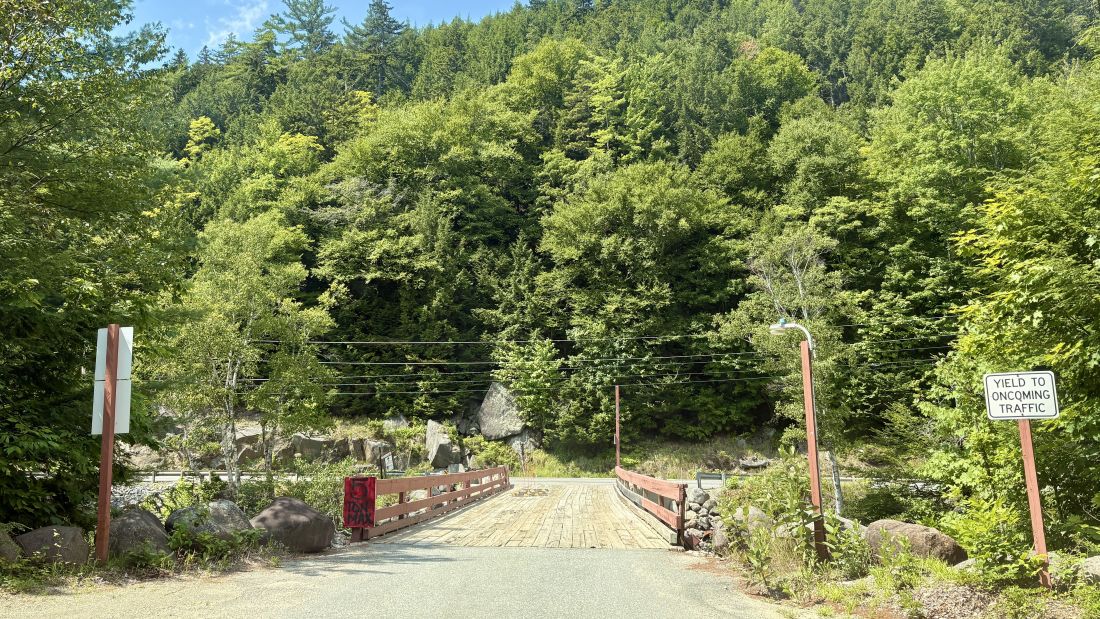
The privately owned bridge, which provides access to the Ira Mountain neighborhood, is now limited to five tons after an engineering assessment in July found significant deterioration, including damaged surface planks and two deformed support beams.
Part of that assessment included a recommendation that the bridge be replaced within a year, raising concerns about emergency access, funding and long‑term repair responsibilities.
Before the downgrade, the bridge was posted for 32 tons. The reduced five‑ton limit now restricts large vehicles, including emergency and delivery trucks. The bridge serves more than 60 homes on the other side of the Carrabassett River.
Planning Board Chairman Richard Hawkes and members Jared Clukey, Susan Davis, Scott Hoisington, Taylor Lee, Thaniel “Babe” Smith and Robert Woodhouse debated the implications of the bridge’s condition, the neighborhood’s continued growth and where the town’s responsibility begins and ends.
The discussion highlighted a fundamental problem: While the town does not own the bridge, residents and town officials alike are increasingly concerned about whether the existing one‑lane structure can safely accommodate current and future traffic.
“We’ve already hit the 115 lots that would have triggered the first two‑lane bridge,” Woodhouse said. “The other term was the 87 units. We’re at, I think, 64. So we’re at roughly 75 percent of that capacity currently.”
The thresholds to which he referred come from previous traffic studies conducted before and after those completed by Bowdoin College dating to 2003.
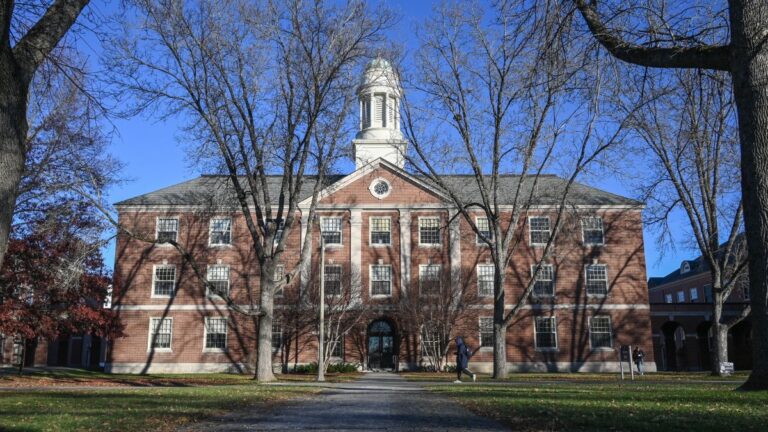
The issue of bridge safety and capacity arose after Bowdoin filed an application to establish a seven-site overnight camping area near Ira Mountain. The site would accommodate up to 28 tents and 84 students and faculty, all of whom would have to drive over the bridge to reach the property the Brunswick liberal arts college purchased last year.
A small group of residents immediately petitioned the town for a moratorium to stall the project, after which Bowdoin withdrew its application to give the town time to update its ordinances.
The temporary moratorium on transitional overnight recreational developments passed in July.
Woodhouse argued that the bridge’s current structural failures — along with the concerns raised by residents in countless letters sent after the Bowdoin application was submitted — should prompt the Planning Board to provide “guidance” to the road associations responsible for the neighborhood and the bridge “because the bridge has failed and (there are) safety concerns.”
“I feel like this board should provide some guidance to the road associations,” he said.
The associations are the Iron Bridge Road Association, Claybrook Road Association, Ira Mountain Road Association and Poplar Hill Road Association.
Members of these groups have repeatedly voiced safety concerns about heavy construction trucks turning onto and crossing the Iron Bridge from Route 27, a stretch of highway known for fast‑moving traffic and heavy logging trucks.
The turn onto the Iron Bridge from both directions of Route 27 is considered hazardous even in ideal weather. Residents worry that large vans carrying Bowdoin Outing Club students — moving slowly across the bridge and unable to reverse quickly in an emergency — present an added safety hazard.
The most contentious part of the discussion centered on whether the Planning Board has the authority to require a two‑lane bridge in the first place.
Woodhouse noted that the board missed an earlier opportunity to make a two‑lane bridge a condition of development approvals.
“That’s now out until we have another something else in front of us that we have to approve to have a condition of upgrading,” he said.
Hawkes agreed that the town lacks the authority to require the bridge be widened.
“We don’t have the authority to tell them they have to go to a two‑lane bridge,” he said. “There’s no requirement for a two‑lane bridge. It’s a recommendation by an engineering firm.”
The ownership of the privately owned bridge is now “under review by counsel for the parties involved,” according to Rob Thompson, a representative for all four road associations affected.
Members have questioned how far the town can go in directing what the private owners should do.
“I think we have authority as to overlooking the development and the safety that’s going on,” Woodhouse said. “We have a responsibility for the safety of townspeople. We do. We’re just asking them to look into the future growth.”
Safety concerns extending past the bridge repair itself are also at the root of the situation. In addition to worries about weight and increased traffic, residents have raised concerns about the difficulty of entering and exiting the bridge at Route 27, particularly when vehicles are traveling at highway speeds during winter conditions.
Residents cited the difficulty of entering and exiting the bridge at Route 27 as a keystone in their argument against having Bowdoin build a year‑round campsite there. A single‑lane bridge can also require drivers to stop or wait for opposing traffic, adding further complications to the intersection.
On July 23, town officials sent a letter to residents regarding the emergency response plan, noting that the bridge cannot hold the weight of most emergency vehicles, including ambulances and fire trucks.
According to that letter, the town “cannot guarantee that route (across the Iron Bridge) will be available, and cannot promise a specific response time while the bridge restriction remains in place.”
It went on to say that the Kingfield Fire Department “will use every lawful and available means to reach you in an emergency and will pursue all reasonable options — including mutual aid from neighboring departments, alternate apparatus, and, where legally permitted, emergency crossing of private property — to respond as effectively as current conditions allow.”
There is no consensus on the Planning Board about repair or replacement, as Woodhouse emphasized to fellow members that “the bridge has actually failed.”
Hawkes offered a different perspective, suggesting repairs could restore the existing structure.
“After one-half is repaired and the other half repaired in three years, it’s going to be as good as it was in 1987,” he said.
A temporary fix is being discussed, which would be expected to last three to five years, but the timing on that has not been finalized, Hawkes said.
Hawkes estimated the construction of a new bridge could be more than $3 million.
Residents are now working to form a separate road association whose sole focus is the bridge. The immediate concern is that residents still need access for heavy vehicles.
“Snow’s coming, and they want a fuel truck to go across the bridge, and they want a propane truck to go across the bridge,” Hawkes said, noting that someone also wants a concrete truck to cross the bridge to pour a foundation — something that may be possible with temporary repairs. “That’s all gonna’ happen before snow flies, but not (building) a two‑lane bridge,” he said.
As discussion crept past the meeting’s allotted hour, one member recommended “we cease this discussion because we’re not going any further with it at the moment.”
The Planning Board’s next regular meeting is scheduled for Sept. 8.
Earlier this year, Bowdoin College said it intends to refile its application for the campsite.
When asked for comment on the ongoing discussions over bridge access and ordinance amendments, Bowdoin’s communication director repeated prior statements that the college “remains committed to this project and to the future learning opportunities it will provide students. We continue to respect the town’s process.”